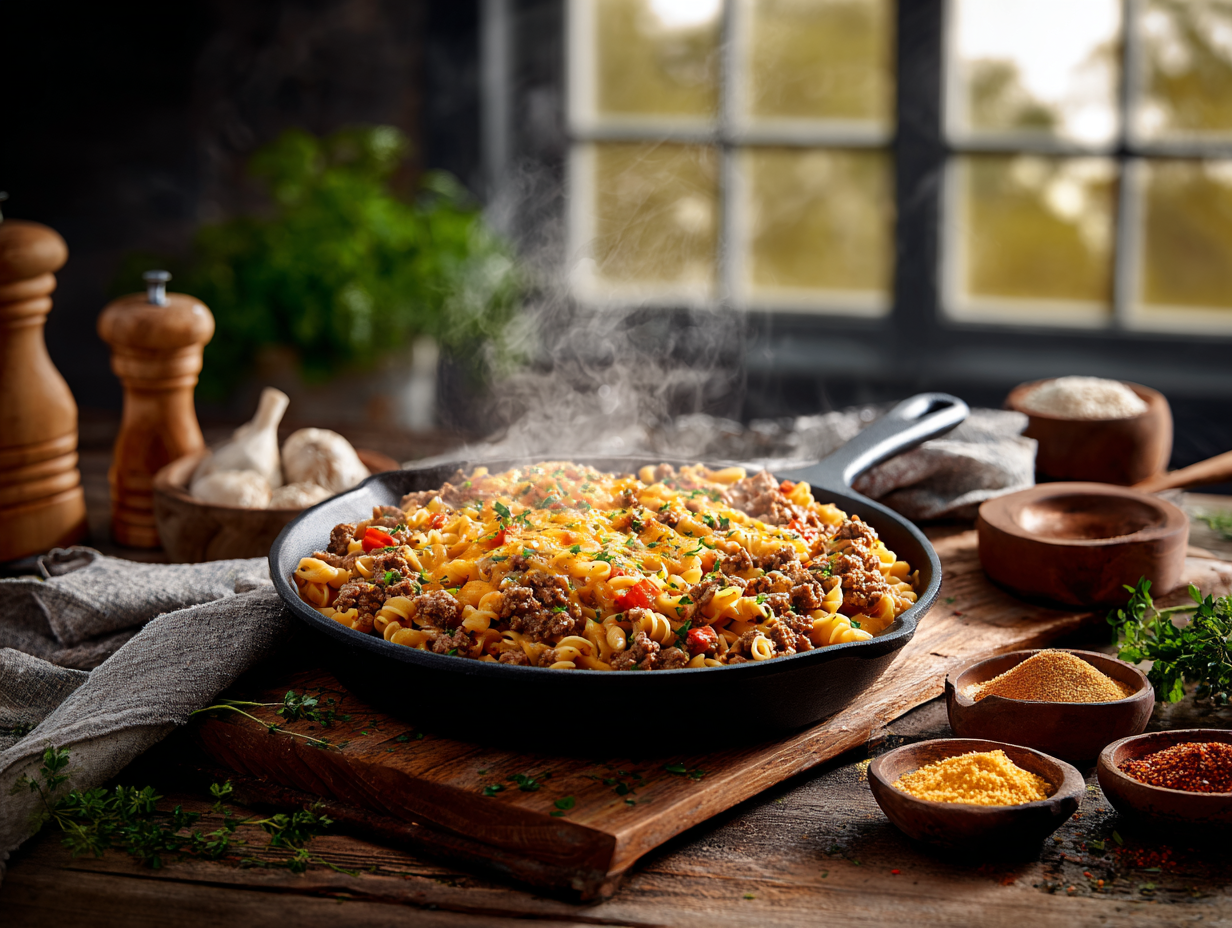
Hamburger Helper is one of those dishes that transports many Americans back to their childhood kitchens, where the clang of pots and pans was accompanied by the savory aroma of dinner simmering on the stove. Born in the 1970s and developed by General Mills under their Betty Crocker brand, Hamburger Helper quickly became a household staple. Affordable, simple, and satisfying, it offered busy families a shortcut to a hearty meal—most often just requiring a pound of ground beef, a box of the mix, and sometimes a splash of milk. The result was a creamy, filling pasta dish ready in under 30 minutes—perfect for feeding hungry children, working parents, and college students alike.
But as nostalgic as the boxed mix may be, today’s home cooks are increasingly seeking ways to replicate their favorite comfort foods with real, wholesome ingredients. That’s where this Homemade Hamburger Helper Seasoning recipe comes in—bringing the convenience and flavor of the original product while allowing you to skip the artificial additives and preservatives that often accompany pre-packaged meals.
The true inspiration behind this seasoning blend lies in reclaiming the comforting flavors of old-school Hamburger Helper, but with a fresher and more customizable approach. Whereas the boxed version contains unpronounceable additives and powdered cheese that may not shine in quality, homemade seasoning puts control back in your hands. You get the same rich umami, the mild spice, and the creamy, cheesy finish—but with ingredients you probably already have in your pantry.
Let’s start by breaking down what’s in the seasoning blend. The paprika (preferably smoked) lays the foundation with a mellow, earthy flavor and slight sweetness that invokes the familiar color and scent of the original. Onion powder and garlic powder are classic savory base notes in many seasoning blends, offering depth and roundness. Dried parsley gives it a hint of herby brightness, while the right balance of salt and black pepper is essential to enhance and tie all the flavors together.
What makes this homemade blend really shine is the inclusion of just a touch of sugar and cornstarch. The teaspoon of sugar, while subtle, does wonders to smooth out the acidic edges and adds a sense of body to the overall flavor. Cornstarch, on the other hand, is your ticket to the signature creamy texture that defines a good skillet pasta dish. Instead of relying on processed cheese powders or artificial thickeners, cornstarch naturally binds the broth, milk, and cheese together into a velvety sauce.
One of the joys of making homemade Hamburger Helper seasoning is the culinary flexibility it provides. Want a bolder flavor? Add a pinch of cayenne, more smoked paprika, or a touch of Worcestershire sauce. Craving a fresher profile? Swap in fresh parsley for dried, or toss in some diced tomatoes. Even the base can be adapted—use ground turkey for a leaner take, or try a meatless ground protein to make the dish vegetarian.
The instructions are delightfully simple and follow the classic one-skillet method that Hamburger Helper is known for. Brown the meat, add your seasoning, stir in the pasta with broth and milk, and let it simmer away until the noodles are tender and the sauce has thickened. A final handful of sharp cheddar cheese finishes the dish with gooey, melty magic that pulls it all together.
From a cost and time standpoint, this dish remains a go-to for weeknight dinners. Requiring just 30 minutes from start to finish and using affordable ingredients, it proves that cooking from scratch doesn’t have to be inconvenient. Plus, the homemade seasoning mix can easily be doubled or tripled and stored in an airtight jar, ready to go for next time. It’s perfect for meal planning or prepping grab-and-cook kits for busy weeks—and far more flavorful than anything you’ll tear out of a cardboard box.
In a broader sense, this recipe is a love letter to American pantry cuisine. It recognizes how boxed meals shaped our culinary traditions and family routines, while embracing the modern shift toward intentional, ingredient-conscious cooking. It’s this blend of nostalgia and nutrition that makes the homemade Hamburger Helper seasoning far more than just a spice mix—it’s a comforting, customizable base for a meal that feels both familiar and fulfilling.
So whether you’re recreating your family’s favorite childhood dinner or introducing nostalgic comfort food to a new generation, this seasoning blend brings the taste of Hamburger Helper full circle—from its 1970s roots to your modern-day table, one sizzling skillet at a time.
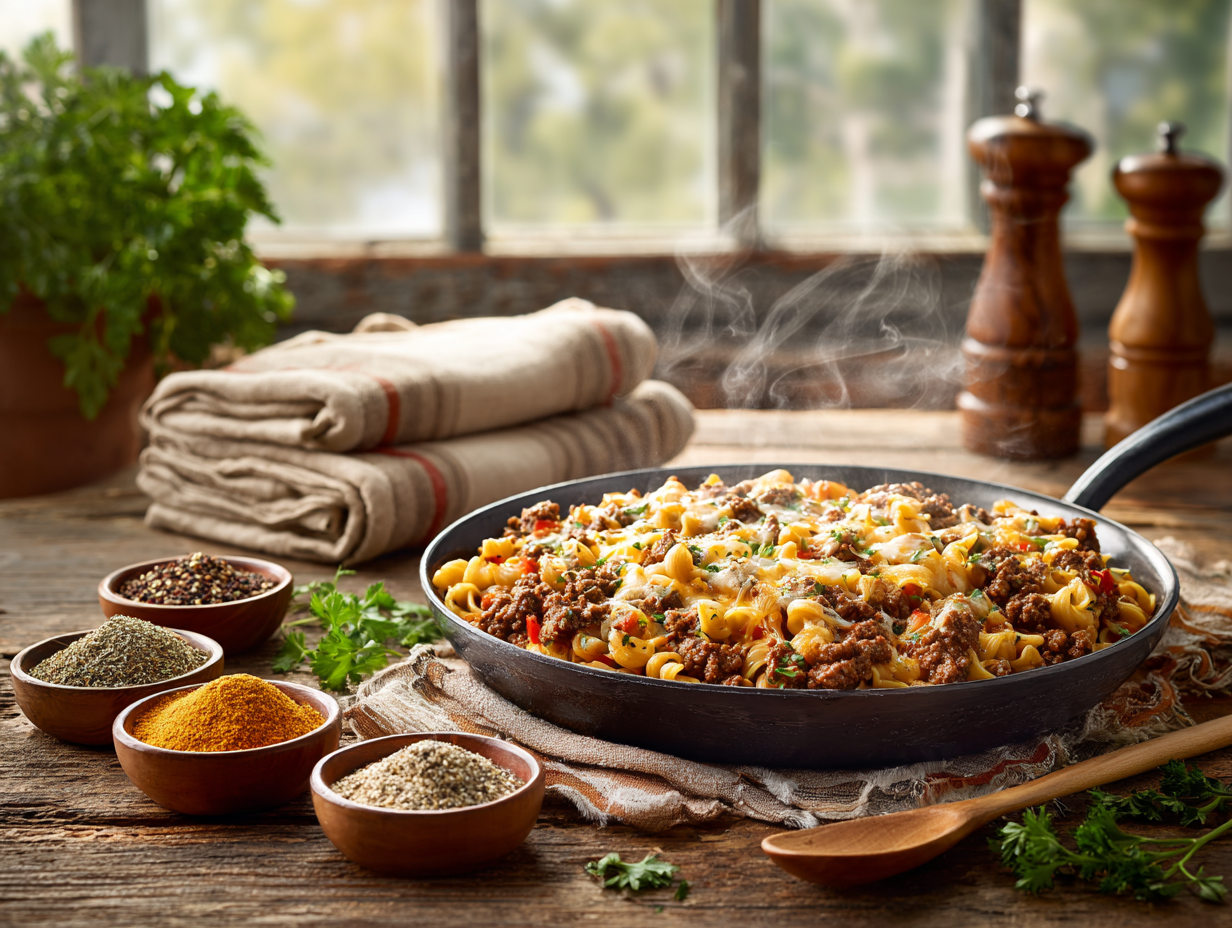
Homemade Hamburger Helper Seasoning

Ingredients
Seasoning Blend
- 1 tablespoon paprika preferably smoked for deeper flavor
- 2 teaspoons onion powder
- 1.5 teaspoons garlic powder
- 1 teaspoon dried parsley or use 2 teaspoons (4 g) fresh, finely chopped
- 1 teaspoon salt kosher salt preferred
- 0.5 teaspoon black pepper freshly ground
- 1 teaspoon sugar balances the acidity
- 1 tablespoon cornstarch helps thicken the final dish
Main Dish Base
- 1 pound ground beef 80/20 ground chuck recommended
- 8 ounces elbow macaroni or other small pasta shape
- 2.5 cups beef broth low-sodium preferred
- 1 cup milk whole milk for richness
- 1.5 cups cheddar cheese shredded, sharp for best flavor
Instructions
- In a small bowl, whisk together all seasoning blend ingredients: paprika, onion powder, garlic powder, parsley, salt, pepper, sugar, and cornstarch. Set aside.
- In a large skillet over medium-high heat (375°F / 190°C), brown the ground beef until fully cooked and no longer pink, about 6–8 minutes. Drain excess fat.
- Add the homemade seasoning mix to the skillet. Stir well to evenly coat the beef in the spices.
- Pour in the beef broth and milk. Stir in the dry pasta, ensuring it is fully submerged in the liquid.
- Bring the mixture to a gentle boil, reduce to low heat (low simmer), and cover. Cook for 12–14 minutes, stirring occasionally, until the pasta is tender and liquid has mostly absorbed.
- Turn off the heat and stir in shredded cheddar cheese until melted and creamy. Let sit 3–5 minutes before serving for maximum creaminess.
Notes
- Use smoked paprika for added depth or chili powder for a spicier twist.
- Sauté half a diced onion with the beef for added texture and sweetness.
- Use gluten-free pasta and cornstarch to easily make this gluten-friendly.
- Ground turkey or plant-based meat may be substituted for a leaner or vegetarian option.