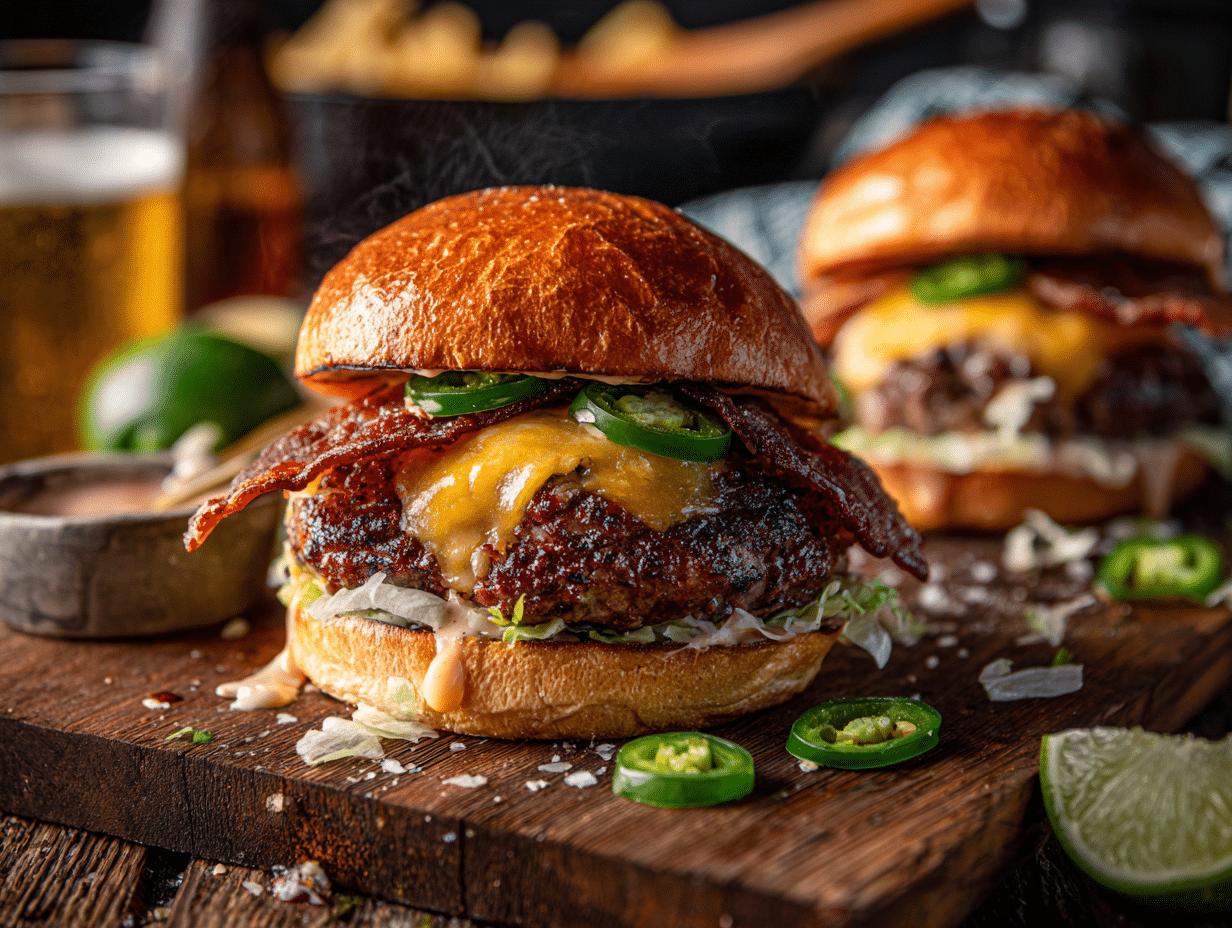
The FlameThrower GrillBurger: A Spicy American Icon Reimagined
The FlameThrower GrillBurger represents a pivotal moment in American fast-food history when chains began embracing bold, spicy flavors to capture the growing heat-seeking demographic. Originally introduced by Dairy Queen as part of their GrillBurger line, this fiery creation emerged during the early 2000s spicy food renaissance, when jalapeño poppers ruled appetizer menus and chipotle became America’s favorite “exotic” pepper.
The Rise of Fire in Fast Food
The FlameThrower wasn’t born in a vacuum. It arrived during a cultural shift when mainstream American palates were expanding beyond basic ketchup and mustard. The late 1990s and early 2000s saw an explosion of spicy menu items across fast-food chains—from Wendy’s Spicy Chicken Sandwich to Jack in the Box’s jalapeño-laden creations. Dairy Queen, traditionally known for soft-serve and comfort food, needed to compete in this increasingly bold landscape.
What set the FlameThrower apart was its layered approach to heat. Rather than relying on a single spicy element, it combined pepper jack cheese, jalapeño slices, and a signature spicy mayo sauce—creating what food scientists call “compound heat” that builds with each bite rather than shocking the palate upfront.
Deconstructing the FlameThrower Formula
The genius of the FlameThrower lies in its balance. The cooling elements—mayonnaise base, iceberg lettuce, and tomato—provide respite between waves of heat. The bacon adds a smoky, salty counterpoint that enhances the perception of spiciness without adding more capsaicin. This interplay of hot, cool, crispy, and creamy textures creates what food psychologists call “dynamic contrast,” keeping diners engaged bite after bite.
The sauce itself tells a story of American culinary fusion. Built on a mayo base (a nod to burger tradition), it incorporates chipotle peppers—smoke-dried jalapeños that bring both heat and deep, earthy flavor. This Mexican ingredient, virtually unknown in mainstream American cuisine before the 1990s, became shorthand for “sophisticated spicy” in the new millennium.
The Pepper Jack Revolution
The choice of pepper jack cheese was equally strategic. This American original, developed in the 1980s by adding jalapeño and habañero peppers to Monterey Jack, represented a departure from the standard American or cheddar typically found on burgers. Its creamy melt and visible pepper flecks signaled serious heat intentions while maintaining the familiar comfort of melted cheese.
Engineering the Perfect Spicy Burger
Creating a successful spicy burger requires careful temperature management—not just of the grill, but of the heat experience itself. The FlameThrower achieves this through what I call “heat mapping”: immediate impact from the jalapeños, sustained burn from the sauce, and background warmth from the pepper jack. The 80/20 beef blend provides enough fat to coat the mouth, slightly dampening the heat and allowing flavors to linger.
The brioche bun, while not part of the original fast-food version, represents an evolution in burger thinking. Its slight sweetness and enriched dough provide another heat buffer while adding textural interest. The butter-toasting technique creates a moisture barrier that prevents the intense sauce from creating structural failure—a common problem with heavily sauced burgers.
Cultural Impact and Legacy
The FlameThrower GrillBurger’s success helped normalize spicy options in traditionally “safe” restaurant chains. It proved that heat-forward items could appeal beyond young males (the traditional spicy food demographic) when properly balanced with familiar comfort elements. This democratization of spice paved the way for today’s ghost pepper burgers, Nashville hot chicken sandwiches, and sriracha-everything culture.
The Science of Scoville in Fast Food
From a culinary chemistry perspective, the FlameThrower operates in what capsaicin researchers call the “pleasant heat” zone—roughly 2,500-8,000 Scoville units when all components are combined. This level triggers endorphin release without causing genuine distress, creating a mildly addictive eating experience that encourages repeat visits.
The dairy proteins in both the mayo and cheese bind to capsaicin molecules, providing built-in relief. This is why the FlameThrower feels more approachable than dishes using the same peppers in isolation—it’s self-regulating by design.
Homemade Advantages
The home cook has several advantages over the fast-food original. Fresh jalapeños can be fire-roasted for added complexity. The chipotle sauce can be customized to personal heat tolerance. Most importantly, the beef quality and cooking method can be optimized for maximum flavor development through proper Maillard reaction—something difficult to achieve in high-volume fast-food settings.
This recipe represents not just a recreation but an elevation—taking the accessible appeal of the original and applying restaurant-quality techniques. It’s a testament to how fast-food innovation can inspire home cooking, creating a feedback loop that pushes both commercial and domestic cuisine forward.
The Future of Fiery Burgers
As American heat tolerance continues to rise—hot sauce production has increased 150% over the past decade—burgers like the FlameThrower serve as important markers in our culinary evolution. They bridge the gap between mainstream comfort food and adventurous eating, proving that with proper balance, any dish can be both familiar and exciting.
The FlameThrower GrillBurger isn’t just a spicy burger—it’s a snapshot of American food culture in transition, a successful experiment in controlled culinary chaos, and a blueprint for how traditional favorites can be reimagined for changing tastes. In recreating it at home, we’re not just making dinner; we’re participating in an ongoing dialogue about heat, flavor, and the endless possibilities of the American burger.
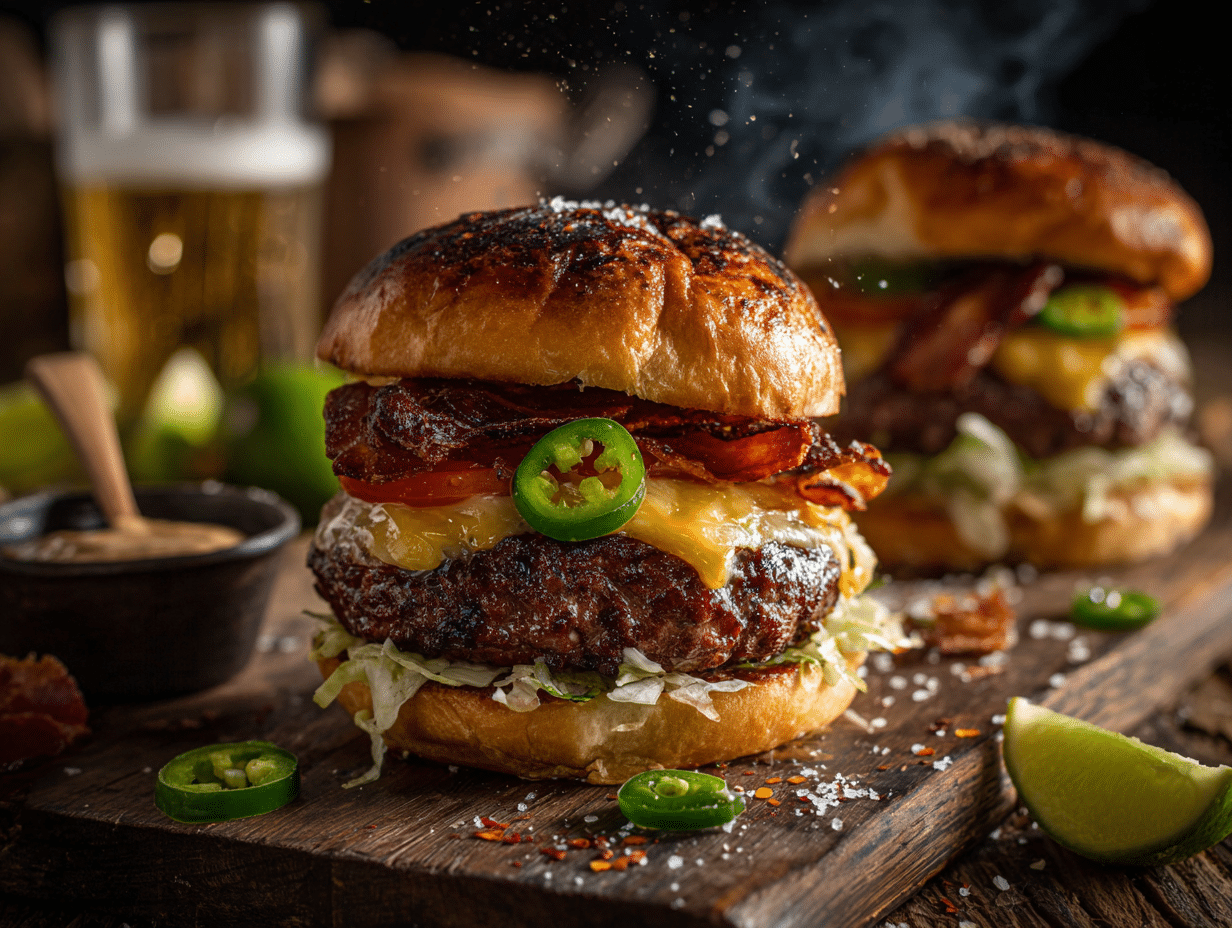
FlameThrower GrillBurger (DQ-Inspired, Homemade)

Ingredients
For the FlameThrower Sauce:
- ½ cup mayonnaise full-fat for best body
- 1 tbsp adobo sauce from canned chipotle peppers stirred smooth
- 1 tsp finely minced chipotle pepper optional for extra heat
- 1 tsp hot sauce choose your favorite, e.g., Cholula or Frank’s
- 1 tsp fresh lime juice brightens the sauce
- ½ tsp smoked paprika adds smoky backbone
- ¼ tsp cayenne pepper adjust to taste
- 1 clove garlic microplaned to a paste
- 1 pinch kosher salt to taste
For the Burger & Assembly:
- 4 slices thick-cut bacon smoked, for added depth
- 1 lb 80/20 ground beef divide into two 8 oz patties; keep cold
- 1 tsp kosher salt for seasoning beef, plus more to taste
- ½ tsp freshly ground black pepper
- ½ tsp Worcestershire sauce optional; brush lightly on patties
- 2 whole brioche burger buns split
- 1 tbsp unsalted butter softened, for toasting buns
- 4 slices pepper jack cheese 2 slices per burger
- 8–10 pieces fresh jalapeño rings seeds in for extra heat; about 1 jalapeño
- 4 slices ripe tomato about 1 medium tomato
- 1 cup shredded iceberg lettuce crisp and cold for contrast
- 1 tbsp neutral oil canola or avocado, for the pan or grill
Instructions
- Make the FlameThrower Sauce (10 minutes active + 15 minutes rest): In a small bowl, whisk together mayonnaise, adobo sauce, minced chipotle (if using), hot sauce, lime juice, smoked paprika, cayenne, and a pinch of kosher salt. Taste and adjust heat and salt. Cover and let the sauce rest 15 minutes in the fridge so the flavors marry.
- Cook the Bacon (about 8 minutes): Start bacon in a cold skillet, then set heat to medium. Cook, flipping as needed, until the fat renders and the bacon is deep mahogany and crisp, 7–9 minutes. Transfer to a paper towel–lined plate. Reserve 1 teaspoon bacon fat in the skillet for toasting buns later.
- Preheat Your Cooking Surface: Heat a grill or cast-iron skillet to medium-high—about 450°F (232°C). Lightly oil the grates/pan with neutral oil. If grilling, close the lid to stabilize the temperature.
- Prep the Fresh Toppings (5 minutes): Slice jalapeño into rings, slice tomato, and shred the iceberg. Keep lettuce chilled so it stays extra crisp.
- Form and Season the Patties (2–3 minutes): Divide beef into two 8 oz portions. Shape gently into 4 1/2–5 inch rounds with a slight center dimple (prevents doming). Season the first side with kosher salt and pepper right before cooking.
- Sear the Burgers (6–7 minutes total): Place patties seasoned-side down onto the hot grill/pan; season the top side. Cook 3–4 minutes until the edges darken and you see fat bead up. Flip; if using Worcestershire, brush lightly now. Top each patty with 2 slices pepper jack during the last 60–90 seconds to melt. For food safety, cook ground beef to an internal temperature of 160°F (71°C) measured at the center with an instant-read thermometer.
- Blister the Jalapeños (30–60 seconds): While the burgers finish or immediately after, toss jalapeño rings onto the hot pan or grill. Cook just until lightly charred and fragrant, 30–60 seconds, flipping once.
- Toast the Buns (30–60 seconds): Spread cut sides of brioche with softened butter and toast cut-side down in the reserved bacon fat or on the grill until golden and crisp at the edges.
- Assemble (2 minutes): Spread 1 to 1 1/2 tablespoons FlameThrower sauce on each bottom bun. Add a nest of shredded iceberg and 2 tomato slices. Set the cheesy patty on top, crown with 2 slices bacon and the blistered jalapeños. Swipe 1 tablespoon sauce on the top bun and close. Rest 1 minute for juices to settle.
- Serve: The burger should look glossy with melted cheese, vibrant green jalapeños, and a golden toasted bun. You should smell smoke, spice, and warm garlic-chile aroma from the sauce.
- Alternative Methods: If you don’t have a grill or cast-iron, use a heavy stainless skillet preheated thoroughly. For the sauce, a mortar and pestle will produce an even finer garlic-chile paste; a food processor works too, though it aerates the mayo slightly.
Notes
Chef’s Tips:
- Heat Control: For a gentler burn, omit the minced chipotle and reduce cayenne to a pinch. For maximum fire, add extra adobo and keep jalapeño seeds.
- Cheese Options: Pepper jack is classic; ghost pepper jack or habanero cheddar will take it up a notch.
- Beef Blend: 80/20 is ideal. For luxury, blend 50% chuck, 25% short rib, 25% brisket.
- Faster Caramelization: Pat patties dry and avoid crowding—steam is the enemy of browning.
- Dietary Swaps: Use turkey (cook to 165°F / 74°C), a plant-based patty, or portobello caps. Sub vegan mayo and plant-based cheese to go fully dairy-free.
- Bun Insurance: Lightly toasting creates a crunch barrier that keeps the bottom bun from going soggy.