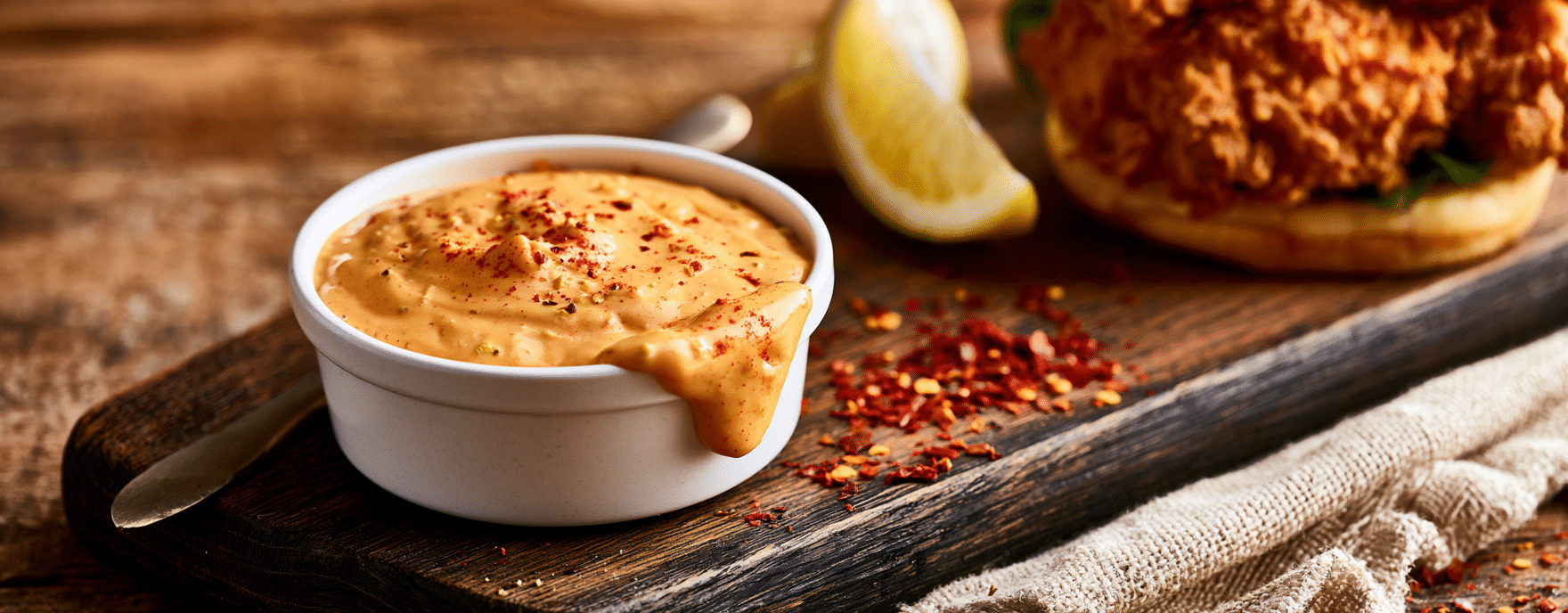
This is a quick mayo-based sauce with lemon, chilli, garlic, mustard, and a touch of olive oil — the kind of thing that makes a homemade crispy chicken burger taste like it came from somewhere better than your kitchen. It takes five minutes and uses one bowl. If you’re already making the chicken, there’s no good reason to skip it.
What makes this version work
The balance between fat and acid is what holds this sauce together. Mayonnaise gives you the creamy base, but without the lemon juice it tastes flat and heavy — the acid cuts through and keeps it bright. The olive oil might look redundant next to mayo, but it loosens the texture just enough so the sauce spreads without tearing a soft bun. Keep the chilli powder at exactly a half teaspoon if you want heat that’s noticeable but not the whole story; go over that and it starts to overpower the garlic and mustard, which are doing quiet but important work in the background.
Keeping and reheating
Spoon any leftover sauce into a small jar or airtight container and refrigerate it. It keeps well for up to five days. Give it a quick stir before using again — the olive oil can separate slightly as it sits, which is normal. This sauce doesn’t freeze well; mayo breaks when frozen and thawed, leaving you with a greasy, split mess. Make a fresh batch if you need more. Since the whole thing takes five minutes, that’s not a hardship.
What can go wrong
- Sauce tastes muddy or dull: This usually means the lemon juice was skipped or underdone. Add a small extra squeeze and stir — it wakes everything up fast.
- Texture is too thick to spread: Different mayo brands vary in thickness. If yours is stiff, the half teaspoon of olive oil in the recipe should handle it, but if it’s still too dense, add a few drops more oil and stir again rather than adding water, which dilutes the flavor.
- Heat level is too sharp: Chilli powder strength varies a lot by brand. If yours is particularly hot, pull it back to a quarter teaspoon — you can always stir in more, but you can’t take it out. Skip the temptation to add hot sauce as a substitute; it changes the texture and makes the sauce runny.
- Garlic flavor is harsh or raw-tasting: Garlic powder should dissolve smoothly into mayo, but if you accidentally used granulated garlic (coarser grind), it can sit in clumps and taste sharp. Use proper garlic powder and let the mixed sauce rest for two or three minutes before tasting — the flavor mellows noticeably.
- Sauce slides off the chicken during assembly: Spread it on the bun, not directly on the hot chicken. A hot surface melts mayo-based sauces and they run straight off the patty onto the wrapper.
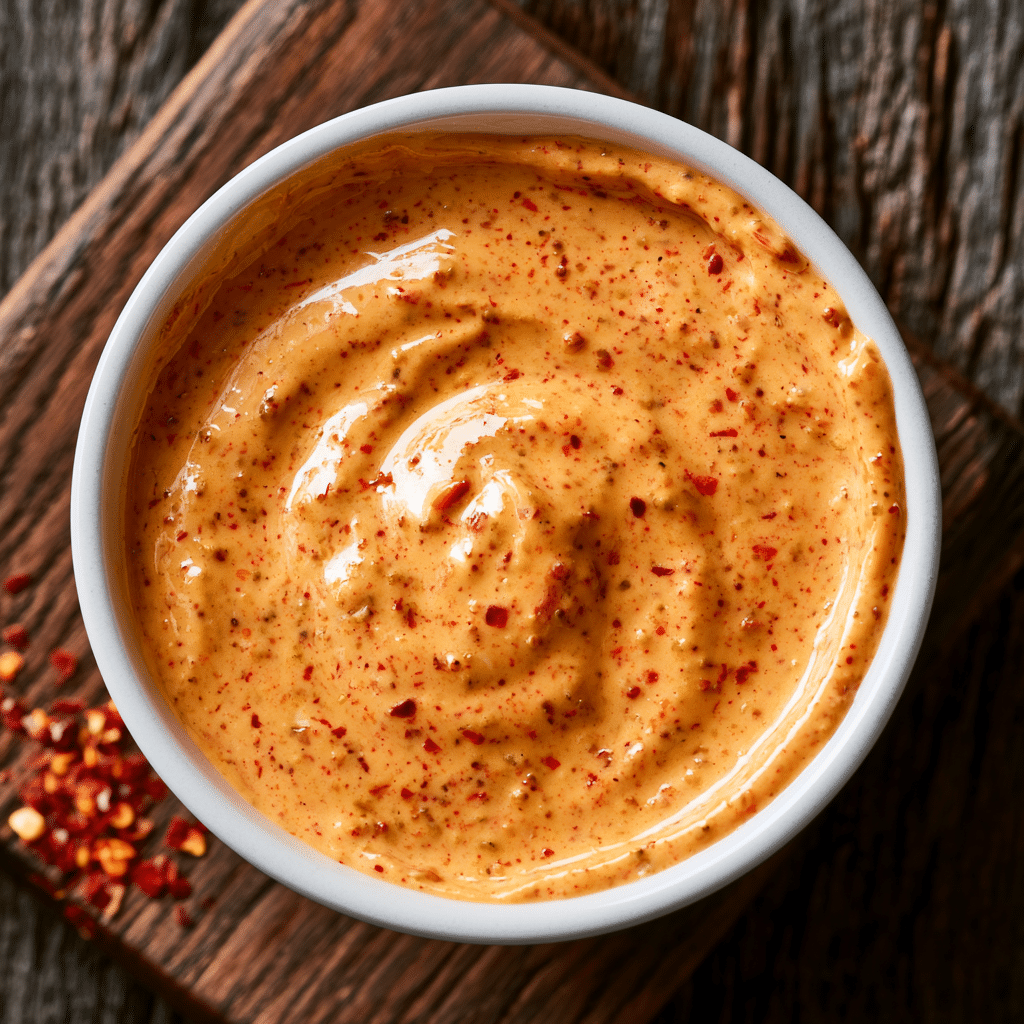
KFC Zinger Sauce Recipe (5 Minutes, One Bowl)

Equipment
- Small mixing bowl
- Teaspoon measuring spoons
- Tablespoon measuring spoon
- Small whisk or fork
- Airtight jar or container for storage
Ingredients
- 4 tablespoons mayonnaise 60g
- 1 teaspoon lemon juice 5ml
- ½ teaspoon red chilli powder
- ½ teaspoon garlic powder
- ½ teaspoon mustard paste English or Dijon
- ½ teaspoon olive oil 2.5ml
Instructions
- Add the mayonnaise to a small mixing bowl. Add the lemon juice, red chilli powder, garlic powder, mustard paste, and olive oil. Whisk or stir with a fork until the sauce is smooth, evenly coloured, and no streaks of chilli powder remain.4 tablespoons mayonnaise, 1 teaspoon lemon juice, 1/2 teaspoon red chilli powder, 1/2 teaspoon garlic powder, 1/2 teaspoon mustard paste, 1/2 teaspoon olive oil
- Taste and adjust the chilli powder or lemon juice to your preference. Use immediately or transfer to a small airtight container and refrigerate for at least 30 minutes to let the flavours develop. Spread generously on your homemade Zinger burger bun just before serving.1/2 teaspoon red chilli powder, 1 teaspoon lemon juice
Notes
Nutrition
Frequently asked questions
Can I use Dijon mustard instead of mustard paste?
Yes, Dijon works as a direct swap at the same quantity. It’s slightly sharper and more vinegary than plain mustard paste, so the sauce will have a little more bite — not a problem, just something to know going in.
Can I make this sauce ahead of time?
Yes, and it actually improves after 30 minutes in the fridge. The garlic powder and chilli have time to fully hydrate and the flavors knit together better than when it’s freshly mixed.
What if I only have fresh garlic?
Use it sparingly — about a quarter of a small clove, grated very fine on a microplane. Fresh garlic is significantly stronger and more pungent than garlic powder, and raw garlic in a cold sauce doesn’t mellow the way cooked garlic does.
Is this sauce spicy enough for a proper Zinger-style burger?
At the stated amounts it’s mild-to-medium — present but not aggressive. If you want it closer to the real Zinger heat level, increase the chilli powder to three-quarters of a teaspoon and taste before you go further.
Can I use light or low-fat mayonnaise?
You can, but the sauce will be noticeably thinner and slightly less rich. Low-fat mayo also has more water content, which can make the sauce weep a little as it sits — use full-fat if you have the choice.
More burger recipes to try
- Spicy Zinger Fried Chicken
- KFC Famous Chicken Sandwich
- KFC Double Crunch Perfected
- Crispy Chicken Royale Burger