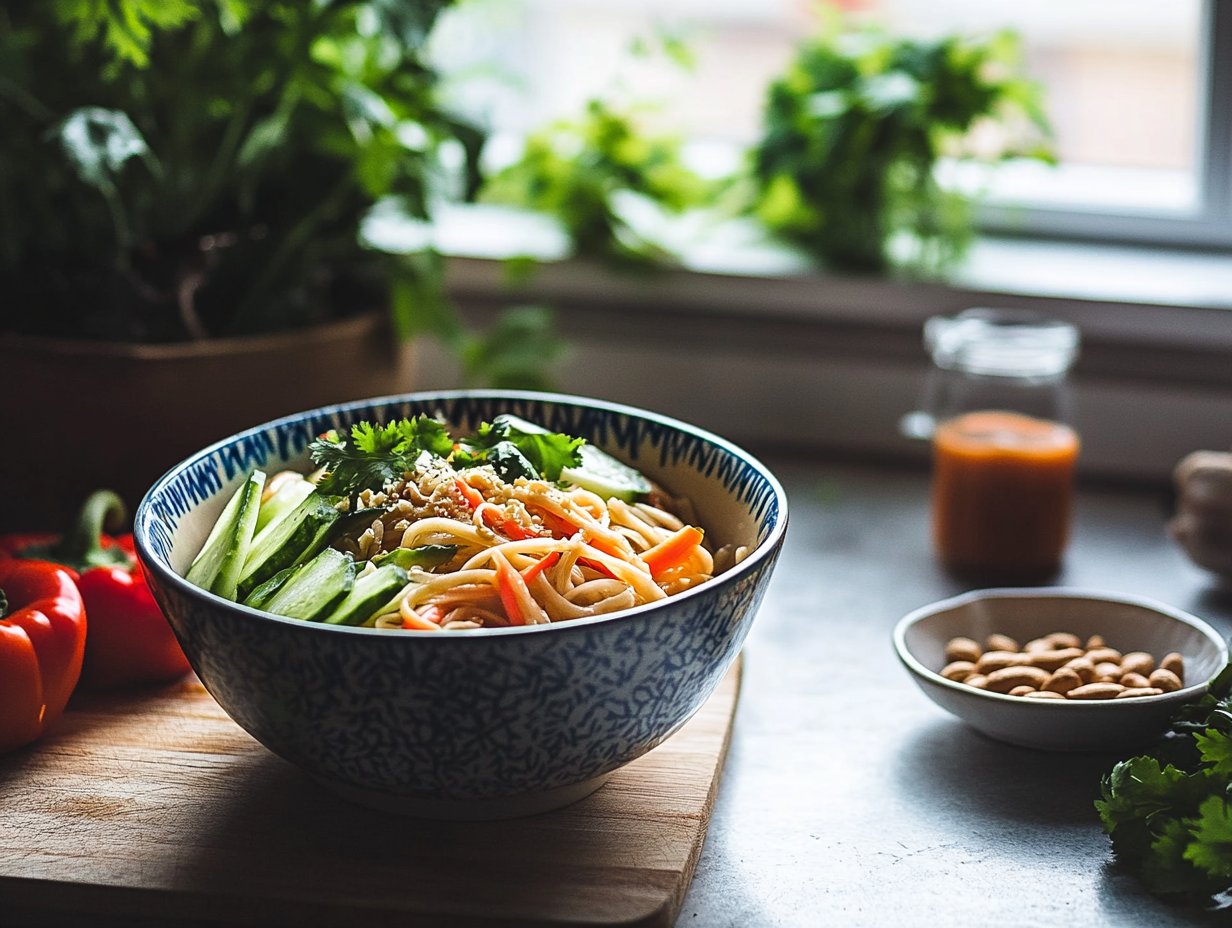
This is a cold rice noodle bowl tossed in a blended peanut sauce with raw vegetables — ready in 30 minutes and built almost entirely from pantry staples. It works on a weeknight because the sauce comes together in a food processor while the noodles cook, and there is no stove time beyond boiling water. The whole thing costs well under $10 to make for four people.
Why this recipe works
The sauce is blended, not whisked, and that matters. Processing whole roasted peanuts with the liquids — soy sauce, lime juice, warm water — breaks them down into a genuinely creamy base rather than a grainy one you get from stirring peanut butter out of a jar. The second thing that actually works here is rinsing the cooked noodles under cold water immediately after draining. It stops the cooking, firms the texture, and — critically — keeps the noodles from absorbing all the sauce before the bowl even hits the table. Skip that rinse and you end up with a clumped, starchy mass that soaks up the peanut sauce unevenly. Those two steps are the difference between a bowl that holds together and one that doesn’t.
Common problems and fixes
- Sauce is too thick to coat the noodles evenly: Add warm water one tablespoon at a time after blending. Cold water seizes the sauce; warm water keeps it loose and pourable. If you’ve already mixed everything and it’s clumping, a 10-second microwave on the bowl loosens it right up.
- No roasted peanuts in the pantry: Raw peanuts work — dry-toast them in a skillet over medium heat for 4 to 5 minutes, stirring constantly, until golden. Peanut butter (natural, no added sugar) is a faster swap; start with 3 tablespoons and skip the water until you see the consistency. Almond butter works too, though the flavor is milder.
- Rice noodles turn mushy: Most rice noodle packages say to boil, but soaking in just-boiled water off the heat for 6 to 8 minutes gives you better texture and more control. Check them early — they go from done to soft fast.
- Sauce tastes flat: It almost always needs more lime juice, not more sriracha. Add lime in small increments and taste after each one. A small pinch of salt can also sharpen the whole thing if you used unsalted peanuts and low-sodium soy sauce together.
- No fresh vegetables on hand: Frozen edamame (thawed) and shredded cabbage from a bag both hold up well and cost less than the fresh vegetables listed. Thinly sliced snap peas or even frozen corn work fine — use what’s in the fridge or freezer rather than making a special trip.

Savory Thai Peanut Sauce Noodle Bowl

Ingredients
For the Peanut Sauce
- 1 cup roasted peanuts preferably unsalted
- 2 tablespoons soy sauce low sodium recommended
- 2 tablespoons lime juice freshly squeezed
- 1 tablespoon honey or maple syrup for vegans
- 1 clove garlic finely minced
- 1 teaspoon fresh ginger grated
- 1 teaspoon sriracha or to taste
- 0.5 cup warm water adjust for desired consistency
For the Noodle Bowl
- 300 grams rice noodles
- 1 cup carrot julienned
- 1 cup red bell pepper sliced thinly
- 1 cup cucumber diced
- 1 cup bean sprouts
- 2 tablespoons cilantro chopped
Instructions
Preparing the Peanut Sauce:
- In a food processor, combine roasted peanuts, soy sauce, lime juice, honey, minced garlic, grated ginger, and sriracha.
- Blend until smooth. Gradually add warm water while blending to reach the desired consistency; creamy but pourable.
- Taste and adjust seasoning if needed, adding more lime juice or sriracha as desired.
Assembling the Noodle Bowl:
- Cook the rice noodles according to package instructions, then drain and rinse with cold water. Set aside.
- In a large mixing bowl, combine the julienned carrots, red bell pepper, and diced cucumber.
- Add the cooked noodles and bean sprouts to the mix, tossing gently to combine.
- Pour the peanut sauce over the noodle mixture, ensuring an even coating.
Notes
Nutrition
Common questions
Can I make the peanut sauce ahead of time?
Yes — the sauce keeps in a sealed jar in the refrigerator for up to five days. It will thicken as it sits, so stir in a tablespoon of warm water before using it to bring it back to a pourable consistency.
What can I use instead of rice noodles?
Any thin noodle works: spaghetti, linguine, soba, or even ramen noodles cooked and drained. Cook them according to their package directions, rinse with cold water the same way, and the sauce coats them just as well.
How do I make this more filling without buying extra ingredients?
A fried or soft-boiled egg on top adds protein and costs almost nothing. Canned chickpeas, drained and rinsed, also bulk it out without changing the flavor much.
Can I use regular soy sauce if I don’t have low-sodium?
You can, but cut the amount to 1 tablespoon and taste before adding more. Regular soy sauce is significantly saltier, and the sauce can easily become too salty to fix once it’s blended.
Try these next
- Hawaiian Teriyaki Burger
- Korean Fried Chicken Burger
- Sweet Chili Chicken Burger
- Korean Rice Bulgogi Burger