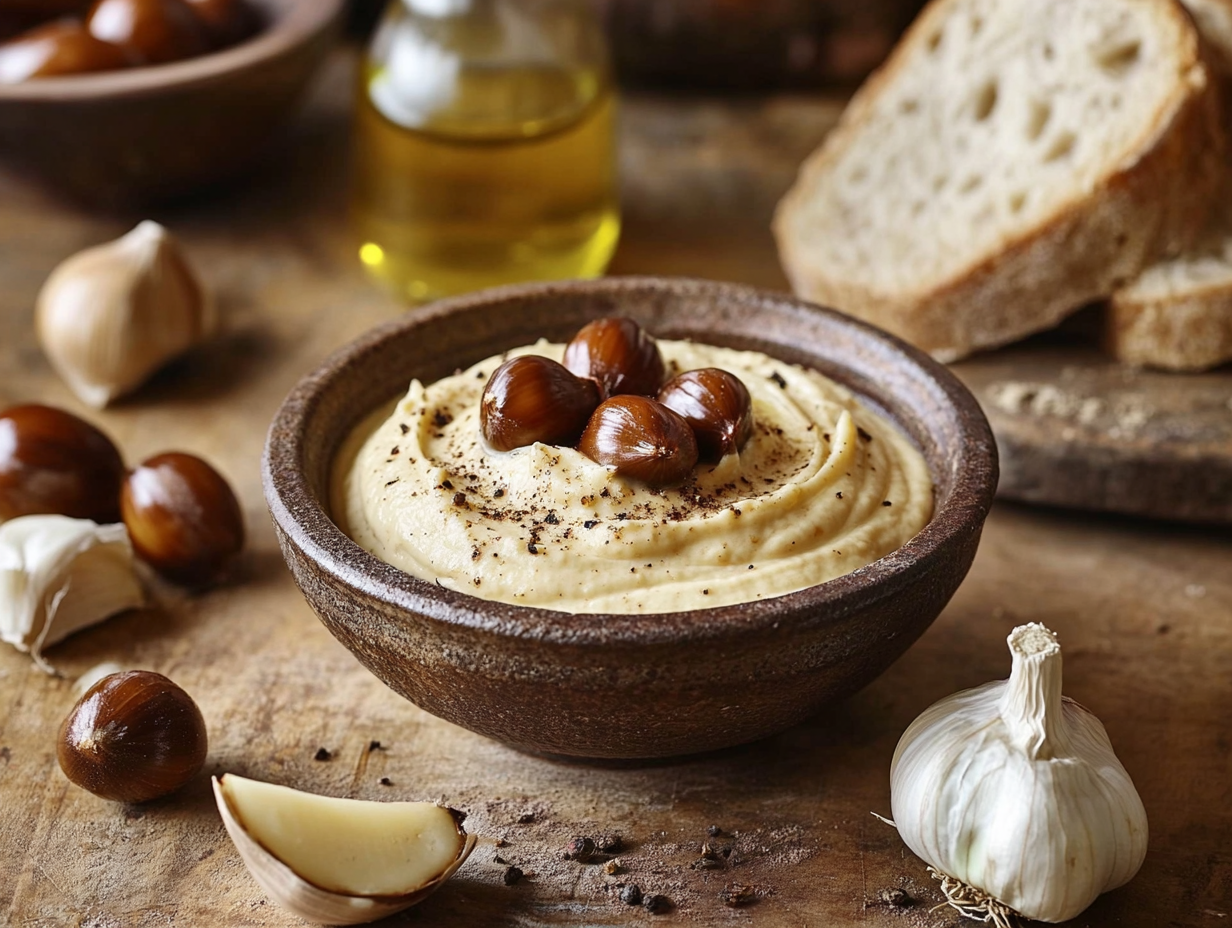
This is a roasted chestnut and garlic aioli — a thick, creamy spread made by blending oven-roasted chestnuts and a whole head of roasted garlic with lemon juice, Dijon mustard, and olive oil. It takes about an hour start to finish, and the payoff is a burger condiment that does a lot more work than plain mayo. Make a double batch and it covers a full cookout spread without any extra effort.
About the ingredients
- Chestnuts: Fresh chestnuts are seasonal (fall through early winter). Jarred or vacuum-packed cooked chestnuts are a solid year-round swap — skip the roasting step and go straight to blending. Avoid water-packed canned chestnuts; they turn the aioli watery.
- Garlic: You need a whole head for roasting, not pre-minced jarred garlic. The slow roast is what kills the sharpness — jarred garlic won’t give you the same result.
- Dijon mustard: Don’t swap this for yellow mustard. Dijon is doing emulsification work here, not just adding flavor. Whole-grain Dijon also works.
- Olive oil: A mild, light olive oil blends more smoothly than a robust extra-virgin. Save the fancy stuff for finishing.
What makes this version work
Two things matter most. First, peel the chestnuts while they’re still hot — once they cool, the inner papery skin bonds to the flesh and you’ll spend twice as long picking it off. Work in batches, keeping the unpeeled ones warm in the oven. Second, drizzle the olive oil in slowly while the processor is running. Dump it in all at once and the emulsion breaks; you end up with a greasy, separated mess instead of a smooth spread. Thirty seconds of patience here makes the difference between a condiment that holds together on a burger and one that slides off the bun.
Troubleshooting
- Aioli is too thick to spread: Add cold water one teaspoon at a time while the processor runs. A tablespoon or two is usually enough to loosen it without thinning the flavor.
- Aioli tastes bitter: The inner chestnut skin wasn’t fully removed. It’s worth being thorough — even a few pieces left in will pull the whole batch bitter. Taste a chestnut before blending.
- Emulsion broke and looks oily: Start a fresh base in the processor with a teaspoon of Dijon mustard, then slowly add the broken mixture back in. It usually comes back together.
- Garlic flavor is still sharp, not mellow: The garlic wasn’t roasted long enough. It should be golden brown and completely soft — a toothpick should slide through with zero resistance. Give it another 10 minutes if needed.
- Scaling up for a crowd and the processor is overloaded: Work in two batches rather than doubling into one bowl. Overfilling prevents proper emulsification and you’ll get an uneven texture.
Make-ahead notes
This aioli keeps well in the fridge for up to 5 days in a sealed container — the flavor actually improves after a day as the chestnut and garlic mellow together. Press a piece of plastic wrap directly onto the surface before sealing to prevent a skin from forming. It does not freeze well; the emulsion breaks on thawing and doesn’t recover cleanly. For a cookout, make it the night before and pull it from the fridge about 20 minutes before serving so it spreads easily at room temperature. Skip storing it in a metal bowl — the lemon juice reacts with some metals and picks up an off flavor.
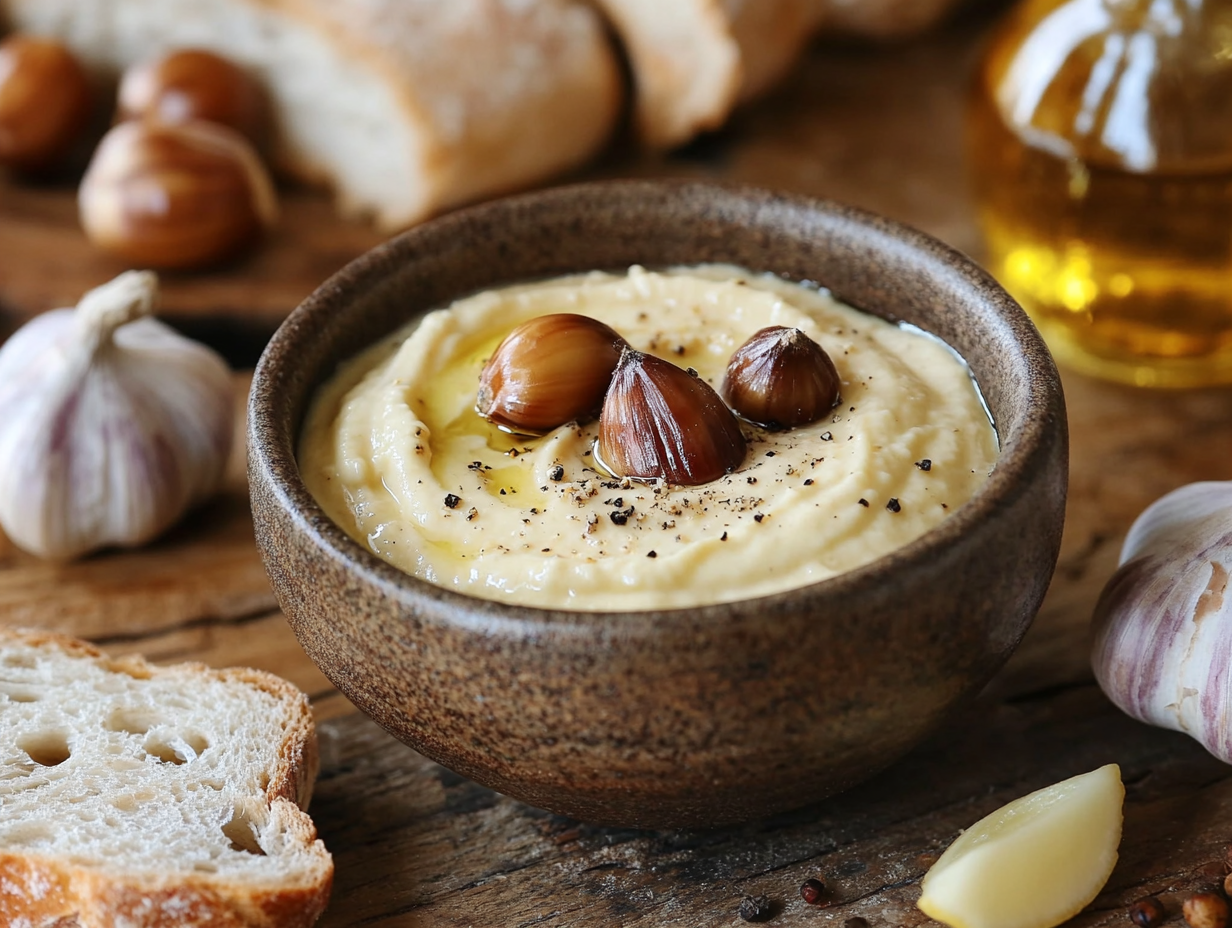
Roasted Chestnut and Garlic Aioli
Ingredients
- 1 cup chestnuts roasted and peeled
- 1 head garlic roasted
- 1 tbsp lemon juice freshly squeezed
- 1 tsp Dijon mustard
- 1 cup extra virgin olive oil
- 1 tsp salt to taste
- 1 tsp black pepper freshly ground
Instructions
- Preheat the oven to 400°F (200°C). Using a sharp knife, score an 'X' on each chestnut to allow steam to escape while roasting.
- Place the chestnuts on a baking sheet and roast for 20 minutes, shaking the pan halfway through. Once done, let them cool slightly before peeling.
- Slice off the top of the garlic head to expose the cloves. Drizzle with olive oil, wrap in foil, and roast at 400°F (200°C) for 30-35 minutes until soft and caramelized.
- In a food processor, combine the peeled chestnuts, roasted garlic (squeezed from the cloves), lemon juice, and Dijon mustard. Pulse until a paste forms.
- Slowly drizzle in the olive oil while blending to create a creamy, emulsified aioli. Season with salt and black pepper to taste.
- Let the aioli chill in the refrigerator for at least 30 minutes to allow flavors to meld before serving.
Notes
- For a smokier flavor, roast the chestnuts over an open flame instead of in the oven.
- If the mixture is too thick, add water or a little more lemon juice.
Nutrition
FAQ
Can I use pre-cooked jarred chestnuts instead of roasting fresh ones?
Yes, jarred or vacuum-packed cooked chestnuts work well here. Just drain them thoroughly and pat dry before blending — excess moisture is the main thing that can throw off the texture of the finished aioli.
How much aioli does one batch make, and is it easy to scale up?
One batch makes enough for about 6 servings as a burger spread. Scaling to a double or triple batch is straightforward — just process in separate batches rather than cramming everything into one processor run, which helps the emulsion stay stable.
Does this aioli contain raw egg?
No — this recipe uses Dijon mustard as the emulsifier instead of raw egg yolks, so there’s no food safety concern there. That also makes it easier to serve at outdoor cookouts where the spread might sit out for a bit.
More burger recipes to try
- Angus Bacon Guacamole Burger
- Halloumi King Burger Homage
- Mushroom Swiss King Copycat
- Veggie Sauce Burger Perfection