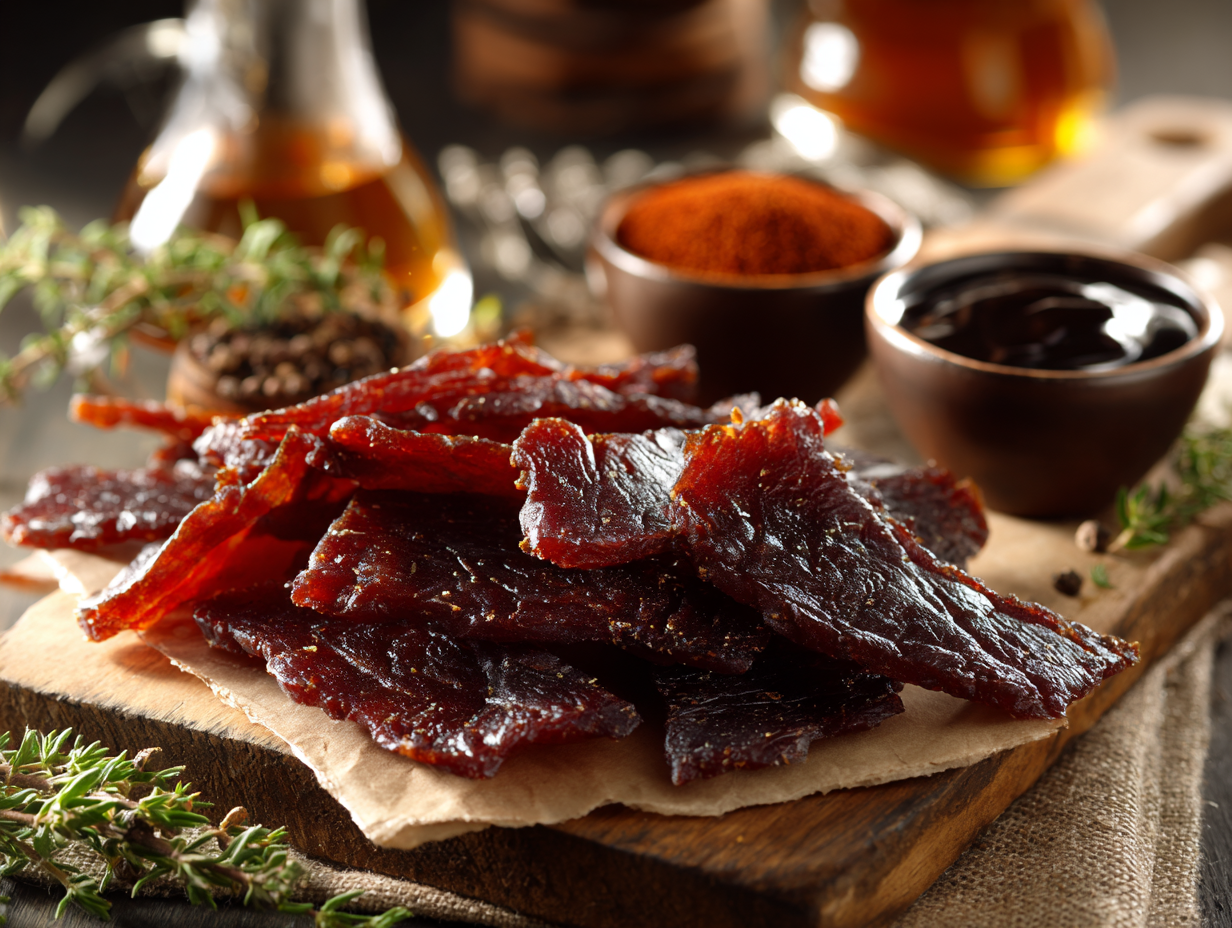
Hamburger jerky uses seasoned ground beef pressed thin and dried low and slow — no slicer, no whole muscle cuts, no specialty equipment beyond your oven. It takes a few hours of hands-off drying time, but the active work is under 20 minutes. The payoff is a smoky, chewy snack that travels well and costs a fraction of store-bought jerky.
Before you start
Two things determine whether this jerky turns out right. First, uniform thickness — if the sheet of meat is thicker in some spots than others, those spots will still be soft and underdone when the thin edges are finished. Take an extra minute with the rolling pin and check the corners. Second, temperature control matters more here than with whole-muscle jerky because ground beef must reach and hold 160°F (71°C) throughout to be safe. Use an oven thermometer if you’re not sure your oven runs true — many run 15–25°F off, and too low means the center of the meat never gets there.
Ingredient notes
- Liquid smoke: A small amount goes a long way. Start with what the recipe calls for and resist adding more — it turns bitter fast.
- Low-sodium soy sauce: Worth using over regular here. Full-sodium soy sauce combined with the natural salt in ground beef can make the finished jerky uncomfortably salty once moisture is driven out.
- Ground beef fat content: Lean (90/10 or leaner) is the right call. Fat doesn’t dry out — it goes rancid. Higher-fat beef shortens shelf life noticeably and can leave the jerky greasy.
- Smoked paprika: If you only have sweet paprika, it still works, but you’ll lose some of the smoky depth. Don’t substitute hot paprika unless you want the heat front and center.
Leftovers and meal prep
Fully dried jerky keeps at room temperature in an airtight container or zip-lock bag for up to two weeks — press out as much air as possible before sealing. In the fridge it’s good for a month. For longer storage, vacuum-sealed portions freeze well for up to three months; thaw at room temperature for 30 minutes before eating. If you’re batch-making for a road trip or a week of snacks, let the jerky cool completely on a wire rack before packing — sealing it while still warm traps steam and softens the texture you worked to build.
Troubleshooting
- Jerky is soft and bendable after the full drying time: Your oven temperature is likely running low, or the meat was rolled too thick. Return the strips to the oven for another 30–60 minutes and check again. Properly dried jerky should bend without snapping but not feel squishy.
- Strips crumble apart instead of tearing cleanly: The meat was probably rolled too thin, or the oven ran too hot and dried it out too fast. Aim for an even 1/4 inch — thinner than that and ground beef jerky loses its cohesion.
- Jerky tastes too salty: This usually means regular soy sauce was used instead of low-sodium, or the meat wasn’t lean enough and the salt concentrated as fat rendered out. Switch to low-sodium soy sauce on the next batch.
- Greasy or shiny surface on the finished jerky: Fat rendered out during drying — the beef wasn’t lean enough. Pat the strips with paper towels during the last hour of drying. Skip the egg in the mix — it makes the patty mushy and traps fat near the surface.
- Meat tears or sticks when peeling off the parchment before drying: It wasn’t chilled long enough after rolling. Give it at least 30 minutes in the fridge — the fat firms up and the sheet holds together cleanly when you transfer it.
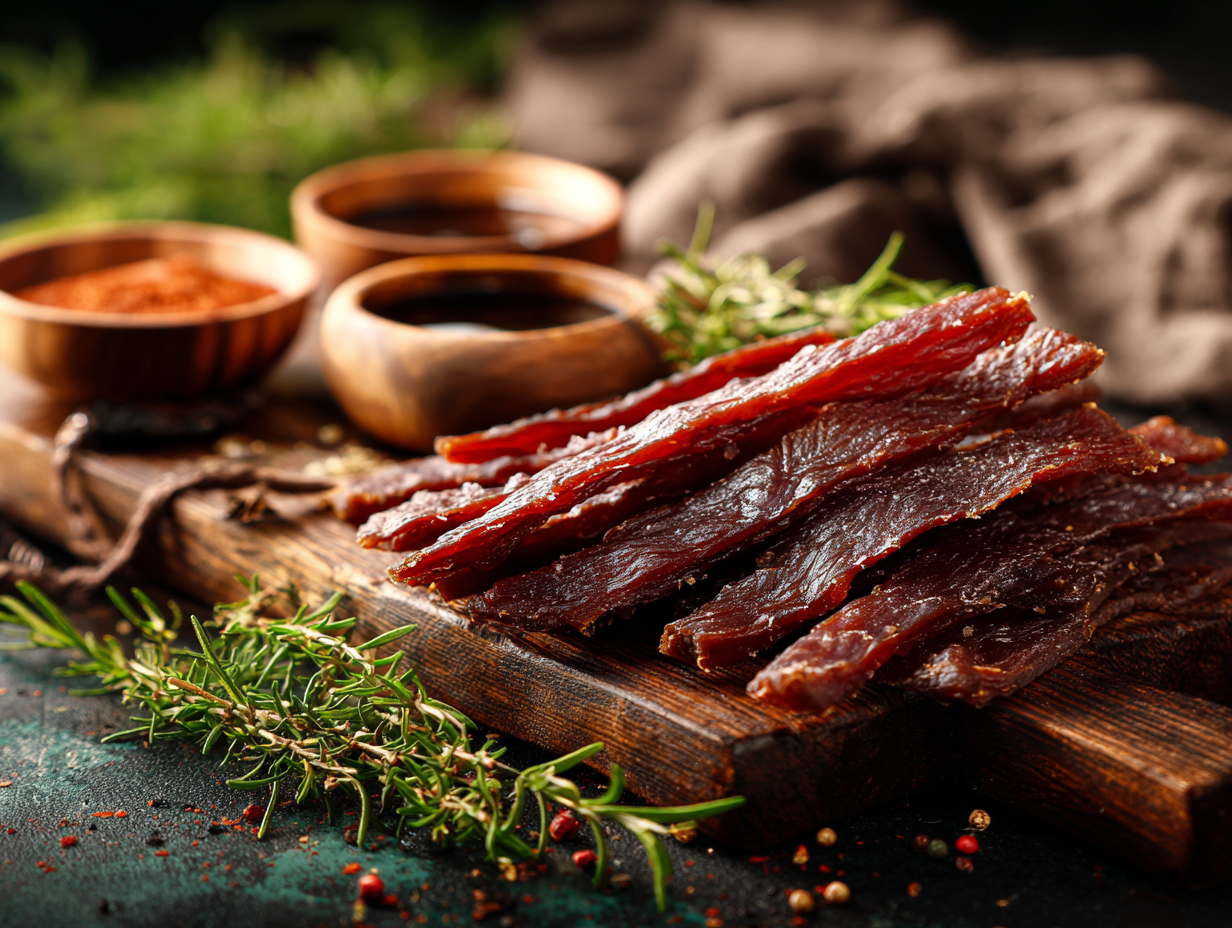
Homemade Hamburger Jerky

Ingredients
- 1 lb lean ground beef (90% lean or higher) grass-fed recommended for best flavor and texture
- ¼ cup soy sauce low sodium preferred
- 1 tbsp Worcestershire sauce
- 1 tsp liquid smoke hickory or mesquite flavor
- 1 tsp onion powder
- 1 tsp garlic powder
- ½ tsp black pepper freshly ground for best flavor
- ½ tsp smoked paprika
Instructions
- In a large mixing bowl, combine the ground beef with soy sauce, Worcestershire sauce, liquid smoke, onion powder, garlic powder, black pepper, and smoked paprika. Mix thoroughly using clean hands or a stand mixer until all ingredients are evenly incorporated. The mixture should become sticky and cohesive.
- Place the meat mixture between two sheets of parchment paper. Roll out the meat to a uniform thickness of about 1/4 inch. Uniform thickness ensures even drying.
- Transfer to a lined baking sheet and score into strips using a knife or pizza cutter. This makes tearing easier after it dries. Refrigerate for 1 hour to help firm it up before drying.
- Preheat your dehydrator to 160°F (71°C) or your oven to the lowest temperature setting. If using the oven, prop the door open slightly with a wooden spoon to allow moisture to escape.
- Carefully place the meat strips onto dehydrator trays or wire racks. Avoid overlapping pieces.
- Dry at 160°F (71°C) for 5–6 hours, flipping once halfway through. The jerky is done when firm, dry to the touch, and no longer pliable in the center.
- Let cool before storing in airtight containers or vacuum-sealed bags. Store in a cool, dry place or refrigerate for up to 2 weeks.
Notes
- For a spicier kick, add 1/2 teaspoon of red pepper flakes.
- Always use lean meat to avoid spoilage from fat.
- You can substitute turkey or venison if desired.
Nutrition
FAQ
Can I make this without a dehydrator?
Yes — a standard oven works fine. Set it to 160°F, prop the door open about an inch with a wooden spoon to let moisture escape, and place the strips on a wire rack over a baking sheet.
How do I know when the jerky is actually done?
It’s done when it bends without snapping and no moist or shiny spots remain in the center of a strip. If you’re unsure, use an instant-read thermometer — the internal temperature should have reached 160°F (71°C) at some point during drying.
Can I use ground turkey instead of ground beef?
Ground turkey works with the same method, but it must reach 165°F (74°C) internal temperature throughout — not 160°F. Turkey jerky also tends to be slightly drier in texture, so check it a bit earlier than the beef version.
Why does my jerky need to go in the fridge before drying?
Chilling firms the rolled meat so it holds its shape when you score it and peel it off the parchment. Skip this step and the strips tend to stretch, tear, and dry unevenly.
Can I double the batch and dry two sheets at once?
You can, but rotate the racks halfway through drying — the sheet closer to the oven’s heating element will dry faster. Expect to add 30–45 minutes to the total time when drying two sheets simultaneously.
More burger recipes to try
- Hawaiian Teriyaki Burger Recipe
- BBQ Cheeseburger Recipe
- Korean Rice Bulgogi Burger
- Copycat Rodeo King Burger