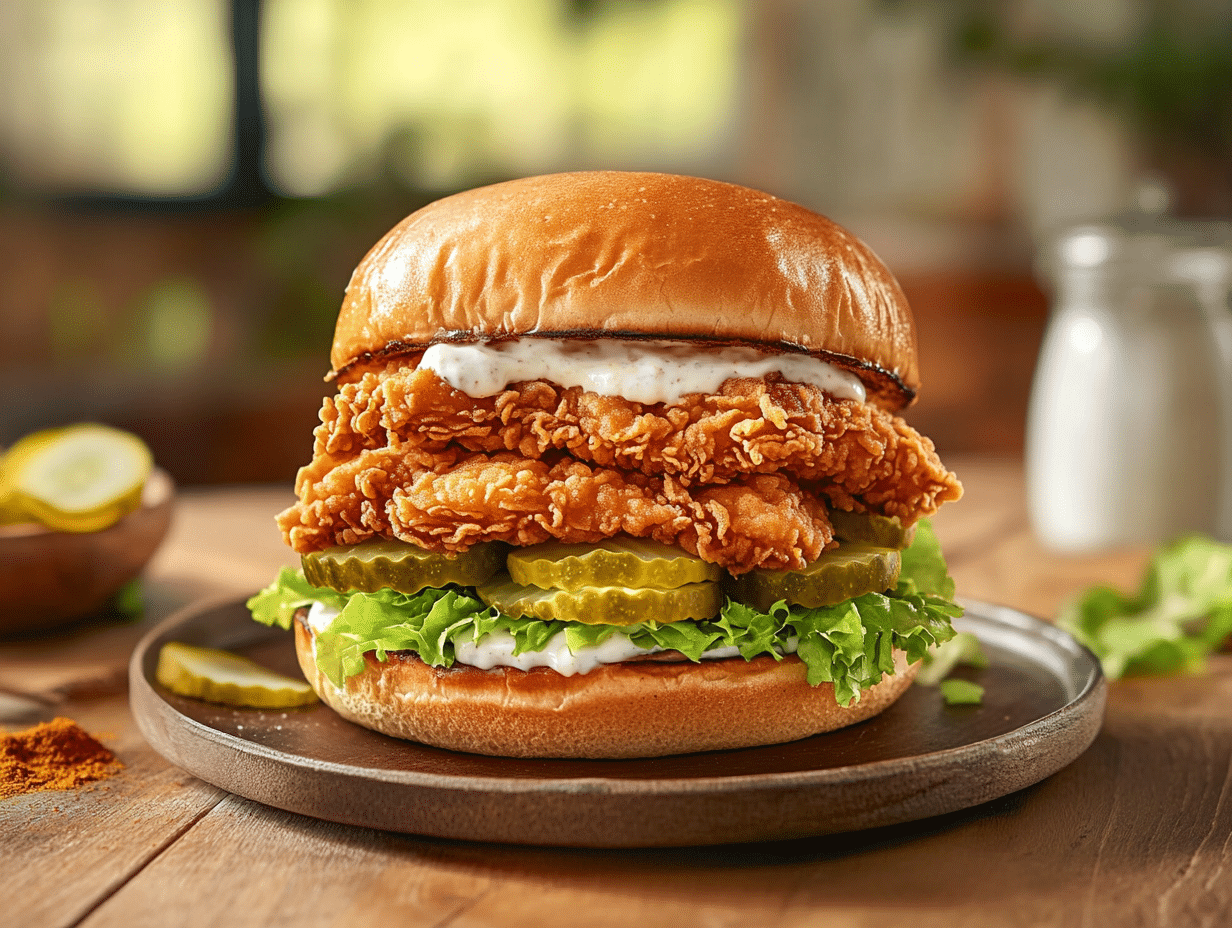
The KFC-Style Double Tender Burger is more than just a homage to fast food—it’s a deep-fried tribute to everything we love about bold Southern flavors, indulgent textures, and the kind of comfort food that clings to memory as much as it does to our fingers. Born from the desire to recreate one of KFC’s cult-favorite menu items—the Double Tender Sandwich—this recipe takes the fast food original and elevates it for the home cook who wants the satisfaction of building something finger-lickin’ good from scratch.
To understand the appeal of this sandwich, it’s worth exploring the roots of two beloved traditions it draws from: Southern fried chicken and the all-American burger. Fried chicken in the Southern United States is a culinary institution. Characterized by its signature crispy coating and juicy interior, it encapsulates generations of heritage, handed down from cast-iron skillet to family table. Burgers, in their own right, are icons of American fast food, tailored to be hand-held vehicles of happiness and convenience. The originality of combining two crispy fried chicken tenders between a bun turned heads when KFC first introduced the idea—not only was it a brilliant marketing play, it genuinely delivered on flavor and texture.
This version of the Double Tender Burger starts with chicken tenders, chosen for their convenience and even cooking, and takes them through a vibrant marination in buttermilk and kosher salt. The role of the buttermilk goes beyond mere flavor: it tenderizes the meat while helping the breading cling more effectively. Salt is critical here—not only for seasoning but for drawing out moisture slightly, which allows the meat to absorb more of the buttermilk’s tang.
When it comes to breading, this is where the magic intensifies. A spiced flour dredge with paprika (for color and smokiness), garlic, onion powder, and black pepper ensures the exterior of the tenders has not just crunch, but personality. The result—when fried at just the right temperature (350°F / 175°C)—is a crust that’s golden, crispy, and audibly satisfying. The beauty of making these tenders from scratch is that you can customize the flavor level, spice level, and even texture. Want it spicier? Add a pinch (or four) of cayenne. Craving something even crispier? Try a double dip: dredge in flour, back into a bit of buttermilk, then back into flour again to create those much-loved flaky ridges.
The burger doesn’t stop with just the chicken—its supporting cast is just as essential. The burger buns—soft, buttery, and slightly toasted—serve as the perfect canvas. Iceberg lettuce contributes cold crunch, while differently textured dill pickles add the needed zing and balance to the fatty fried chicken. And then there’s the mayo—rich and creamy, it smooths the layers together. For those looking for something more, this too can be personalized: opt for spicy mayo, mix in garlic, or lighten it with a little Greek yogurt as suggested. Each of these components pull their weight to deliver a multilayer experience in every bite—sanctifying the concept that there’s beauty in a well-constructed sandwich.
As a recipe designed for the home cook, there’s also a level of nostalgia to this burger. For anyone who grew up loving fast food but has since embraced home cooking, this burger represents a return to joy—but with more control. You know the oil is fresh. You chose the quality of your chicken. The bread is precisely as fluffy or crusty as you like it. You can swap iceberg for arugula, or add a slice of cheese because…why not? The process becomes personal, and in this way, mirrors the very evolution of food culture: from factory-perfect fast food to individualized cooking that allows us to play chef in our own kitchens.
This burger is casual enough to make during a weekend lunch, yet indulgent enough to serve guests at a game-day party or comfort-food night. It’s the kind of showstopper that doesn’t require a plate and fork, but guarantees conversation. It makes no apologies for embracing the greasy, the crunchy, and the overstuffed. If anything, it invites you to own that experience—and even revel in it.
For cooks looking to experiment further, this Double Tender Burger offers a strong foundation. You could introduce international touches—perhaps a Korean-inspired gochujang mayo, or a Middle Eastern spin using tahini and za’atar. You could turn it tropical with grilled pineapple and jerk spices, or lean full Southern comfort by adding a drizzle of hot honey. Once you’ve succeeded with the base recipe, the possibilities are endless—proving that great food starts with great technique and flavor, and from there, creativity can take over.
Ultimately, recreating the KFC-Style Double Tender Burger at home is as much an act of culinary empowerment as it is a flavorful indulgence. It reminds us that we don’t always have to settle for the drive-thru indulgence to experience food that’s exciting, comforting, and just the right amount of over-the-top. Instead, we can put on an apron, pour a glass of sweet tea (or a cold beer), and build something delicious with our own two hands. And if that something happens to include fried chicken nestled between toasted buns, all the better.
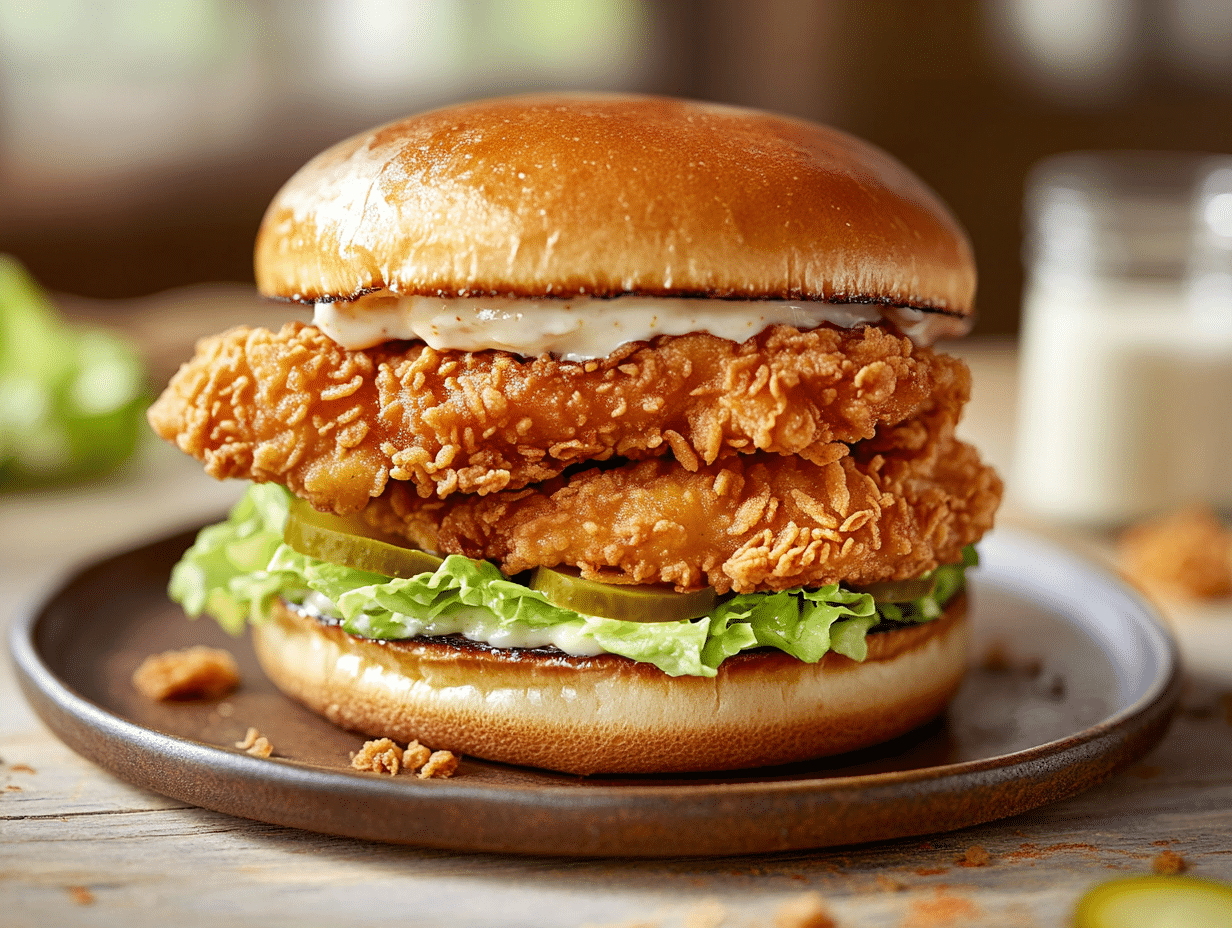
KFC-Style Double Tender Burger

Ingredients
For the Chicken Tenders:
- 1.5 pounds chicken tenders boneless, skinless
- 1 cup buttermilk for marinating
- 1 teaspoon kosher salt for marinating
- 2 cups all-purpose flour for dredging
- 1 tablespoon paprika preferably smoked
- 1 teaspoon garlic powder
- 1 teaspoon onion powder
- 1 teaspoon black pepper freshly cracked
- 1.5 cups vegetable oil for frying
For the Burger Assembly:
- 4 pieces burger buns soft and lightly buttered
- ½ cup mayonnaise preferably Kewpie or high-quality mayo
- 1 cup iceberg lettuce shredded
- 12 slices dill pickles thinly sliced, crunchy style
Instructions
- Marinate the Chicken: In a mixing bowl, combine chicken tenders with buttermilk and kosher salt. Cover and refrigerate for at least 30 minutes (ideally 2–4 hours) for maximum tenderness and flavor infusion.
- Prepare Dredge: In a large shallow dish, whisk together the flour, paprika, garlic powder, onion powder, and black pepper.
- Bread the Tenders: Remove tenders from marinade, letting excess buttermilk drip off. Dredge in seasoned flour, pressing firmly to ensure full coating. Set aside on a tray.
- Fry the Chicken: In a heavy-bottomed skillet, heat vegetable oil over medium-high heat (350°F / 175°C). Fry the tenders in batches for 3–4 minutes per side, until golden and crispy. Drain on a wire rack over paper towels.
- Toast the Buns: Lightly butter the insides of each bun and toast on a skillet or grill pan until golden-brown edges appear.
- Assemble the Burger: Spread mayo on both bun halves. On the bottom bun, layer shredded lettuce, 3 pickle slices, two chicken tenders, followed by the top bun. Repeat for all servings.
Notes
- Double dipping the tenders in seasoned flour and buttermilk can add an extra craggy, crispy texture.
- Make it spicy by adding cayenne pepper to the dredge.
- Substitute Greek yogurt for mayo to lighten the sauce.