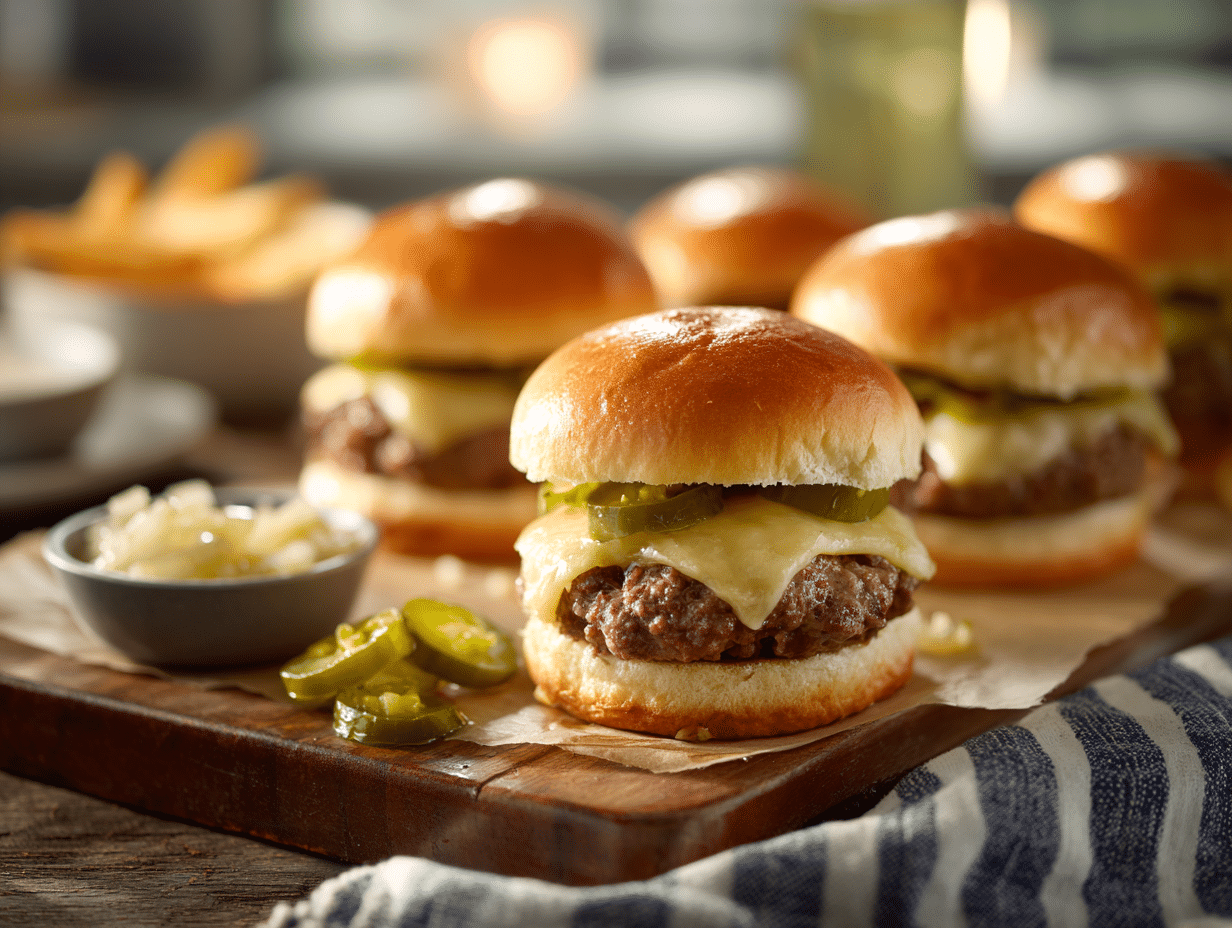
The White Castle Jalapeño Cheese Slider: A Culinary Icon with a Spicy Twist
The Birth of an American Legend
In 1921, in Wichita, Kansas, Walter Anderson and Billy Ingram revolutionized American dining with the opening of the first White Castle restaurant. Their vision was simple yet radical: serve affordable, consistent hamburgers in a clean, white-tiled environment that evoked purity and trustworthiness. At a time when ground beef was viewed with suspicion, White Castle’s five-cent sliders became symbols of modern American efficiency and innovation.
The Science of the Slider
What made White Castle’s approach revolutionary wasn’t just the price or cleanliness—it was the cooking method. The signature technique involves placing ultra-thin beef patties directly onto a bed of steaming onions, with the buns positioned on top to capture the aromatic vapors. This method, perfected over decades, creates three distinct phenomena:
- Steam-cooking: The moisture from the onions and added water creates a humid cooking environment that keeps the thin patties juicy while fully cooking them
- Flavor infusion: The beef absorbs the sweet essence of the onions while the buns capture both beef and onion aromatics
- Textural perfection: The steam softens the buns to an almost custard-like consistency while maintaining structural integrity
The iconic five holes punched into each patty serve a practical purpose: they allow steam to penetrate through the meat, ensuring even cooking and preventing curling while creating more surface area for flavor development.
Evolution of the Jalapeño Cheese Variant
While the original slider remains unchanged since 1921, White Castle has periodically introduced variations to appeal to evolving tastes. The jalapeño cheese slider emerged as part of the chain’s efforts to embrace America’s growing love affair with spicy foods in the late 20th century. This version maintains the classic cooking method while adding:
- Pepper jack or jalapeño-infused American cheese for creamy heat
- Fresh or pickled jalapeño rings for textural contrast and bright acidity
- The same beloved steamed-onion base that defines the original
Cultural Impact and Crave Culture
White Castle didn’t just create a burger—it created a culture. The term “slider” itself originated from the ease with which these small burgers “slide” down one’s throat. The chain pioneered:
- Fast food standardization: Every slider identical, every experience predictable
- The “Crave”: White Castle’s unique flavor profile creates an almost addictive quality that spawned the marketing phrase “What You Crave”
- Late-night culture: Becoming the go-to destination for post-party sustenance
- Pop culture status: Featured in films like “Harold & Kumar Go to White Castle,” cementing its place in American mythology
The Midwest Connection
White Castle’s roots run deep in Midwestern soil. The chain’s expansion followed a deliberate pattern through America’s heartland—Ohio, Michigan, Illinois, Indiana—before eventually reaching the coasts. This Midwestern heritage influenced everything from the unpretentious approach to the focus on value and consistency. The jalapeño variant represents a bridge between traditional Midwestern comfort food and the increasing influence of Southwestern flavors in American cuisine.
Technical Mastery in Simplicity
Creating an authentic White Castle-style slider at home requires understanding the delicate balance of:
- Temperature control: Too hot and the exterior burns before the interior cooks; too cool and you lose the characteristic crust
- Moisture management: The precise amount of water creates steam without making the patties soggy
- Timing precision: Each stage—onion cooking, patty placement, cheese melting—requires exact timing
- Ingredient quality: 80/20 ground beef provides necessary fat content; finely minced onions ensure even cooking
The Modern Revival
In recent years, the slider has experienced a renaissance. Upscale restaurants serve gourmet versions, food trucks offer artisanal interpretations, and home cooks perfect copycat recipes. The jalapeño cheese variant particularly resonates with contemporary palates that crave bold flavors while maintaining nostalgic connections to classic American comfort food.
Beyond the Recipe
This copycat recipe represents more than mere imitation—it’s a preservation of culinary technique and cultural memory. By understanding the history and science behind White Castle’s method, home cooks can recreate not just the taste but the experience: the anticipation as steam rises from the griddle, the soft yield of the bun, the perfect marriage of beef, onion, and cheese punctuated by jalapeño’s gentle heat.
The White Castle jalapeño cheese slider stands as testament to American ingenuity: taking a Depression-era innovation and continuously adapting it for new generations while never abandoning the core principles that made it legendary. In every bite, there’s a century of history—proof that sometimes the simplest ideas, perfectly executed, become timeless.
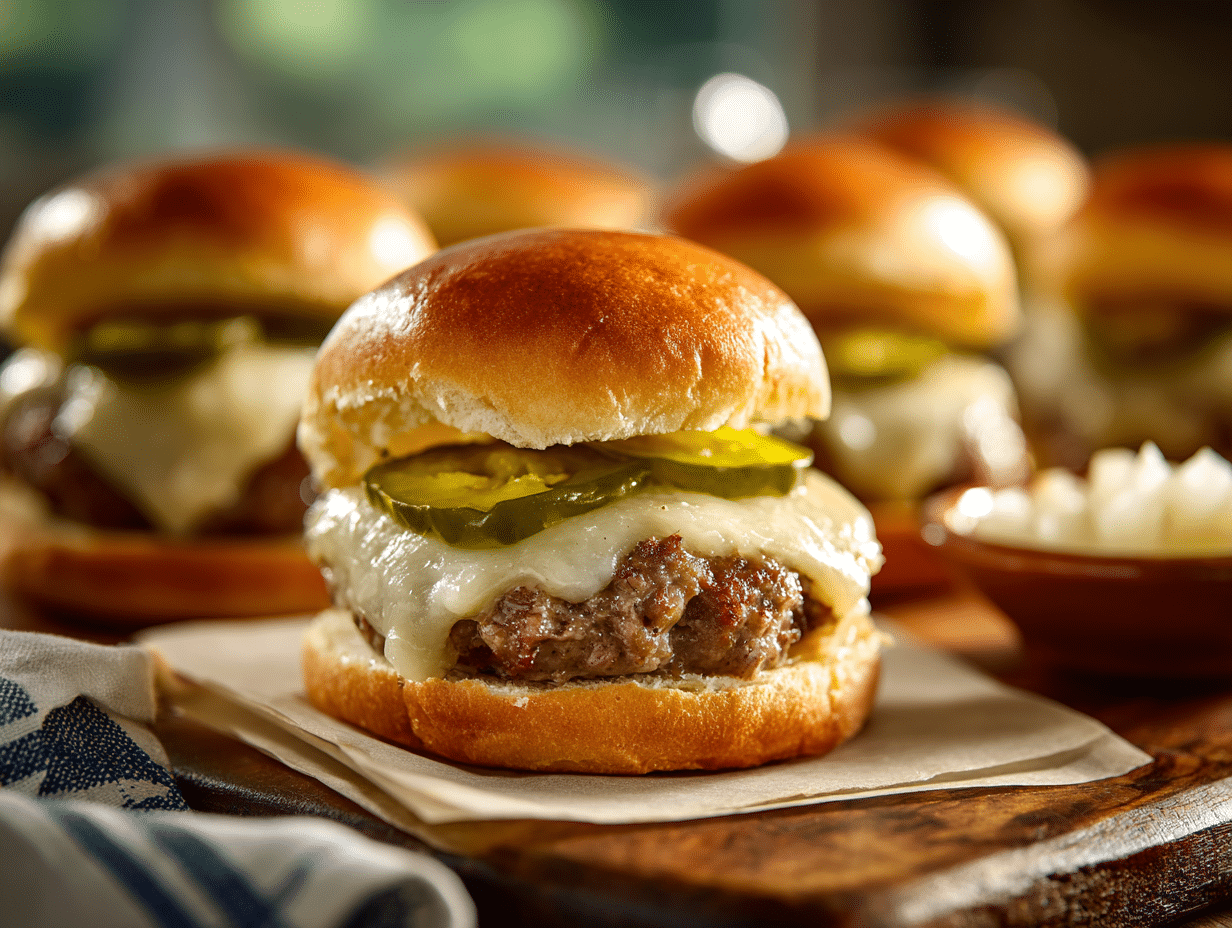
White Castle Jalapeño Cheese Slider (Copycat)

Ingredients
- 1 lb ground beef, 80/20 cold; higher fat keeps patties juicy even when thin
- 1 tsp kosher salt divided; most for the beef, a pinch for onions
- ½ tsp freshly ground black pepper
- ¼ tsp onion powder optional, for a touch of diner-style savoriness
- 1 ½ cups white onion, very finely minced about 1 large; mince to rice-size pieces
- ¾ cup water for steaming onions and buns
- 1 tsp neutral oil canola or vegetable; to lightly film the griddle
- 8 whole soft slider buns plain, not toasted; keep attached as a sheet if possible
- 16 chips dill pickle slices 2 per slider
- 4 slices jalapeño American or pepper jack cheese cut each slice in half to make 8 half-slices
- 1 medium fresh jalapeño, thinly sliced into rings or use 1/3 cup pickled jalapeño rings
- 1 pinch kosher salt for the onions while steaming
- 1 tbsp unsalted butter, melted optional, for brushing buns after steaming
Instructions
- Form the Classic Thin Patties (with holes): On a parchment-lined sheet pan, gently press the cold ground beef into an even rectangle about 1/8" to 1/4" thick (roughly 10" x 10"). Season evenly with 3/4 tsp kosher salt, black pepper, and onion powder (if using). Cut into 8 equal squares (about 2 1/2" each). Using a clean straw, chopstick, or the end of a wooden spoon, punch 5 small holes in each patty (like the five dots on dice). Chill in the freezer for 10 minutes to firm; this preserves the thin shape.
- Mince the Onions Finely: Peel and finely mince the white onion to rice-size bits. You can pulse in a food processor using short bursts (scrape down often) to avoid turning it into a puree. You should have about 1 1/2 cups. The finer the cut, the sweeter and more uniform the steam-cook.
- Preheat the Griddle or Large Skillet: Heat a cast-iron griddle or wide skillet over medium-high until a drop of water skitters and evaporates on contact, about 400°F (205°C). Lightly film the surface with neutral oil.
- Steam-Sauté the Onions: Spread the minced onions into 8 small mounds or a single even bed across the pan. Sprinkle with a pinch of kosher salt. Pour the water around the onions to create steam and reduce heat to medium (about 350°F / 175°C). Cook 2–3 minutes, until the onions turn translucent, tender, and sweetly aromatic.
- Cook the Patties on the Onions: Place the chilled patties, holes facing up, directly on the onions. Season the tops with the remaining 1/4 tsp kosher salt. Immediately position the bun bottoms and tops cut-side down over each patty so they can steam. Add two pickle chips to each bun bottom so they warm. Cook 2–3 minutes, until the beef turns gray at the edges and juices bubble up through the holes. For doneness, beef should be fully cooked (160°F / 71°C) if using an instant-read thermometer.
- Add Jalapeño and Cheese: Place 2 jalapeño rings on each patty, then top with one half-slice of jalapeño American or pepper jack cheese. Cover again with the buns and cook 30–45 seconds more, just until the cheese melts and drapes the edges.
- Build and Serve: Using a thin spatula, scoop each patty with its bed of onions and set onto the warmed bun bottoms. Cap with bun tops. If desired, brush the tops lightly with melted butter for a glossy finish. Serve immediately while steamy and soft.
- Alternate Methods (if needed): No hole punch? Use a skewer to make quick perforations. No griddle? Cook in two large skillets to avoid crowding. If you don’t have time to pre-chill patties, press them very thin between parchment and transfer gently with a bench scraper.
Notes
Chef’s Tips:
- Onion Size Matters: Mince onions very fine so they soften quickly and perfume the patties. Larger chunks can scorch before the meat steams.
- Classic Moisture: That splash of water isn’t just for steam—it mimics the original’s ultra-moist cooking environment for ultra-soft buns.
- Meat Temperature: Keep beef cold so it stays thin and cooks evenly without tightening up.
- Cheese Choices: Jalapeño American gives nostalgic melt; pepper jack adds peppery sharpness. For extra heat, add a dash of hot sauce beneath the cheese.
- Dietary Swaps: Use 1 lb plant-based ground and vegan American-style slices; steam the same way and brush buns with olive oil instead of butter.
- Faster Caramelization: Stir a pinch of baking soda into the onions to raise pH and promote browning if you prefer deeper color; use only a pinch to avoid off flavors.