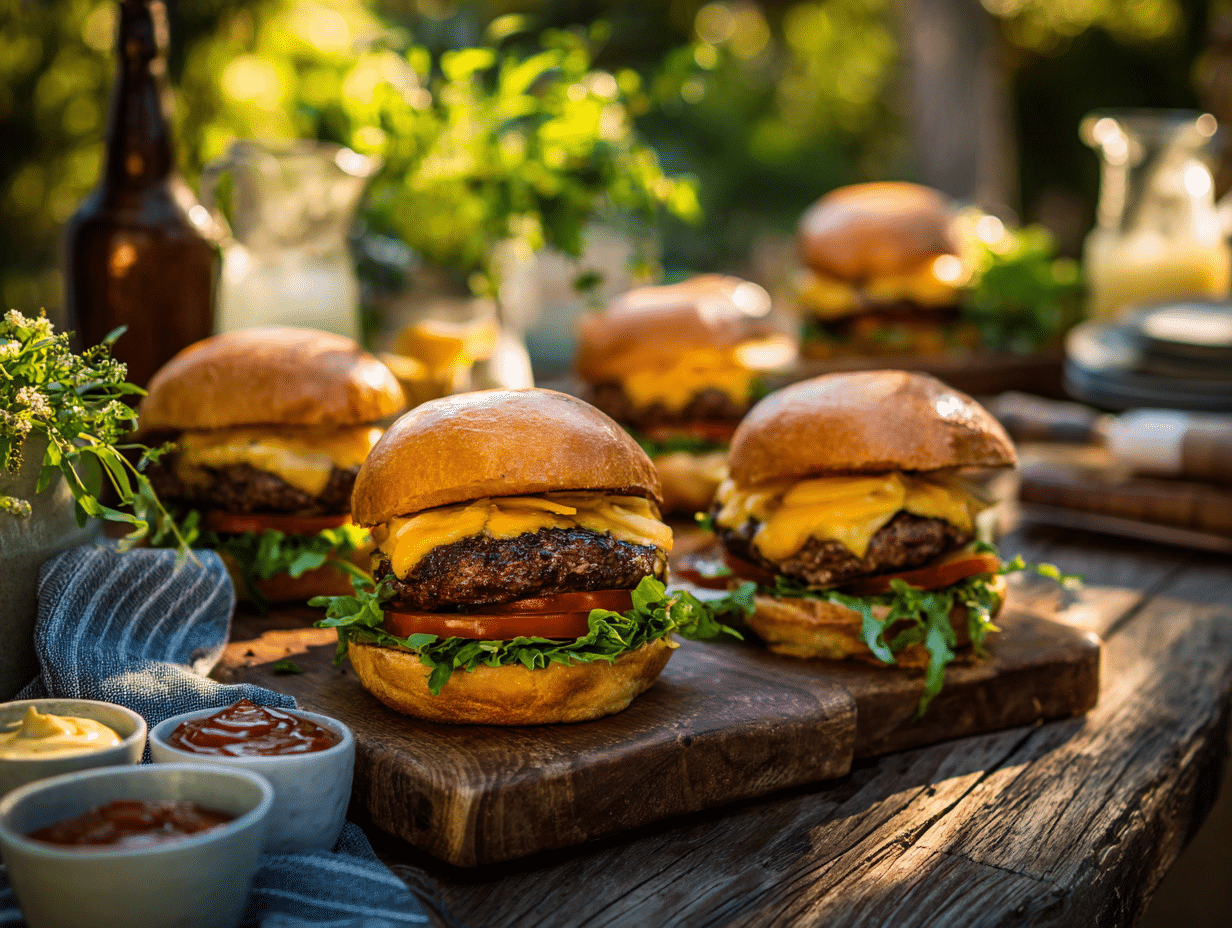
The Classic Hamburger stands as one of the most iconic dishes in American cuisine—a true emblem of comfort, simplicity, and communal satisfaction. More than just a meal, the hamburger is a culinary symbol steeped in rich history, global influence, and modern reinterpretation. While today we enjoy burgers in countless variations, from gourmet creations stacked a foot high to minimalist sliders, there remains something fundamentally gratifying about returning to the basics. That’s exactly what this recipe aims to do: celebrate the enduring appeal of the quintessential hamburger.
A Brief History of the Burger
The origins of the hamburger are the subject of friendly debate among culinary historians, but most agree that its foundation was laid in the 19th and early 20th centuries. Inspired by the Hamburg steak, a seasoned minced beef dish brought to the U.S. by German immigrants, the concept of serving ground beef as a sandwich emerged during a time of great industrial and social change. Portable, filling, and inexpensive, the hamburger’s appeal made it ideally suited for working-class Americans in an age of rapid urbanization.
It wasn’t long before the hamburger evolved into the modern sandwich we recognize today. In the early 1900s, diners and food vendors began inserting cooked patties between slices of bread or buns for convenience. By the time the automobile culture of post-WWII America took off, drive-in and fast-food restaurants helped launch the hamburger to superstar status. Today, with its place secured on menus from coast to coast and beyond, the classic hamburger remains a beloved staple.
Why the Classic Burger Still Matters
In an age brimming with gourmet builds, plant-based alternatives, and endless fusion concepts, there’s a kind of magic in stripping the burger down to its essence. A well-executed classic hamburger doesn’t rely on flashy toppings or exotic ingredients. Instead, it’s about mastering technique and quality.
This recipe pays homage to that simplicity. It starts with the most crucial ingredient: the beef. An 80/20 blend of ground beef (that is, 80% lean, 20% fat) provides the perfect balance of texture and flavor. The touch of Worcestershire sauce adds a subtle umami depth, while salt and pepper are used with purpose, not excess. There’s no egg, no breadcrumbs, and no elaborate seasoning mix—just beef at its best.
The buns are crucial too. Brioche or potato buns, lightly buttered and toasted to golden perfection, provide a slightly sweet, tender structure that complements the meat without overpowering it. Toasting ensures a firm yet yielding bite and helps avoid sogginess once the condiments and juices from the patty come into play.
Cheddar cheese, particularly when aged, presents a sharp and creamy balance to the savory beef. While other cheeses certainly have their place—Swiss for nuttiness, blue cheese for funk, pepper jack for heat—the cheddar in this recipe is a nod to the burger’s American roots.
Fresh produce offers textural contrast and brightness. Thick slices of beefsteak tomato provide juicy acidity, crisp romaine or butter lettuce brings crunch, and red onion adds sharp bite and a touch of sweetness. When assembled together, these layers deliver flavor complexity in every mouthful without distracting from the star of the show—the beef patty.
Sauces are handled with restraint in this build, too. A thin spread of mayonnaise on the toasted bottom bun creates a rich foundation, while a spoonful of ketchup adds a familiar tangy sweetness. Of course, the burger encourages personalization, but this balance is all about highlighting flavors without overwhelming the main ingredients.
Technique: The Heart of a Great Burger
What separates a forgettable burger from an unforgettable one isn’t necessarily the ingredients—it’s the method. Gentle handling of the meat mixture ensures the patties stay tender; over-mixing makes them dense. Flattening the patties with a dimple in the center helps them cook evenly and prevents puffing, which is essential for those beautiful, uniform builds.
Cooking over medium-high heat—ideally on a grill or cast-iron skillet—creates a beautiful sear, locking in juices and giving the burger its signature crust. Importantly, allowing the patties to rest before serving ensures that the juices redistribute, keeping each bite juicy rather than dry.
Assembling a burger is both an art and a science. Each layer has its purpose and order. The lettuce goes directly atop the sauce-spread bottom bun to act as a barrier, then comes the juicy patty, followed by tomato and onion. This thoughtful sequence ensures structural integrity and mouthfeel. Finally, the top bun crowns the creation, bringing it all together.
The Social Element
The classic hamburger has always been about more than flavor—it’s about experience. Whether grilled in the backyard with friends, devoured at diners after a long day, or served at summer cookouts, burgers bring people together. They also invite participation. Everyone has their ideal version, their preferred toppings, and the best way to prepare it. The recipe included here offers a trusted foundation, but it also sparks creativity.
Add a few slices of pickle for crunch, caramelized onions for sweetness, or perhaps a fried egg for indulgence. Swap in turkey or plant-based patties if desired. Even the condiments invite play—dijon mustard, barbecue sauce, or a homemade aioli can add your signature touch.
This Classic Hamburger recipe is more than just a set of instructions for building a sandwich—it’s a tribute to an enduring American favorite that has stood the test of time. It honors the principles of quality, technique, and simplicity. Whether it’s your first time making burgers from scratch or you’re revisiting an old favorite, this recipe offers something universally satisfying.
Perfect for backyard grills, quick weeknight dinners, or special gatherings, the burger here captures the essence of why we fell in love with them in the first place. And in a world that’s constantly changing, sometimes there’s incredible comfort in mastering the classics.
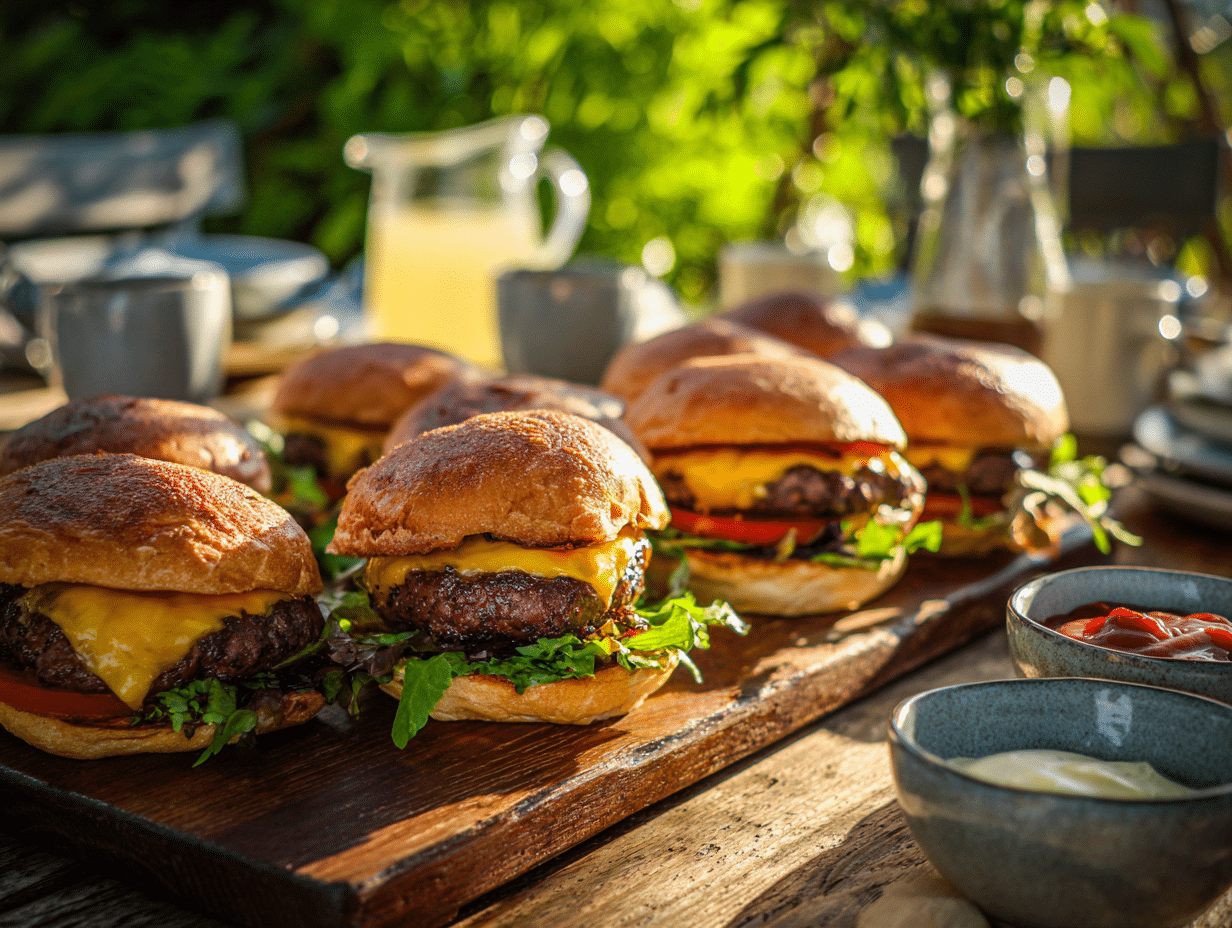
Classic Hamburger

Ingredients
For the Hamburger Patties:
- 1.5 pounds ground beef (80/20 blend) fresh and ideally grass-fed
- 1 teaspoon kosher salt adjust to taste
- ½ teaspoon freshly ground black pepper
- 1 tablespoon Worcestershire sauce
For the Assembly:
- 4 pieces brioche or potato burger buns lightly buttered
- 4 slices cheddar cheese aged for better flavor
- 1 large beefsteak tomato sliced thickly
- 4 leaves romaine or butter lettuce washed and patted dry
- 1 medium red onion thinly sliced into rings
- ¼ cup mayonnaise or special sauce of your choice
- ¼ cup ketchup
- 2 tablespoons unsalted butter for toasting buns
Instructions
- In a large bowl, combine the ground beef, salt, black pepper, and Worcestershire sauce. Mix gently with your hands just until combined—over-mixing can toughen the meat.
- Divide the mixture into 4 equal portions and shape into patties about 1/2-inch thick. Make a shallow dimple in the center of each patty with your thumb to prevent puffing during cooking.
- Preheat a grill or heavy cast-iron skillet over medium-high heat (about 400°F / 200°C). While the grill heats, melt butter and brush the cut sides of the buns lightly.
- Toast the buns, cut side down, for about 30–60 seconds until golden and crisp. Remove and set aside.
- Add patties to the hot grill or skillet. Cook for 3–4 minutes per side for medium doneness (internal temperature of 160°F / 71°C). Add cheese slices during the last minute of cooking and cover lightly with a lid to melt cheese.
- Let the patties rest for a couple of minutes off the heat to retain juices.
- Spread mayonnaise on the bottom buns, then layer the lettuce, burger patty, tomato slice, onion rings, and a dollop of ketchup on top. Cap with the top bun and serve immediately.
Notes
- For juicier burgers, never press down on the patties while grilling.
- You can substitute cheddar with blue cheese, pepper jack, or Swiss for different flavor profiles.
- For gluten-free adaptation, use gluten-free buns or wrap in iceberg lettuce.
- Add pickles, grilled mushrooms, or a fried egg for a gourmet twist.