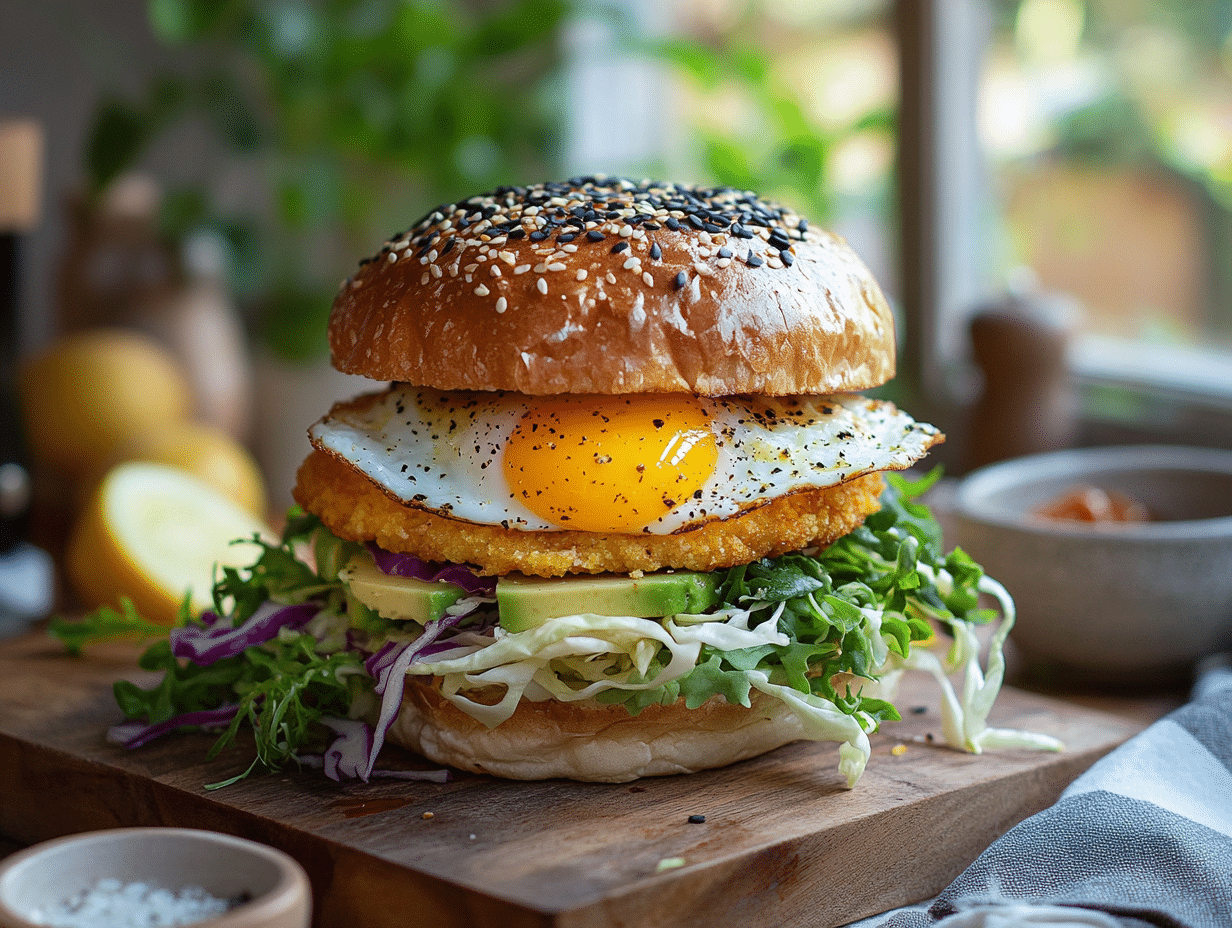
The Japanese Tamago Egg Burger swaps the usual beef patty for a tamagoyaki — a rolled Japanese omelet seasoned with soy sauce, mirin, and sugar — then stacks it on a soft milk bread bun with avocado, napa cabbage, Japanese mayo, and okonomiyaki sauce. It takes about 30 minutes of active cooking, most of that spent rolling the omelet. If you want a satisfying burger that skips the meat entirely without feeling like a compromise, this is a genuinely good one.
Why this recipe works
Two things drive this recipe. First, the tamagoyaki technique — pouring thin layers of egg into a hot pan and rolling each one before adding the next — builds a dense, sliceable patty that holds its shape in a bun instead of falling apart like a plain fried egg would. The sugar in the egg mixture helps each layer set quickly and gives the outside a light caramelized color. Second, the sauce pairing is doing real structural work: okonomiyaki sauce brings enough acidity and sweetness to cut through the richness of the egg and avocado, so the whole thing tastes balanced rather than heavy.
Smart swaps
- Milk bread buns: Brioche buns are the closest substitute for shokupan — same soft, slightly sweet crumb. A plain potato roll also works. Avoid anything crusty; it will overpower the egg patty.
- Okonomiyaki sauce: Mix 2 tablespoons Worcestershire sauce, 1 tablespoon ketchup, and 1 teaspoon soy sauce. It’s not identical but it’s close enough and uses pantry staples.
- Japanese mayo (Kewpie): Regular mayo works, but add a small splash of rice vinegar and a tiny pinch of sugar to get closer to Kewpie’s tangier, richer flavor.
- Mirin: Use 1 teaspoon dry sherry or rice wine plus a pinch of sugar per teaspoon of mirin called for. Avoid skipping it entirely — it’s what gives the omelet its gloss.
- Napa cabbage: Green cabbage shredded thin is a fine swap. It’s crunchier, so slice it as finely as you can.
- Black sesame seeds: White sesame seeds or a light sprinkle of toasted regular sesame seeds work just as well.
Common problems and fixes
- Tamagoyaki tears when rolling: The pan is too hot. Medium-low heat is the right call — the egg should set gently, not sizzle hard. If a layer tears, just press it back together as you roll; the next layer will seal it.
- Omelet patty is too thin to hold up in the bun: You need at least 3 layers, ideally 4. Pour each layer thin — about 2–3 tablespoons at a time — and let them build up. A thicker roll slices cleanly and won’t compress to nothing when you bite down.
- Avocado turns brown before serving: Slice it right before assembling. If you’re prepping ahead, toss the slices in a little lemon or lime juice and press plastic wrap directly against the surface.
- Bun gets soggy: Apply the mayo to both cut sides of the bun — it acts as a moisture barrier. Assemble just before eating rather than letting the built burger sit.
- Tamagoyaki tastes flat: Skip the egg in the mix — it makes the patty mushy. Make sure you’re using both soy sauce and mirin; cutting either one leaves the flavor one-dimensional.
Make-ahead notes
The tamagoyaki is the only component worth making ahead. Cook it fully, let it cool to room temperature, then wrap it tightly in plastic wrap and refrigerate for up to 2 days. Slice it cold and reheat in a dry nonstick pan over medium-low heat for about 90 seconds per side — it warms through without drying out. Don’t microwave it; the texture turns rubbery. The okonomiyaki sauce substitute (if you made it from scratch) keeps in a small jar in the fridge for up to a week. Everything else — avocado, cabbage, buns — is best prepped the day you’re eating.
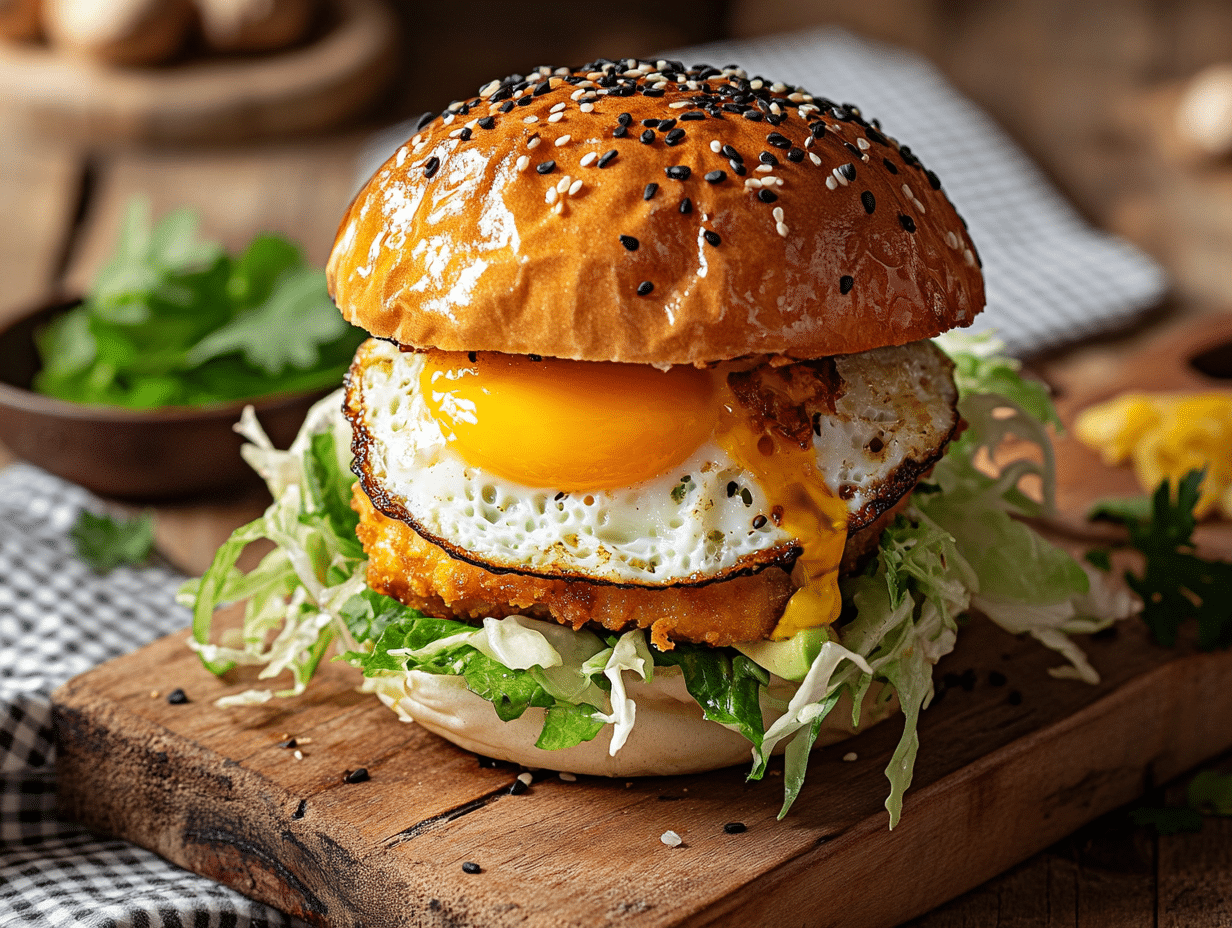
Japanese Tamago Egg Burger

Ingredients
For the Tamagoyaki Egg Patty:
- 6 large eggs preferably farm-fresh or organic
- 2 tablespoons dashi stock use instant dashi or homemade for deep umami flavor
- 1 tablespoon sugar
- 1 teaspoon soy sauce use light Japanese soy sauce for delicate flavor
- 1 teaspoon mirin sweet cooking rice wine
- 1 tablespoon neutral oil for frying (like canola or grapeseed)
For the Burger Assembly:
- 4 pieces Japanese milk bread buns soft and slightly sweet for the perfect contrast
- ½ cup Japanese mayonnaise e.g., Kewpie brand
- 2 tablespoons okonomiyaki sauce a sweet-savory topping sauce, similar to a thick Worcestershire sauce
- 1 cup shredded napa cabbage chilled for extra crunch
- 1 large avocado sliced thin, ripe but firm
- 1 teaspoon black sesame seeds for garnish
Instructions
- In a medium mixing bowl, whisk together the eggs, dashi stock, sugar, soy sauce, and mirin until well combined and slightly frothy.
- Heat a nonstick or tamagoyaki pan over medium-low heat (about 300°F / 150°C). Lightly grease with neutral oil using a paper towel.
- Pour a thin layer of the egg mixture into the pan, just enough to coat. When halfway set but still slightly wet, roll the omelet forward using chopsticks or a spatula. Push the rolled omelet back to the starting point.
- Oil the pan again, add another layer of egg, and lift the existing roll to allow egg to flow underneath. Repeat the folding technique until all egg is used. You should have a layered, rectangular tamagoyaki resembling a thick patty.
- Remove from heat and let it cool slightly before slicing into 4 equal-sized squares or rounds, roughly bun-sized.
- Lightly toast the milk bread buns until golden on the cut sides.
- Spread the bottom bun with a layer of Japanese mayonnaise, followed by a helping of shredded cabbage, a slice of avocado, and a tamagoyaki patty on top.
- Drizzle the tamagoyaki with a thin line of okonomiyaki sauce and an extra touch of mayo if desired. Sprinkle with black sesame seeds and crown with the top bun.
Notes
- Use a rectangular tamagoyaki pan if possible—it gives the best shape.
- For extra flavor, infuse the cabbage with a hint of yuzu juice or rice vinegar.
- Substitute dashi with chicken or vegetable broth in a pinch—though it will change the umami profile.
Nutrition
FAQ
Do I need a special rectangular tamagoyaki pan?
No — a small round nonstick skillet (8 inches or smaller) works fine. The rectangular pan just makes it easier to roll a uniform shape; with a round pan you’ll trim the edges slightly after rolling, which takes about 30 seconds and wastes almost nothing.
Can I use regular sandwich bread instead of milk bread buns?
Yes, two slices of soft white sandwich bread work as a practical stand-in. Avoid toasting it too dark — you want the bread soft enough that biting through doesn’t squeeze the filling out.
Where do I find okonomiyaki sauce if my grocery store doesn’t carry it?
Most Asian grocery stores stock it near the Japanese condiments, and it’s widely available online. If neither is an option, the scratch substitute in the Smart Swaps section above (Worcestershire, ketchup, soy sauce) covers you without a special trip.
If you liked this one
- Korean Rice Bulgogi Burger
- Hawaiian Teriyaki Burger Recipe
- Korean Fried Chicken Burger
- Teriyaki Whopper Jr Recipe