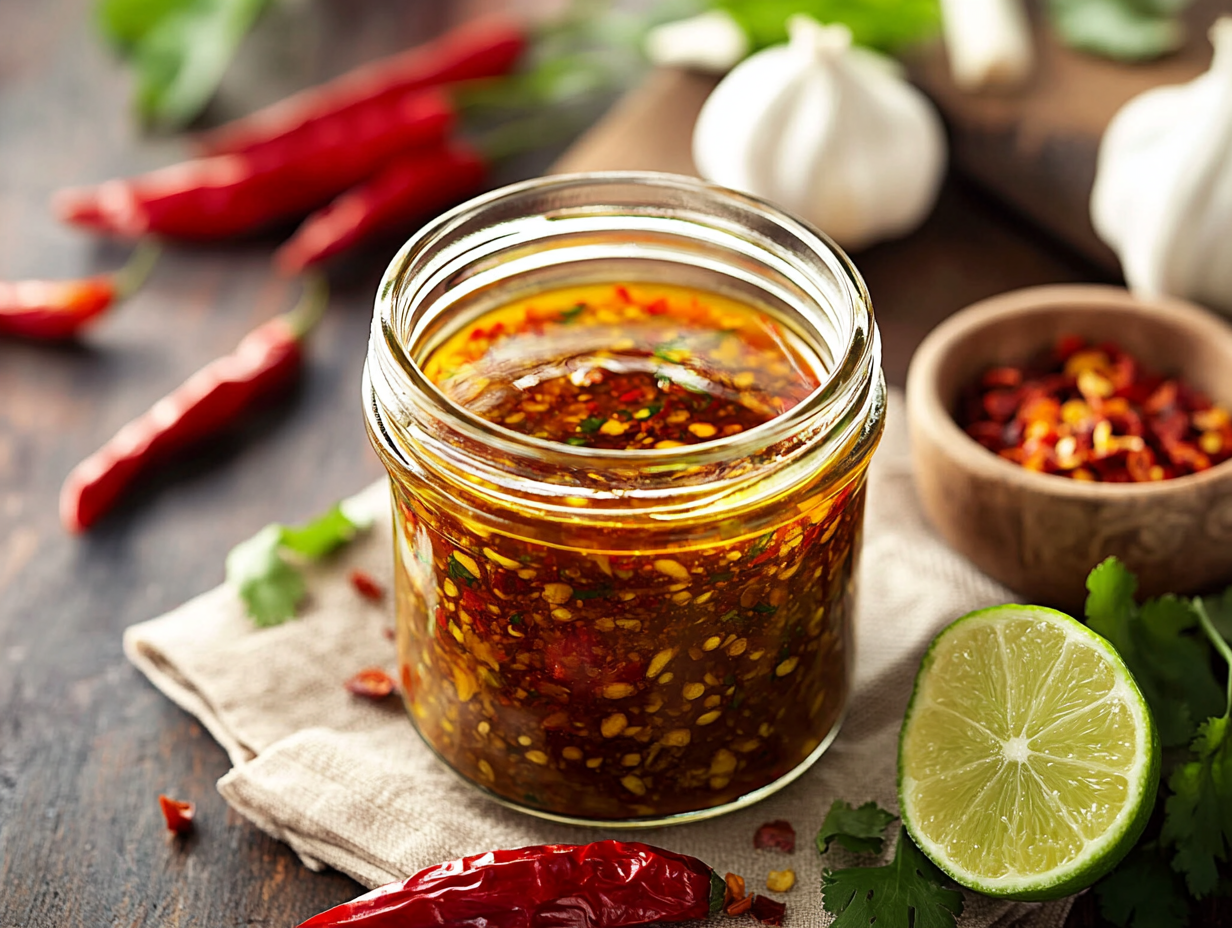
This is a cooked lemongrass chili sauce — sautéed, not blended raw — so it has a slightly deeper, less sharp flavor than a fresh chili paste. It comes together in 30 minutes and makes 4 cups, which is exactly why it earns a spot at a cookout: one batch covers a lot of burgers, skewers, or grilled chicken without any last-minute scrambling. The fish sauce and lime keep it bright, and the lemongrass gives it something most hot sauces don’t have.
Ingredient notes
- Lemongrass: Buy fresh stalks, not dried or jarred paste — the paste won’t sauté the same way and the flavor is flatter. Peel back the tough outer layers until you reach the pale, slightly flexible inner stalk. That’s the part you chop.
- Fish sauce: Brands vary a lot in saltiness. Tiparos and Megachef are widely available and consistent. Avoid the cheapest bottles — they can taste harsh rather than savory.
- Palm sugar: If you can’t find it, light brown sugar works fine. The difference in a sauce this small is minimal.
- Red chilies: Fresno chilies are a reliable grocery-store option. Thai bird’s eye chilies are hotter and smaller — use two instead of three if you go that route.
- Vegetarian swap: Replace fish sauce 1:1 with soy sauce or coconut aminos. The sauce will be slightly less complex but still very good.
Before you start
The one technique that matters here is controlling your heat when the garlic goes in. Lemongrass takes about 3 minutes to soften and turn fragrant, but garlic burns fast — especially once it’s minced fine. Keep the pan at a true medium, not medium-high, and stir constantly once the garlic hits the oil. Burnt garlic turns bitter and there’s no fixing it in a sauce this simple. If you’re doubling or tripling the batch for a crowd, use a wider saucepan rather than a deeper one so the lemongrass sautés evenly instead of steaming in its own moisture.
Troubleshooting
- Sauce tastes flat after cooling: The lime juice loses brightness as it sits. Stir in a small squeeze of fresh lime right before serving to wake it back up.
- Too salty: Fish sauce saltiness varies by brand. Add a small pinch of sugar and a little extra lime juice — both cut the perception of salt without diluting the sauce.
- Lemongrass pieces are too fibrous to eat: You didn’t chop finely enough, or you used too much of the tough green top. Next time, mince the white part almost to a paste. For this batch, strain the sauce through a fine mesh strainer before serving.
- Sauce is thinner than expected: This is a loose, pourable condiment by design — skip the egg in the mix — it makes the patty mushy applies to burgers, but here, if you want it thicker for spreading, simmer uncovered on low for an extra 3–4 minutes after adding the fish sauce and sugar.
- Heat level is too high for the crowd: You can’t remove chili heat once it’s cooked in, but serving the sauce alongside a neutral mayo or sour cream lets guests dial it back themselves without you making a second batch.
Leftovers and meal prep
Store the sauce in a sealed glass jar in the fridge for up to 5 days. The flavor actually improves on day two once everything has had time to settle. For longer storage, freeze it in ice cube trays, then transfer the cubes to a zip-lock bag — each cube is roughly 2 tablespoons, which makes it easy to pull out exactly what you need. Frozen, it keeps for up to 2 months. Thaw in the fridge overnight or in a small saucepan over low heat. Give it a stir and a fresh squeeze of lime after reheating.
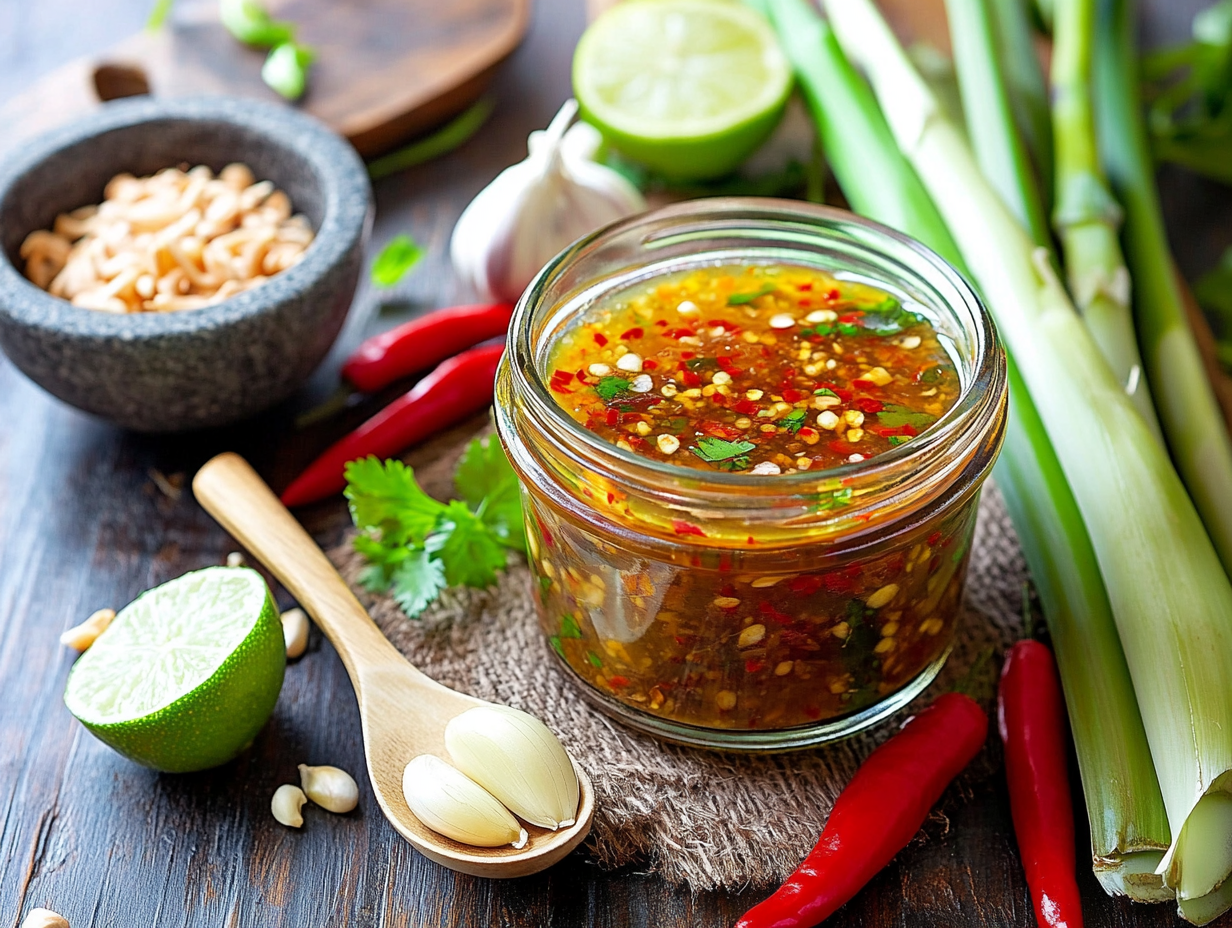
Vietnamese Lemongrass Chili Sauce

Ingredients
- 2 tablespoons vegetable oil Use a neutral oil like canola or sunflower
- 4 stalks lemongrass Finely chopped, use only the tender white parts
- 3 cloves garlic Minced
- 3 pcs red chilies Deseeded and finely chopped
- 2 tablespoons fish sauce Use high-quality Vietnamese fish sauce for best flavor
- 1 tablespoon sugar Preferably palm sugar
- 1 tablespoon lime juice Freshly squeezed
Instructions
- Heat the vegetable oil over medium heat in a small saucepan.
- Add the finely chopped lemongrass and sauté for about 3 minutes until it’s fragrant and slightly golden.
- Stir in the minced garlic and chopped red chilies. Continue to sauté for an additional 2 minutes, ensuring the garlic doesn't burn.
- Lower the heat and add the fish sauce and sugar, stirring until the sugar is completely dissolved.
- Remove the saucepan from the heat and let it cool slightly before adding the freshly squeezed lime juice. Mix well.
- Allow the sauce to sit for at least 15 minutes to let the flavors meld. Before serving, taste and adjust the seasoning, adding more lime juice or fish sauce to suit your taste.
Notes
Nutrition
Frequently asked questions
Can I make this sauce a day ahead for a cookout?
Yes — making it the day before is actually recommended. The flavors meld and deepen overnight in the fridge. Just hold off on any final lime juice adjustment until you’re ready to serve, since lime can turn slightly bitter after extended storage.
How do I scale this up for a large group without it going wrong?
Double or triple the ingredients straightforwardly — the ratios hold. The main thing to watch is pan size: sauté the lemongrass in batches if your pan is crowded, because a packed pan steams instead of sautés and you lose the slightly golden color and deeper flavor.
What burgers does this sauce actually work on?
It works best on grilled chicken burgers, pork burgers, and shrimp burgers where the sauce’s brightness can cut through richer meat. On a beef burger, use it as a secondary condiment alongside mayo rather than the only sauce, or the lime and fish sauce can overpower the beef.
If you liked this one
- Korean Fried Chicken Burger
- Hawaiian Teriyaki Burger Recipe
- Sweet Chili Chicken Burger
- Korean Rice Bulgogi Burger