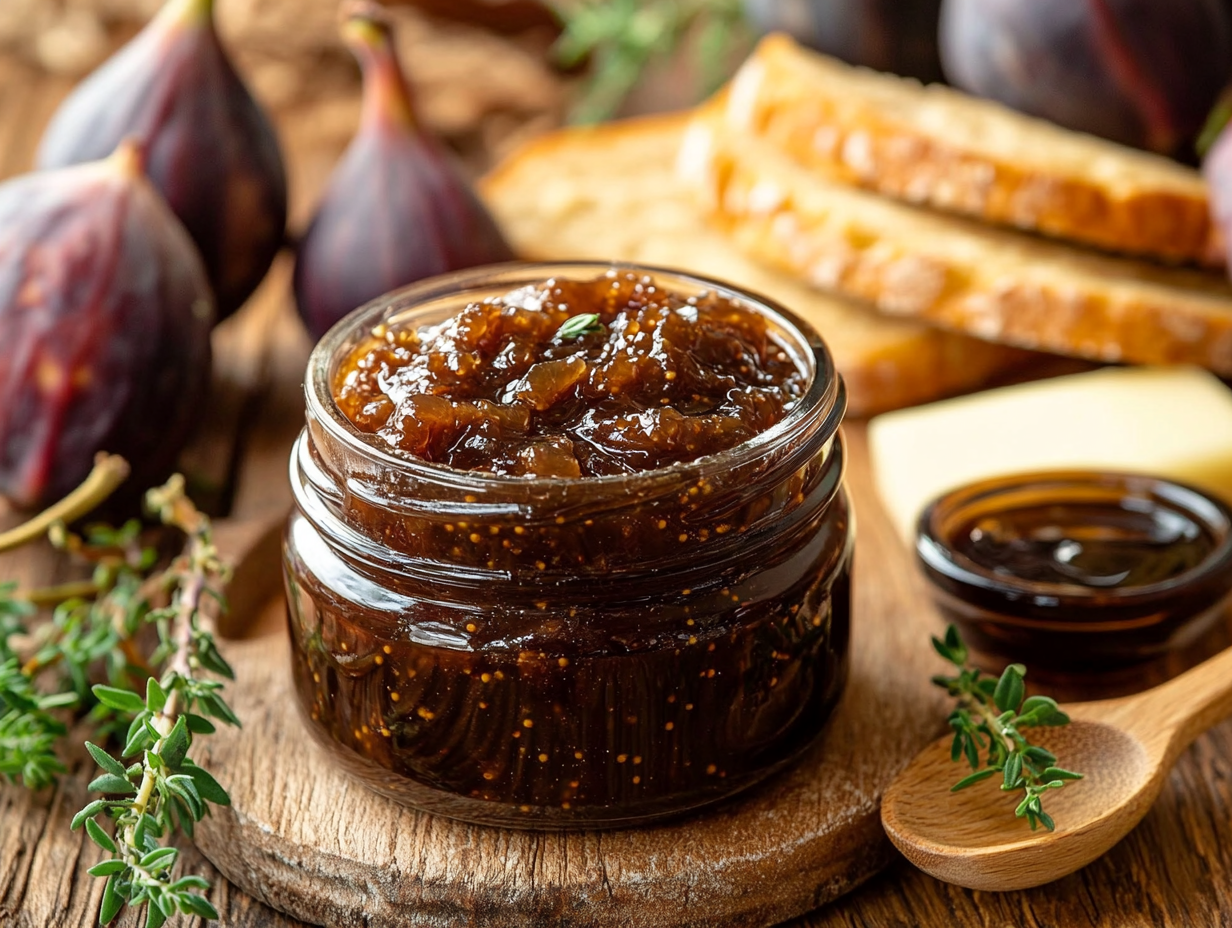
Fig and Balsamic Onion Jam is a thick, sweet-savory spread made by slow-cooking red onions with dried figs, balsamic vinegar, brown sugar, and thyme until everything collapses into a sticky, deeply flavored jam. It takes about an hour and uses pantry staples most people already have. The honest reason to make it: a spoonful of this on a burger or grilled cheese does more work than most condiments you can buy.
Why this recipe works
Two things drive this recipe. First, patience with the onions — red onions need a genuine low-and-slow cook in olive oil before anything else goes in. Rush that step and you get sharp, half-cooked onion bits instead of a sweet, soft base. Second, the balsamic vinegar goes in after the onions are already caramelized, not at the start. Adding it late means it reduces quickly into a glaze rather than steaming off, which is what gives the finished jam its concentrated tang and that slightly sticky, jammy texture. Skip either step and the result tastes flat.
If something goes sideways
- Jam is too thin after cooling: Return it to the pan over medium-low heat and cook uncovered for another 5–10 minutes, stirring often. It thickens significantly as it cools, so pull it off the heat when it still looks slightly looser than you want.
- Jam tastes too sweet: Stir in an extra teaspoon of balsamic vinegar or a small squeeze of lemon juice off the heat. Taste as you go — a little acid goes a long way here.
- Dried figs stayed chewy and didn’t break down: They were probably too dry to start. Next time, soak dried figs in warm water for 15 minutes before chopping. If it’s already in the pan, add a splash of water and keep cooking on low with the lid on for a few minutes.
- Onions scorched on the bottom: Lower your heat and add a tablespoon of water to deglaze the pan. The browned bits will lift and blend in. If it smells bitter rather than just toasty, those bits are burnt — scrape them out before continuing.
- Jam turned out too thick and pasty: Stir in water a tablespoon at a time over low heat until you reach a spreadable consistency. This usually means it cooked a few minutes too long.
Leftovers and meal prep
Store the jam in a clean, sealed jar in the refrigerator for up to two weeks. The flavor actually improves after the first 24 hours as everything settles together, so making it a day ahead is worth it. For longer storage, freeze it in small portions — an ice cube tray works well — and use within three months. Thaw overnight in the fridge. To reheat, a quick 20 seconds in the microwave or a minute in a small saucepan over low heat loosens it right up. Skip reheating it on high heat — it scorches fast because of the sugar content.
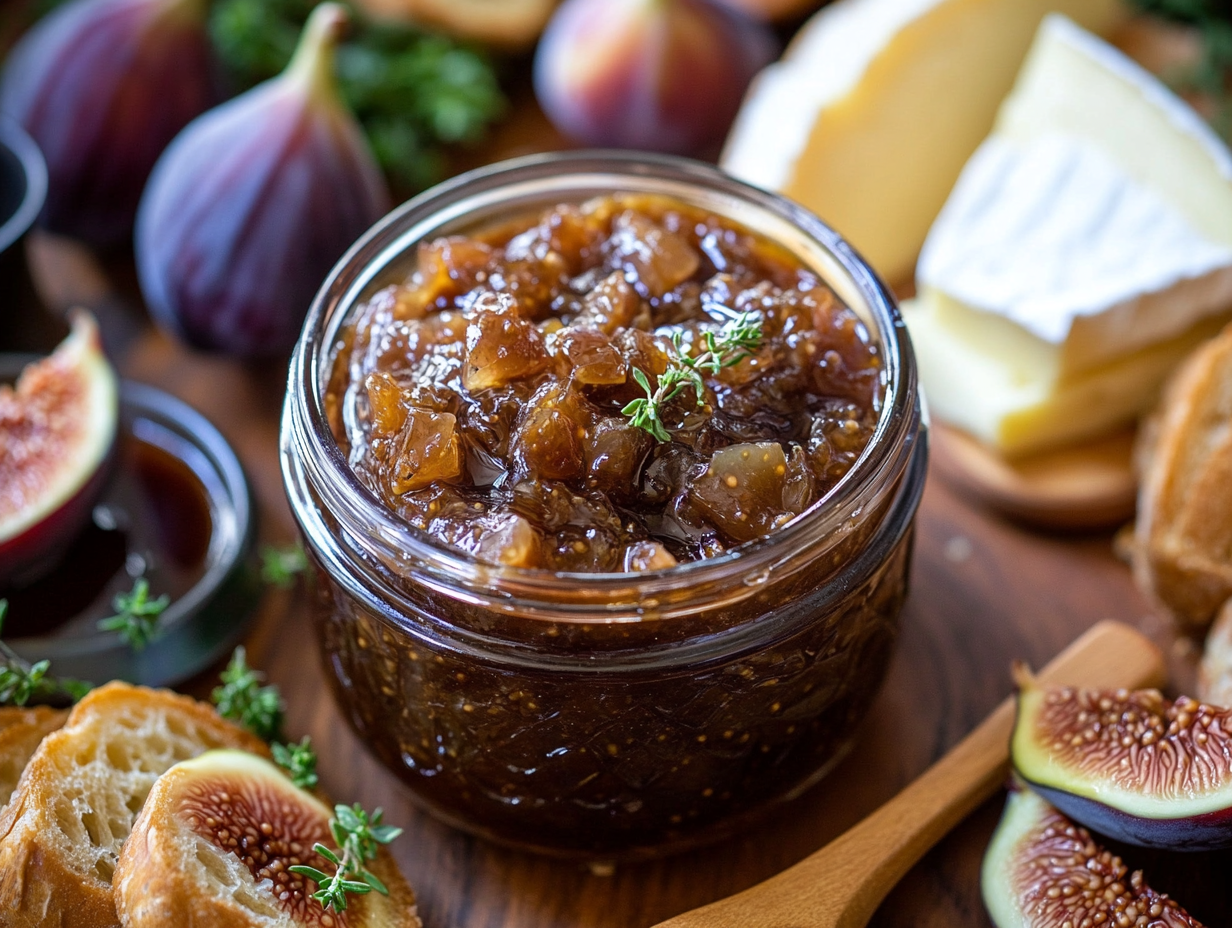
Fig and Balsamic Onion Jam

Ingredients
- 2 tbsp olive oil Use extra virgin olive oil for depth of flavor
- 2 large red onions Thinly sliced for even caramelization
- 1 cup dried figs Chopped into small pieces
- ¼ cup brown sugar Can use honey for a milder sweetness
- ¼ cup balsamic vinegar Aged balsamic will add more complexity
- 1 tsp fresh thyme leaves Optional but adds an herbal note
- ½ tsp salt Adjust to taste
- ½ tsp black pepper Freshly ground
- ¼ cup water To help everything cook down evenly
Instructions
- Heat the olive oil in a pan over medium heat until shimmering.
- Add the thinly sliced red onions and cook gently, stirring occasionally, until they become soft and caramelized, about 15-20 minutes.
- Stir in the chopped figs, brown sugar, balsamic vinegar, thyme (if using), salt, and black pepper.
- Pour in the water and let the mixture simmer on low heat for another 25-30 minutes, stirring occasionally, until thick and jam-like.
- Once the mixture reaches a rich, thick consistency, remove it from the heat and let it cool slightly.
- Transfer the jam to sterilized jars and allow it to cool completely before sealing. Store in the refrigerator for up to two weeks.
Notes
- For deeper flavor, let the jam sit overnight before serving.
- Can be used as a spread for crackers, sandwiches, or even as a topping for grilled meats.
Nutrition
FAQ
Can I use fresh figs instead of dried?
Yes, but use about 50% more by weight since fresh figs have a lot of water that cooks off. The jam will take a bit longer to thicken, and the flavor will be slightly lighter and less intense than with dried.
What can I use if I don’t have balsamic vinegar?
Red wine vinegar with a small pinch of brown sugar is the closest swap — start with the same amount and taste as you go. Apple cider vinegar works in a pinch but gives a slightly fruitier, less complex result.
Can I use yellow or white onions instead of red?
Yellow onions work fine and are often cheaper. They caramelize just as well and the flavor difference in the finished jam is minor. White onions are sharper and a little less sweet, so add a touch more brown sugar if that’s what you have.
Do I need extra virgin olive oil specifically, or will another oil work?
Any neutral cooking oil works — vegetable, canola, or light olive oil are all fine. Extra virgin adds a faint fruity note but it’s not essential, and at the low heat used for caramelizing onions the difference is minimal.
How do I know when the onions are properly caramelized and ready for the next step?
They should be deep golden-brown, very soft, and reduced to roughly a third of their original volume — this typically takes 25–35 minutes on medium-low heat. If they still look pale or feel firm, keep going; pulling them too early is the most common reason the jam lacks depth.
What burgers does this jam actually work on?
It’s a strong match for beef burgers with sharp cheddar or brie, and it’s genuinely good on a grilled chicken burger where you want something other than mayo doing the heavy lifting. Avoid pairing it with already-sweet sauces like teriyaki — the sweetness stacks up fast.
Try these next
- Angus Bacon Guacamole Burger
- Halloumi King Burger Homage
- Ultimate Guacamole Bacon Burger
- Pretzel Bacon Pub Chicken