The Story Behind McDonald’s Chicken Maharaja Mac
The Chicken Maharaja Mac stands as one of the most successful examples of global fast-food localization, representing McDonald’s ingenious adaptation to India’s unique dietary landscape. Launched in the Indian market as a response to the country’s significant Hindu and Muslim populations who abstain from beef and pork respectively, this burger has become an iconic menu item that rivals the Big Mac’s popularity in Western markets.
Historical Context
When McDonald’s entered India in 1996, they faced an unprecedented challenge: how to bring their signature Big Mac to a market where the majority of the population doesn’t consume beef. The solution was revolutionary for the fast-food giant—completely reimagining their flagship burger with chicken, while infusing it with flavors that would resonate with Indian palates.
The Maharaja Mac, whose name playfully references Indian royalty (Maharaja meaning “great king”), was more than just a protein swap. It represented McDonald’s commitment to cultural sensitivity and culinary innovation, incorporating traditional Indian spices and flavors into the familiar double-decker format.
Culinary Innovation
What sets the Maharaja Mac apart from a standard chicken burger is its sophisticated spice profile. The patties are enhanced with a blend of aromatic spices including cumin, coriander, and garam masala—a warm spice mixture that forms the backbone of many Indian dishes. The addition of Kashmiri chili powder provides color and gentle heat without overwhelming the palate, while ginger-garlic paste adds the fundamental flavor base found in countless Indian preparations.
The signature Maharaja sauce represents a fusion of Western condiment traditions with Indian flavor profiles. By incorporating tandoori masala—a spice blend typically used in clay oven cooking—alongside familiar elements like mayonnaise and ketchup, McDonald’s created a sauce that bridges culinary cultures while maintaining broad appeal.
Cultural Significance
The Maharaja Mac has transcended its role as merely a menu item to become a cultural phenomenon in India. It represents the successful marriage of American fast-food culture with Indian culinary traditions, proving that global brands can thrive through thoughtful localization rather than rigid standardization.
The burger’s success has inspired numerous home cooks and chefs to create their own interpretations, elevating the concept beyond fast food into the realm of gourmet cuisine. The inclusion of pickled jalapeños—not traditionally Indian but popular in the subcontinent’s fusion food scene—adds a tangy heat that complements the warm spices beautifully.
Technique and Preparation
The key to an exceptional Maharaja Mac lies in balancing the robust spice blend without overpowering the chicken’s natural flavor. The addition of panko breadcrumbs and mayonnaise to the patty mixture ensures moisture retention—crucial when working with lean ground chicken that can easily become dry and crumbly.
The technique of creating a shallow indent in the center of each patty prevents the common issue of doming during cooking, ensuring even thickness and consistent cooking throughout. This attention to detail, borrowed from professional kitchen techniques, elevates the home-cooked version beyond its fast-food inspiration.
Modern Interpretations
Today’s culinary landscape has seen the Maharaja Mac concept evolve further, with chefs experimenting with different spice combinations, premium ingredients, and innovative cooking methods. Air fryer adaptations cater to health-conscious consumers, while gluten-free and dairy-free versions ensure accessibility for those with dietary restrictions.
The layered construction—maintaining the classic Big Mac’s three-bun structure—provides textural contrast with crisp lettuce, juicy tomatoes, and sharp onions balanced against the creamy sauce and succulent patties. This architectural approach to burger building has influenced how Indians perceive and construct burgers, moving beyond simple single-patty offerings to more complex, satisfying creations.
Global Impact
The success of the Maharaja Mac has had ripple effects throughout the fast-food industry, demonstrating that localization doesn’t mean compromising brand identity. Other international chains have followed suit, creating region-specific items that honor local tastes while maintaining their core appeal.
The burger has also contributed to changing perceptions about fusion cuisine, showing that combining elements from different culinary traditions can create something both authentic and innovative. It stands as a testament to the fact that food, like culture itself, is constantly evolving through exchange and adaptation.
Legacy and Future
As India’s food scene continues to evolve with increasing global influences and local innovation, the Maharaja Mac remains a beloved constant—a reminder of how international cuisine can be successfully adapted to local tastes. Its influence extends beyond McDonald’s restaurants, inspiring a generation of Indian chefs and home cooks to experiment with fusion flavors and techniques.
The Maharaja Mac’s journey from corporate boardrooms to home kitchens illustrates food’s power to bridge cultures, create new traditions, and satisfy both nostalgia and novelty. Whether enjoyed at a McDonald’s counter or recreated with chef-level techniques at home, it continues to reign as a maharaja among burgers—truly fit for a king.
Chicken Maharaja Mac (Inspired by McDonald’s India)

Ingredients
For the Spiced Chicken Patties:
- 1 lb ground chicken (about 93% lean) look for freshly ground for best texture
- ¼ cup panko breadcrumbs plain, not seasoned
- 2 tbsp red onion, minced very fine mince for even patties
- 1 tbsp fresh cilantro, finely chopped stems OK if tender
- 1 tbsp mayonnaise adds juiciness
- 1 tsp ginger-garlic paste or 1/2 tsp each grated ginger and garlic
- 1 tsp ground cumin
- ¾ tsp ground coriander
- ½ tsp garam masala warm, aromatic blend
- ½ tsp Kashmiri chili powder or mild paprika colorful and gentle heat
- ¾ tsp kosher salt Diamond Crystal preferred; adjust if using Morton
- ¼ tsp freshly ground black pepper
- 1 tbsp neutral oil (canola or avocado) for searing
For the Maharaja Sauce:
- ⅓ cup mayonnaise full-fat for best body
- 2 tbsp plain Greek yogurt adds tang; 2% or full-fat
- 1 tbsp ketchup
- 1 tsp yellow mustard classic brightness
- 1 tsp hot sauce habanero or peri-peri for heat; adjust to taste
- 1 tsp tandoori masala (or mild curry powder) signature warm-spice note
- ½ tsp smoked paprika sub regular paprika if preferred
- 1 tsp fresh lime juice balances richness
- ¼ tsp granulated sugar just a touch to round the heat
- 1 pinch fine salt to taste
For the Assembly:
- 4 pieces sesame hamburger buns use 2 bottoms as the middle “club” layers; reserve 2 tops for another use
- 2 tbsp unsalted butter, softened for toasting buns
- 4 slices cheddar or processed cheese melt-friendly
- 1 cup iceberg lettuce, shredded crisp and freshly dried
- 8 slices ripe tomato, thinly sliced from about 2 small tomatoes
- ½ cup red onion, thinly sliced into rings soak in ice water 5 minutes to mellow, then pat dry
- 12 slices pickled jalapeños, drained adjust to heat preference
Instructions
- Make the Maharaja Sauce (5 minutes + rest): In a small bowl, whisk mayonnaise, Greek yogurt, ketchup, yellow mustard, hot sauce, tandoori masala, smoked paprika, lime juice, sugar, and a pinch of salt until smooth. Cover and refrigerate to let the spices bloom while you prep the patties. The brief chill enhances the sauce’s perfume and body.
- Mix and Shape the Patties (10 minutes + 15 minutes chill): In a chilled bowl, gently combine ground chicken, panko, minced red onion, cilantro, mayonnaise, ginger-garlic paste, cumin, coriander, garam masala, chili powder, salt, and black pepper. Handle lightly to avoid toughness. Divide into 4 equal portions (about 4 oz each) and press into thin, wide patties, roughly 4 inches across, with a shallow thumb indent in the center to prevent doming. Chill 15 minutes to hydrate the crumbs and firm the mixture.
- Prep Buns and Veggies (5–7 minutes): Split 4 sesame buns. Designate 2 bottom halves as the middle “club” layers; set aside the two extra tops for another use. Lightly butter the cut sides. Shred lettuce and pat dry, slice tomatoes, and separate onion rings. Keep produce cold for maximum crunch.
- Toast the Buns (3–4 minutes): Heat a large skillet or griddle over medium heat (about 350–375°F / 175–190°C). Toast the buttered sides, working in batches if needed, until golden and fragrant. Transfer to a tray, keeping layers organized: bottoms, middle clubs, and tops.
- Sear the Chicken Patties (7–8 minutes): Increase heat to medium-high (about 400°F / 205°C). Add oil, then the patties. Sear 3–4 minutes per side until deep golden and cooked through. Internal temperature should read 165°F / 74°C at the center. For extra melt, reduce heat to medium for the last minute to avoid scorching spices.Alternatives: Grill at 450°F / 230°C, oiling grates well; cook 3–4 minutes per side. Or broil on a foil-lined sheet at 500°F / 260°C, 4–5 minutes per side; watch closely.
- Melt the Cheese (about 1 minute): In the last 30–45 seconds of cooking, top each patty with a cheese slice and cover the pan briefly to steam-melt.
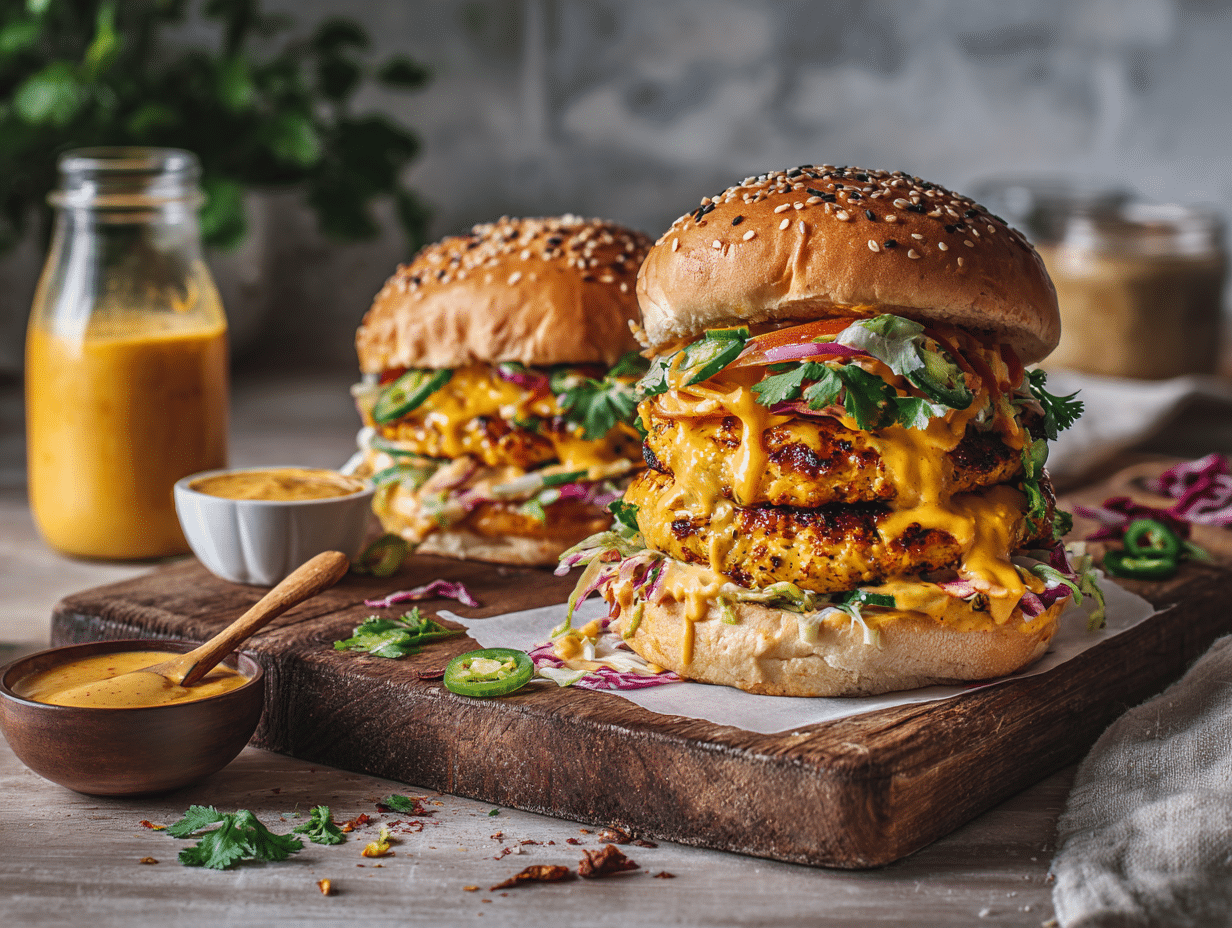
- Assemble the Double-Deckers (3 minutes): Smear the bottom buns with Maharaja sauce. Add a fluffy handful of iceberg, a few onion rings, then a cheesy chicken patty and 3–4 jalapeño slices. Crown each with a middle “club” bun. Add more sauce, a little lettuce, tomato slices, a few onion rings and jalapeños, then the second cheesy patty. Finish with the sesame tops and a gentle press.
- Serve (1 minute): Rest 1 minute so juices settle. Slice in half for that dramatic cross-section—juicy patties, orange-tinted sauce, emerald jalapeños, and crisp lettuce. The aroma should be warm-spiced with a bright tang.
Notes
Chef’s Tips:
- Texture Insurance: Add 1 beaten egg if your ground chicken seems dry; increase panko by 1 tbsp if the mix loosens too much.
- Air-Fryer Patties: 390°F / 200°C for 8–10 minutes, flipping at 6 minutes, to 165°F / 74°C. Lightly spray patties and basket.
- Spice Swap: No tandoori masala? Use 3/4 tsp mild curry powder + a pinch of smoked paprika.
- Heat Control: Jalapeños bring pop; for milder heat, replace with crisp cucumber or sweet pickles.
- Gluten-Free: Use GF panko and GF buns; everything else is naturally GF.
- Dairy-Free: Use dairy-free mayo and cheese; skip yogurt or replace with extra mayo + 1/2 tsp lime.
- Bun Brilliance: A very thin spread of mayo to toast instead of butter yields extra browning through Maillard magic.
- Onion Finesse: Soak rings in ice water 5 minutes, then pat dry—keeps crunch, tames sharpness.
Serving Suggestions:
- Plate on a warm, wide plate. Secure each burger with a pick to hold the tiers.
- Garnish with a scatter of chopped cilantro and an extra drizzle of sauce on the side for dipping.
- Perfect Sides: Masala-dusted fries or crisp slaw. Drink pairing: chilled mango lassi or a light lager.
- Visual Cues: Buns should be evenly golden; cheese glossy and just melted, lettuce still perky, and patties juicy with no pink.
Culinary Context:
The Maharaja Mac is an India-born interpretation of the double-decker legend—built around chicken and spiked with warm subcontinental spices. My version leans chef-forward: balanced heat, layered acidity, and a plush, juicy crumb in the patties that honors the spirit while elevating technique.Optional Advanced Instructions:
- Make-Ahead: Sauce can be made 3 days in advance; patties shaped up to 24 hours ahead (well-chilled).
- Parallel Prep: Let the sauce rest while patties chill; toast buns while the first side of patties sears.
- Beginner Alternative: Form slightly thicker patties for easier handling and cook gently over medium to 165°F / 74°C.
Timing & Details:
- Prep Time: 30 minutes (includes 15-minute chill and sauce rest).
- Cook Time: 18 minutes (toasting, searing, melting, assembly).
- Total Time: 48 minutes.
- Course: Dinner (great for Lunch, too).
- Cuisine/Origin: Indian, Fast-Food Fusion; inspired by McDonald’s India Maharaja Mac.