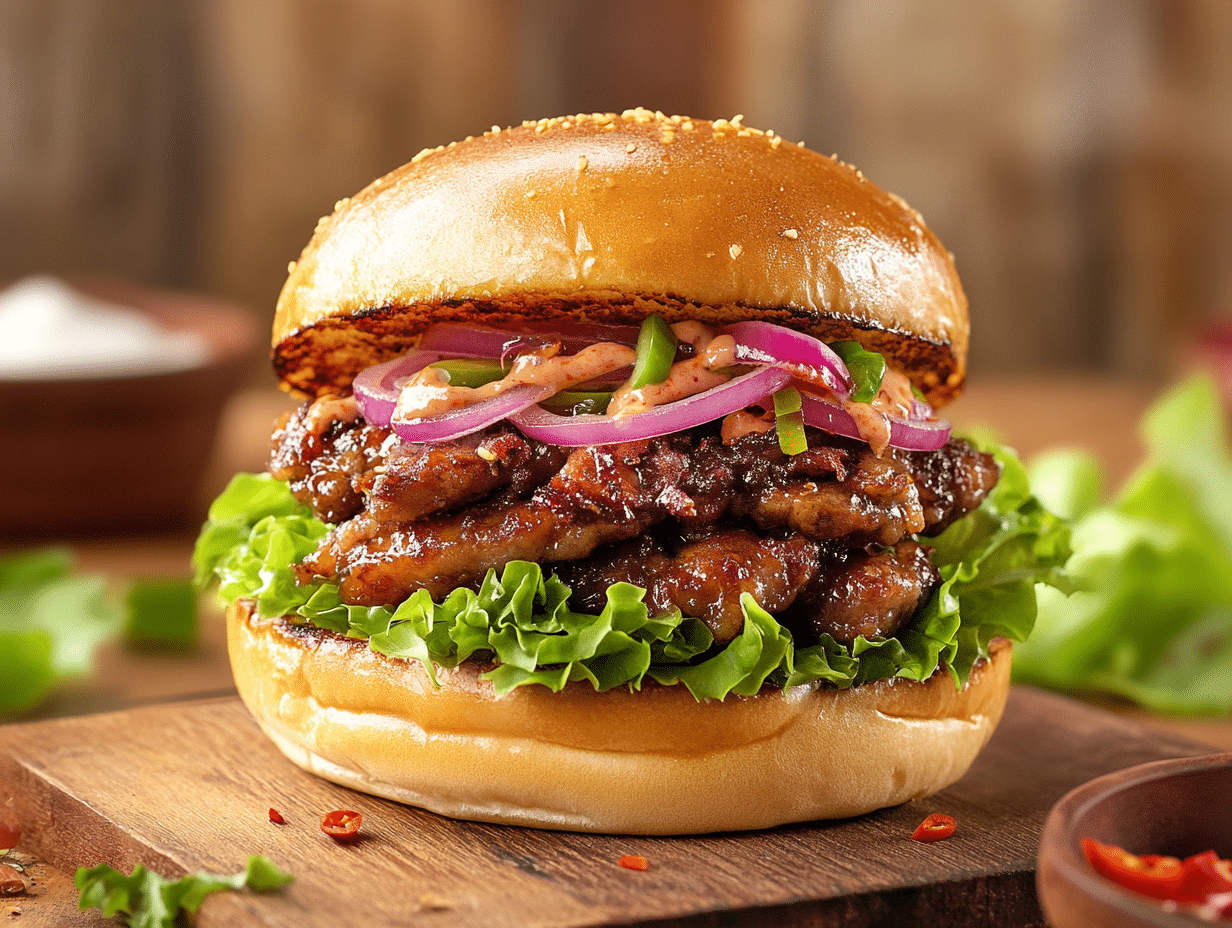
The Filipino Sisig Pork Burger is more than just a gourmet take on a street-food classic — it’s a compelling narrative about cultural fusion, culinary history, and the evolution of comfort food. At the heart of this burger is sisig, a sizzling Filipino dish that’s bold, bright, and unapologetically flavorful. When reinvented into a burger, sisig’s thrill is preserved but adapted for a new audience, offering a familiar format with an entirely new taste experience.
To appreciate the essence of this Sisig Pork Burger, we must first explore the origin of sisig itself.
The Roots of Sisig: A Kapampangan Treasure
Sisig hails from Pampanga, a province in the Philippines famed for its rich culinary heritage. The Kapampangans, often dubbed the “foodies” of the Philippines, are known for transforming humble ingredients into exceptional fare — and sisig is one of their most iconic contributions.
Traditionally, sisig is made from pork parts, primarily pork face and ears, boiled, grilled, and finely chopped. The meat is then sautéed with onions, chili, and a citrusy flavor agent — most authentically calamansi — then served on a sizzling plate. While modern versions often include mayonnaise and even raw egg, the soul of sisig lies in its contrast: crispy bits of pork with tangy, acidic brightness and a whispers of heat.
This dish has humble beginnings. It’s often attributed to Aling Lucing (Lucia Cunanan), who, in the 1970s, popularized the sizzling version of sisig in a small eatery in Angeles City. Originally, sisig was a salad or a pickled dish made with green papaya or green mango, seasoned with vinegar, salt, and pepper — “sisigan” actually means “to make it sour.” Over time, it evolved into the now-beloved sizzling meat dish.
Inspiration for Re-invention: From Sizzle Platter to Street Burger
Sisig has made its presence known in gastropubs, street food stalls, and even gourmet kitchens. The idea of transforming this celebrated dish into a burger was born out of two things: a deep appreciation for classic Filipino flavors and the global love affair with burgers.
The burger is a universally beloved food — portable, satisfying, and open to endless interpretations. Marrying the traditional flavors of sisig with the format of a burger creates a unique bridge for both Filipino food enthusiasts and newcomers alike to experience the vibrancy of Filipino cuisine in a familiar and fun form.
In this Filipino Sisig Pork Burger, every component has a role in replicating the layers of complexity that traditional sisig offers.
Reimagining Sisig in a Burger Patty
Instead of finely chopped offal or pig face, this burger uses pork belly — a more accessible and widely accepted cut that still offers the fatty richness and crispy texture essential to a great sisig. Diced into quarter-inch cubes and pan-fried until golden and crackly, the pork becomes the star of the patty. But unlike a conventional ground meat patty, the pork isn’t bound together until firm — it’s scooped onto the bun loose, letting it retain a beautiful diversity of texture with crispy edges and tender pockets.
To mimic sisig’s original warm-tangy flavor profile, the pork is tossed in soy sauce and calamansi juice while still hot from the pan. The marriage of salty umami and citrus brightness throws your taste buds into celebration, with chili flakes adding a touch of fire to emulate the spicy sting true sisig fans crave.
Calamansi Aioli: A Bright, Creamy Counterpoint
One of the most innovative touches in this burger is the calamansi aioli, made by combining mayonnaise with fresh calamansi juice and garlic. This creamy spread ties the dish together with lusciousness that tempers the pork’s salt and spice, while repeating the tang theme that’s essential to sisig. The aioli also fulfills the modern expectation of burgers having a creamy sauce, while reinforcing the authenticity of Filipino flavor through the use of calamansi.
Calamansi is central to many Southeast Asian dishes. It’s small but mighty: floral, citrusy, and slightly sour. While lime or lemon can be a substitute, the real deal adds unmistakable brightness that cuts through the richness of the crispy pork.
Pickled Red Onions: Crunch, Color, and Contrast
The pickled red onions provide a sharp, sweet, acidic note that lightens each bite. Sitting in a simple brine of white vinegar and sugar, they draw from classic Filipino “achara” (pickled vegetables) — a common accompaniment to grilled or fried meats in the Philippines. These onions bring color and crunch, seasoning each bite with texture and a burst of tangy contrast. Their inclusion is not just for garnish, but to balance the deep, savory pork.
Brioche Buns & Butter Lettuce: The Final Hug
The toasted brioche buns add a rich, buttery component that echoes the indulgence of the pork while standing up to the juicy fillings without going soggy. Using a soft, sweet bun is key here, as it allows the bold ingredients inside to shine, offering a pillowy platform rather than a heavy handler.
Butter lettuce might seem like a small detail, but it adds freshness and textural variety — its crisp yet delicate profile giving your palate a moment of relief between bites of intense flavor.
Culinary Reflection: A Global Yet Deeply Filipino Experience
The Filipino Sisig Pork Burger reflects both nostalgia and innovation. While this recipe maintains authentic flavors through the use of pork belly, soy sauce, onion, and calamansi, its styling pushes the envelope: you’re not eating sisig on a sizzling plate with rice and spoon, but instead gripping it with two hands, savoring a bite of fusion that tells a story.
Such a dish is a testament to Filipino cuisine’s growing presence in global culinary scenes, showing that Filipino food is not just footnotes in street food diaries but contenders on the global fusion plate. You can serve this burger at a backyard barbecue, a food pop-up, or a modern Filipino bistro and watch faces light up — not just from joy, but from flavor.
Customizations and Culinary Tips
For a more authentic take, chopped grilled chicken liver can be added to the pork mixture — it deepens the flavor and mirrors traditional sisig’s complex finish. You can also amp up the spice with Thai bird’s eye chilis or a dash of hot chili oil.
Not a pork eater? The dish adapts well to creative dietary shifts: crispy tofu, pulled jackfruit, or seared mushrooms can form the base of a vegetarian or vegan version, allowing this concept to reach diners of all preferences.
The Filipino Sisig Pork Burger is more than a meal — it’s a canvas painted with history, culture, and creativity. It tells a story of resilience (how humble pigs’ heads were turned into culinary gold), of ingenuity (how adaptions create new dishes), and of pride (how cuisine continues to express Filipino identity in global formats).
In every bite, you feel the sizzling spirit of a Pampanga street corner, now re-imagined between a fluffy brioche bun. It’s modern Filipino food, handheld and heartfelt.
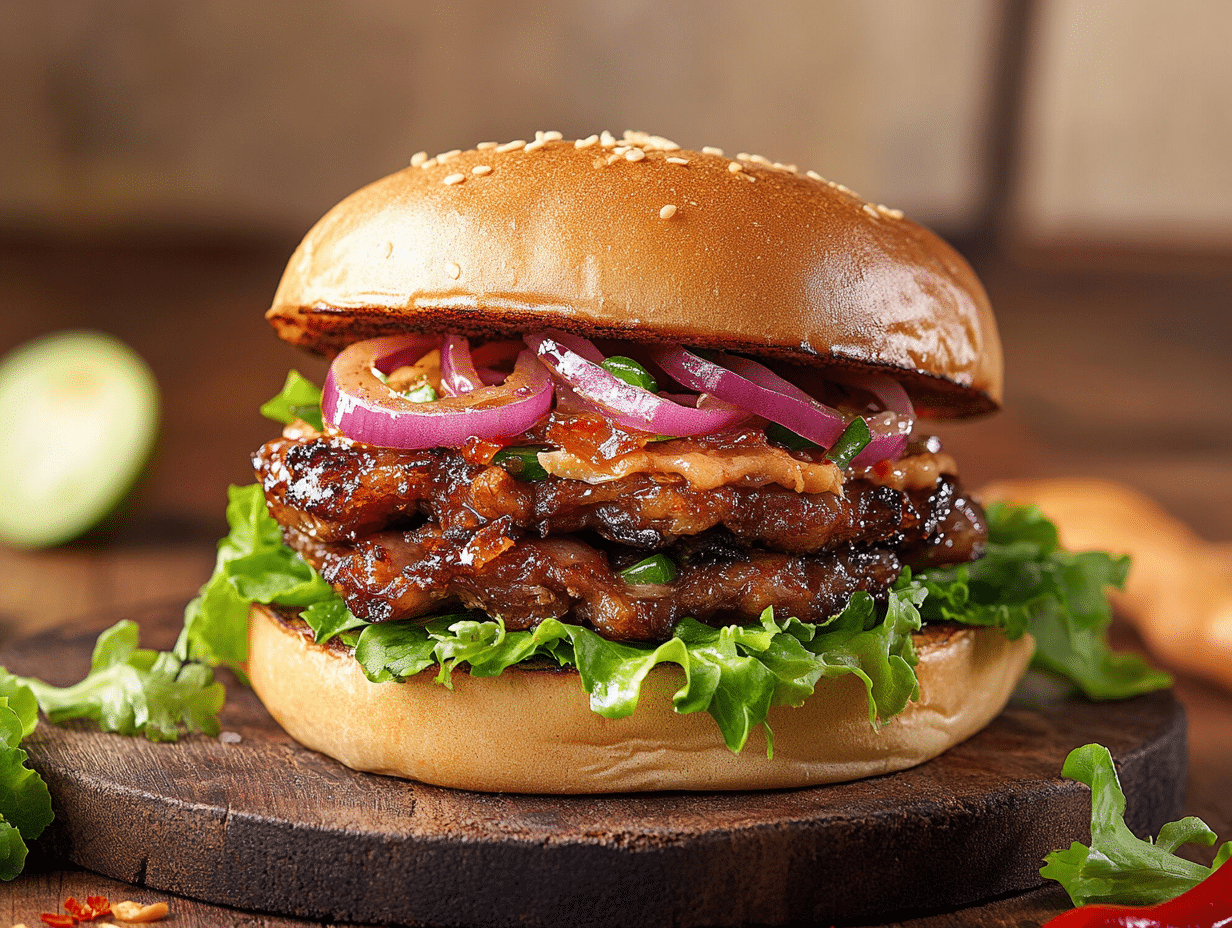
Filipino Sisig Pork Burger

Ingredients
For the Burger Patties:
- 1 lb pork belly skinless, diced into 1/4-inch pieces for even crisping
- 1 tbsp vegetable oil for searing pork
- ½ cup chopped white onion finely chopped
- 3 tbsp soy sauce
- 2 tbsp calamansi juice or substitute with fresh lime juice
- 1 tsp chili flakes adjust to heat preference
For the Pickled Onions:
- ½ cup red onion thinly sliced
- ¼ cup white vinegar
- 1 tsp sugar
For the Calamansi Aioli:
- ½ cup mayonnaise
- 1 tbsp calamansi juice or lime juice
- 1 clove garlic minced finely
For Assembly:
- 4 pieces brioche buns lightly toasted
- 1 cup butter lettuce whole leaves
Instructions
- Pickle the Red Onions: In a small bowl, mix red onion slices, white vinegar, and sugar. Let sit for at least 30 minutes at room temperature while preparing the other ingredients.
- Make the Calamansi Aioli: In a mixing bowl, combine mayonnaise, calamansi juice, and garlic. Whisk until smooth and well-blended. Chill until ready to use.
- Cook the Pork: In a large skillet over medium-high heat, add oil. Fry the pork belly pieces in batches until crispy and golden brown, about 15–20 minutes. Drain excess fat, then add chopped onion, soy sauce, calamansi juice, and chili flakes. Sauté for another 3–5 minutes until aromatic and slightly sticky.
- Toast the Buns: Lightly butter the cut sides of each brioche bun and toast on a hot skillet or grill until golden-brown, about 2 minutes.
- Assemble the Burgers: Spread a generous layer of calamansi aioli on the bottom bun. Layer with butter lettuce, a generous scoop of sisig pork, and a pile of pickled red onions. Cap with the top half of the bun and serve immediately.
Notes
- For extra texture, mix in chopped chicken liver after frying the pork for a more authentic sisig experience.
- To make this dish spicier, add chopped Thai chilis or use a hot chili oil drizzle before serving.
- Dietary Adaptation: Swap pork with firm tofu or jackfruit for a vegetarian version.