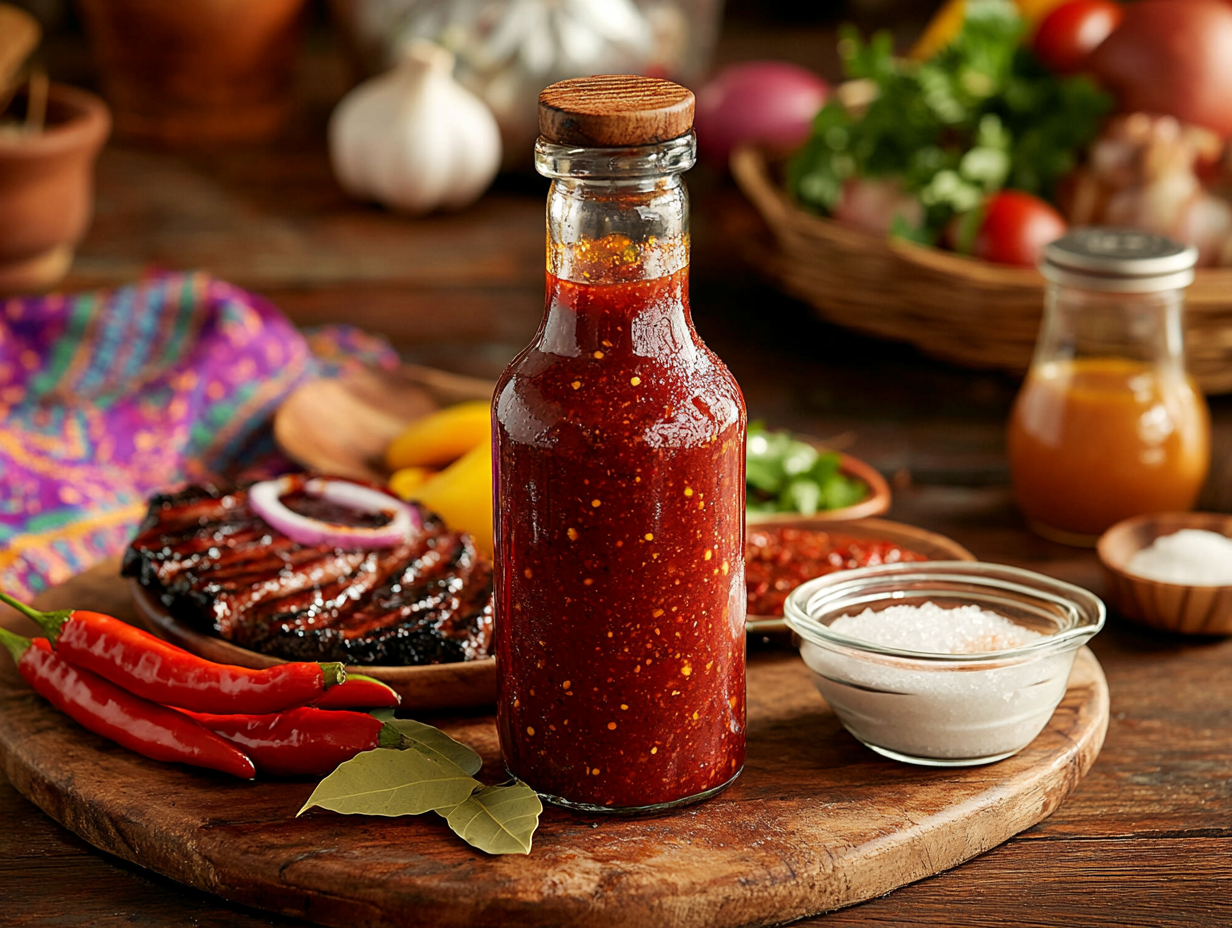
Malagueta pepper sauce is a sharp, vinegary hot sauce made from small Brazilian chilies, garlic, onion, and vinegar — blended smooth and ready in 25 minutes. It keeps for weeks in the fridge and gets noticeably better after a couple of days. If you want a real all-purpose hot sauce that works on burgers, grilled meat, beans, and eggs, this is worth making a jar of.
What makes this version work
Two things matter here. First, you sauté the onion, garlic, and peppers in olive oil before adding the vinegar — that short cook time softens the raw edge of the aromatics and pulls flavor into the oil, so the finished sauce tastes rounded rather than sharp and one-note. Second, you simmer the vinegar gently without boiling it hard. A rolling boil drives off the acidity too fast and leaves the sauce flat. Keep it at a low simmer for a minute or two, then pull it off the heat before blending. Skip adding extra vinegar after blending to adjust heat — it throws off the balance the cooking built.
Shopping notes
- Malagueta peppers: Fresh ones are hard to find outside Brazilian or Latin grocery stores. Jarred malagueta peppers packed in vinegar work well and are more widely available — drain them and reduce the added vinegar by about a third since they already carry acidity. Bird’s eye chilies are the most practical fresh substitute; the heat level is similar, though the flavor is slightly less fruity.
- Vinegar: White wine vinegar is a closer match to the traditional flavor than plain distilled white vinegar, which can taste a little harsh. Apple cider vinegar works fine and gives a slightly softer result.
- Bay leaves: Dried bay leaves do the job here. No need to buy fresh.
- Olive oil: Any neutral cooking oil works if you don’t have olive oil on hand — the amount is small enough that the difference is minor.
Common problems and fixes
- Sauce tastes too sharp right after blending: This is normal. The vinegar flavor mellows significantly after 24 hours in the fridge. Taste it the next day before adding anything to adjust it.
- Sauce is too thin: You blended it too long or added extra liquid. Pour it into a small saucepan and simmer uncovered for 3–5 minutes to reduce it slightly.
- Sauce is too thick to pour: Stir in a tablespoon of water or extra vinegar at a time until it loosens. Don’t add oil — it can separate.
- Heat level is overwhelming: Remove seeds from half the peppers before cooking. The seeds and inner membranes carry most of the capsaicin. You can also increase the sugar to up to a full tablespoon without making the sauce taste sweet.
- Blender lid blew off from steam: Let the cooked mixture sit off the heat for at least 5 minutes before transferring to the blender, and hold a folded kitchen towel firmly over the lid when you start blending. Fill the blender no more than halfway.
Storage and reheating
Pour the finished sauce into a clean glass jar with a tight lid and refrigerate it. It keeps well for up to 3 weeks. The flavor peaks around day 2 or 3 as the ingredients meld together, so making it a day ahead is genuinely worth doing. For longer storage, freeze it in an ice cube tray, then transfer the frozen cubes to a zip-top bag — they’ll keep for 3 months and you can thaw exactly as much as you need. This sauce doesn’t need reheating before serving; use it straight from the fridge. If you want to warm it, a quick 30 seconds in a small saucepan over low heat is enough.
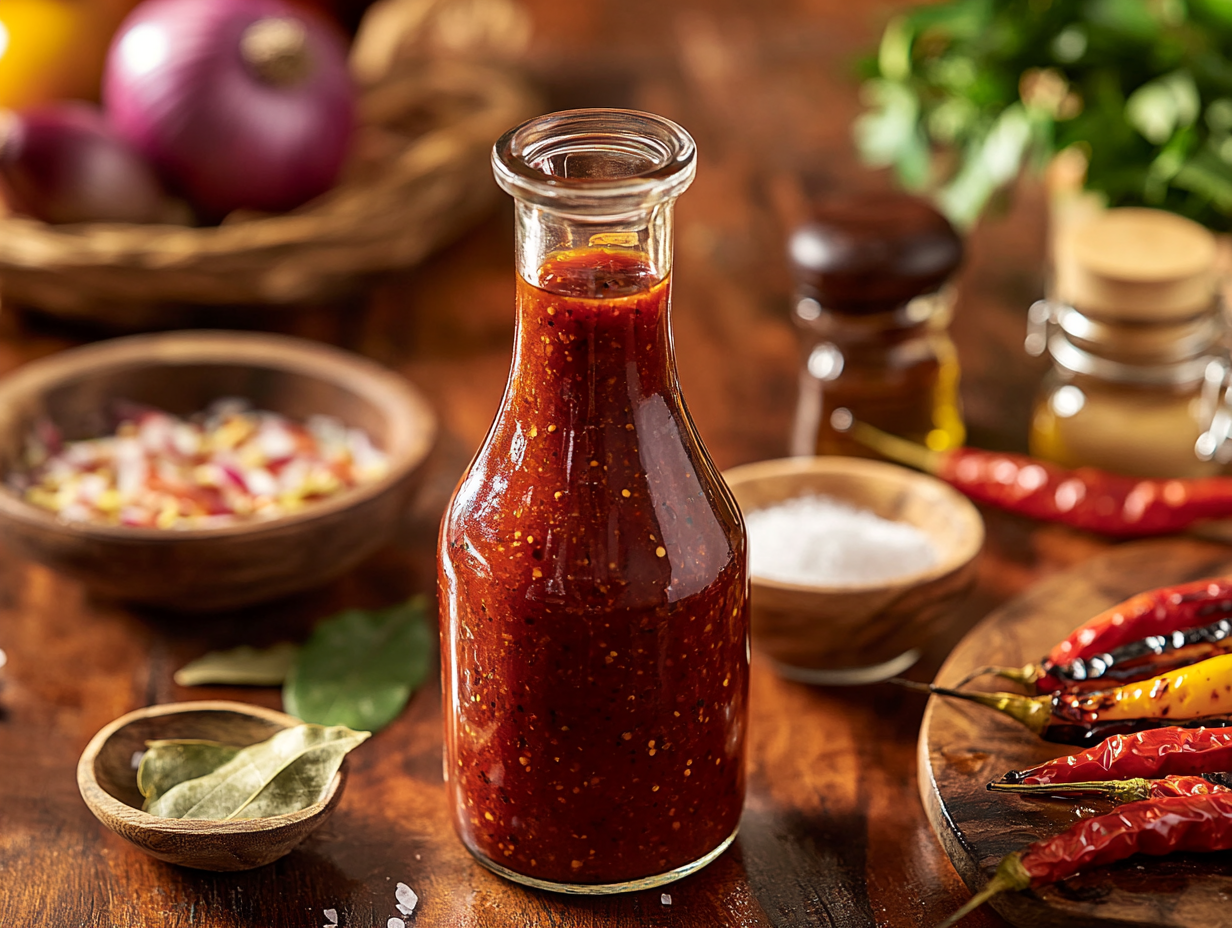
Brazilian Malagueta Pepper Sauce

Ingredients
- 10 small Malagueta peppers stems removed and roughly chopped
- 1 cup white vinegar or apple cider vinegar for a milder tang
- 2 tablespoons olive oil preferably extra virgin
- 1 medium red onion finely chopped
- 4 cloves garlic minced
- 1 teaspoon sugar optional, to balance the heat
- 1 teaspoon salt to taste
- 2 pcs bay leaves adds depth to the flavor
Instructions
- In a skillet, heat the olive oil over medium heat. Add the chopped onions and garlic, and sauté for about 3-4 minutes until they are fragrant and the onions become translucent. This step enhances the aromatics' flavors, softening their sharpness.
- Add the chopped Malagueta peppers to the skillet, stirring well to combine with the onions and garlic. Cook for an additional 2-3 minutes, allowing the peppers to release their heat and infuse the oil.
- Pour in the vinegar and add the sugar and salt, gently stirring until the sugar is dissolved. Bring the mixture to a simmer without letting it boil to retain the vinegar's acidity.
- Transfer the hot mixture to a blender or food processor, adding the bay leaves. Blend until smooth, adjusting the seasoning with salt or additional sugar if needed. Remember to let the mixture cool slightly before blending to avoid creating too much steam.
- Once blended to your desired consistency, pour the sauce into a sterilized jar or bottle and let it cool completely before sealing. Store in the refrigerator where it will develop its flavors further over time.
Notes
Nutrition
Common questions
Can I use dried malagueta peppers instead of fresh?
Yes, dried malagueta peppers work. Rehydrate them in warm water for 15–20 minutes first, then drain and use them the same way as fresh — just expect a slightly deeper, less bright flavor in the finished sauce.
How hot is this sauce compared to something like Tabasco?
Noticeably hotter. Malagueta peppers sit at 60,000–100,000 Scoville units, which is several times hotter than Tabasco. If you want to dial it back, use 5–6 peppers instead of 10 and remove the seeds.
Do I have to blend it smooth, or can I leave it chunky?
You can leave it chunky — pulse the blender a few times instead of running it fully. A chunkier texture works especially well as a topping for burgers or grilled meat where you want visible bits of pepper and onion.
Is it safe to can this sauce for shelf-stable storage?
Not with a standard home process — the oil content makes it unsuitable for water-bath canning without tested adjustments. Stick to refrigerator storage for up to 3 weeks or freeze it for longer keeping.
What’s the best way to use this on a burger?
Use it as a straight swap for any hot sauce you’d normally reach for — drizzle it on the patty just before the bun goes on. It pairs especially well with beef burgers that have a smoky char, and it cuts through rich toppings like avocado or a fried egg.
If you liked this one
- Wendy’s Bacon Jalapeño Burger
- Spicy Jalapeño King Burger
- Nashville Hot Chicken Perfected
- Hawaiian Teriyaki Burger Recipe