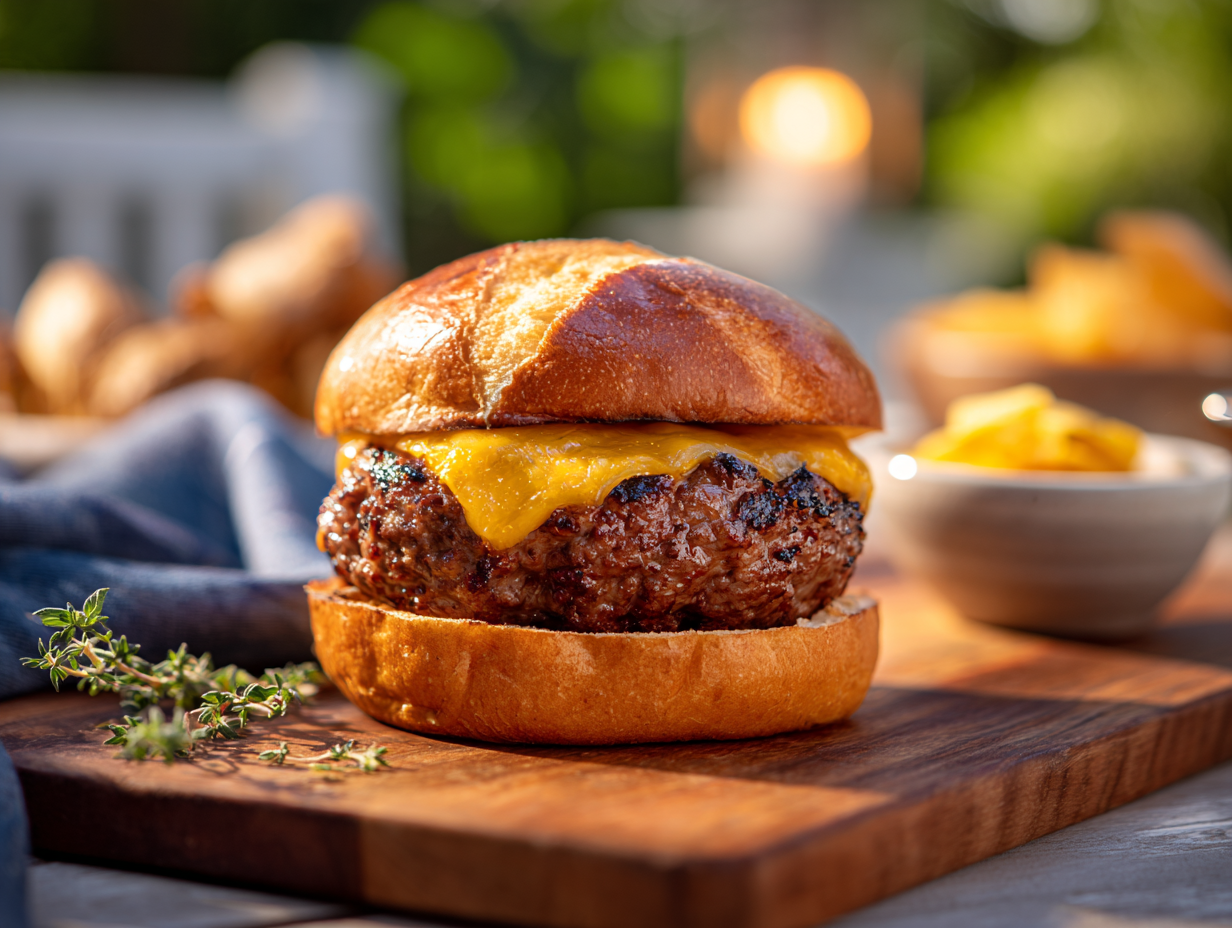
This is a straightforward beef burger patty built around two things: the right fat ratio and a couple of small technique choices that actually change the result. It uses pantry staples and cooks in under 15 minutes. That makes it a genuinely useful weeknight recipe, not just a weekend project.
The short version of why this works
Two things carry this recipe. First, 80/20 ground chuck — that fat content keeps the patty moist through the high heat it needs to brown properly. Leaner beef dries out before you get a decent crust. Second, grated frozen butter worked into the raw meat melts during cooking and bastes the patty from the inside, which is why the texture stays tender even if you cook it to a full 160°F. Neither trick is complicated, but skipping either one is why homemade burgers often disappoint.
About the ingredients
- Ground chuck vs. generic ground beef: Chuck is labeled by cut, which tells you where the fat comes from. Generic ground beef can be a mix of trimmings with unpredictable texture. Chuck is worth asking for specifically.
- Worcestershire sauce: A small amount adds depth without tasting like anything identifiable. Soy sauce works as a 1:1 swap in a pinch — use slightly less since it’s saltier.
- The butter: Freeze it for 10 minutes before grating so it stays in distinct shreds rather than smearing. Skip the egg in the mix — it makes the patty mushy and you don’t need a binder here.
- Cheddar: Sharp cheddar is the default, but any cheese that melts cleanly works. American cheese melts faster if you’re in a hurry.
Keeping and reheating
Cooked patties keep in the fridge for up to 3 days in an airtight container. To reheat, skip the microwave — it steams the patty and turns the texture rubbery. Instead, put it in a dry skillet over medium heat for about 2 minutes per side, or until it hits 165°F internally (reheated ground beef should always be brought back to a safe temperature). Raw formed patties can be stacked with parchment between them and frozen for up to 3 months; thaw overnight in the fridge before cooking, not on the counter.
If something goes sideways
- Patty puffs up into a dome: The thumbprint in the recipe card prevents this, but if you forgot it, the fix mid-cook is to press the center gently with a spatula just once in the first 60 seconds — before the crust sets. After that, you’re stuck with the dome.
- Burger sticks to the grill grates: It’s usually not ready to flip yet. A patty releases naturally when the crust has formed. Give it another 30–60 seconds before trying again instead of forcing it.
- Patty falls apart in the pan: The meat was either overworked, too warm, or packed too loosely. Chill formed patties for 15 minutes before cooking — cold fat holds the structure together better than anything you could add to the mix.
- No crust, just gray meat: The pan or grill wasn’t hot enough, or the patty went in wet. Pat the surface dry with a paper towel before it hits the heat, and make sure the cooking surface is fully preheated before the meat touches it.
- Cheese won’t melt in time: Add a splash of water to the pan and cover with a lid for 30–45 seconds. The steam melts the cheese fast without overcooking the patty.
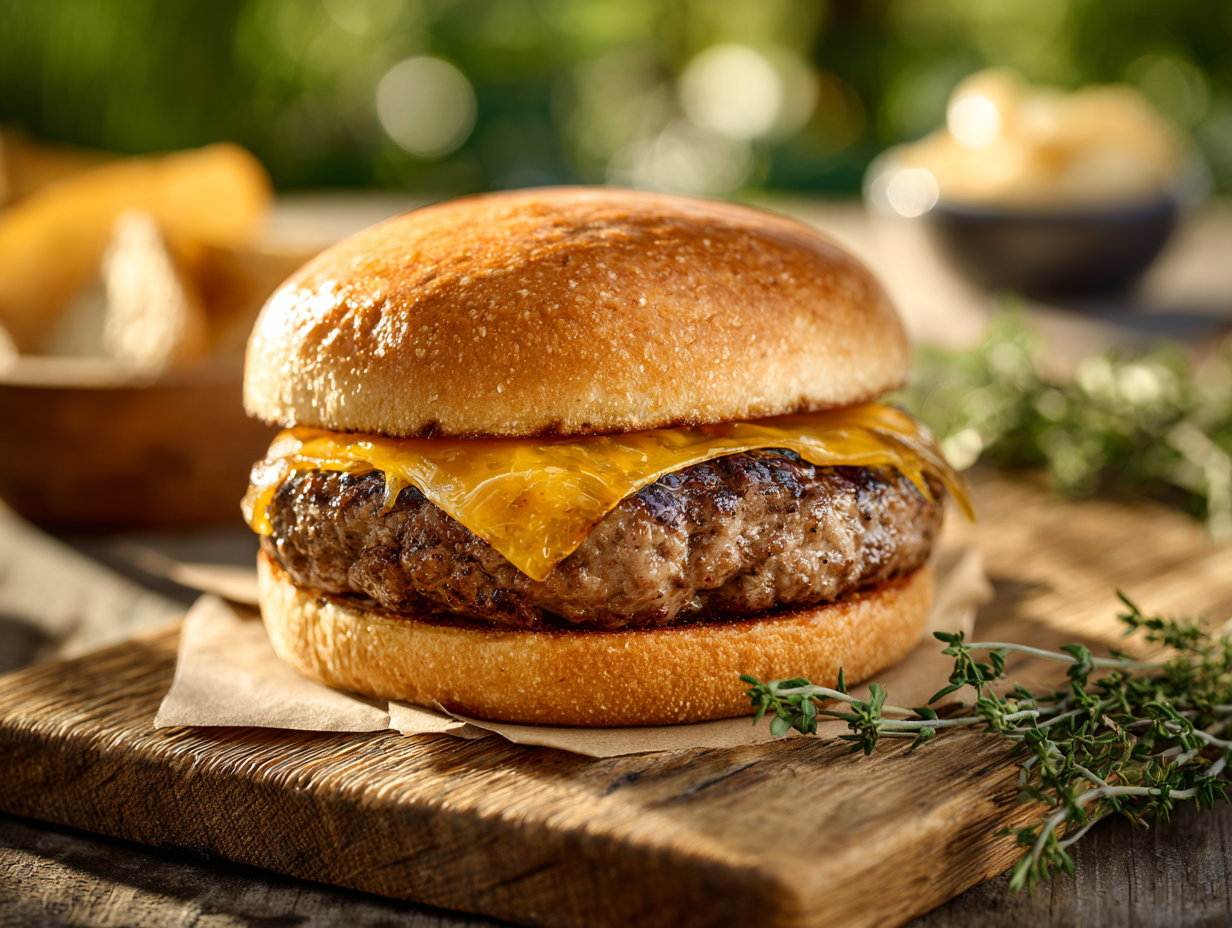
The Best Hamburger Patty Recipe

Ingredients
- 1 ½ pounds 80/20 ground chuck beef freshly ground if possible; 80% lean for ideal juiciness and flavor
- 2 tablespoons unsalted butter grated or very soft, for richness and caramel notes
- 1 teaspoon kosher salt adjust to taste
- ½ teaspoon freshly ground black pepper fresh ground for a better flavor profile
- 1 teaspoon Worcestershire sauce adds umami depth
- 4 slices cheddar cheese sharp aged cheddar preferred, optional
Instructions
- Mix the Patty Base: In a large chilled bowl, gently combine the ground chuck, grated butter, salt, black pepper, and Worcestershire sauce. Mix with your hands just until combined—overworking will make the patties tough. The butter will melt into the meat during cooking, creating extra juiciness and a rich, deep flavor.
- Form the Patties: Divide the mixture into 4 equal portions. Gently shape each into round patties approximately 3/4 inch thick and 4 inches wide. Press a slight indentation in the center of each patty using your thumb—this prevents doming and helps even cooking.
- Preheat and Sear: Heat a cast-iron skillet or grill to medium-high heat (about 400°F / 204°C). Place patties onto the dry, heated surface. Do not press them down—you want to retain juices. Cook undisturbed for 3-4 minutes until a crust forms and juices start to appear on the top.
- Flip and Top with Cheese: Flip the patties with a wide spatula and cook an additional 3-4 minutes for medium doneness. In the last minute of cooking, top each with a slice of cheddar cheese and cover to help it melt fully.
- Rest the Patties: Remove patties from heat and let rest for 2-3 minutes before serving. This allows juices to redistribute, making each bite perfectly moist.
Notes
- For gluten-free, omit Worcestershire or use a gluten-free brand.
- You can substitute ground sirloin for a leaner version, but reduce cook time slightly to avoid dryness.
- For extra smoky flavor, add 1/2 teaspoon smoked paprika to the blend.
- Make Ahead: Form patties in advance and refrigerate, covered, for up to 24 hours before cooking.
Nutrition
Frequently asked questions
Can I use 90/10 ground beef if that’s what I have?
You can, but the patty will be noticeably drier and more prone to overcooking. If 90/10 is all you have, reduce cook time by about a minute per side and pull the patty at exactly 160°F — there’s very little margin before it dries out.
Do I have to let the patties rest before serving?
Yes — even 2 to 3 minutes makes a real difference. Cutting in immediately lets the juices run out onto the plate instead of staying in the meat.
Can I mix and form the patties ahead of time?
Yes, and it actually helps. Formed patties can sit covered in the fridge for up to 24 hours before cooking. The cold firms up the fat and the patties hold their shape better on the heat.
If you liked this one
- Perfect Bacon Double Cheeseburger
- Ultimate Avocado Bacon Smash Burger
- BBQ Cheeseburger Recipe
- Angus Bacon Guacamole Burger