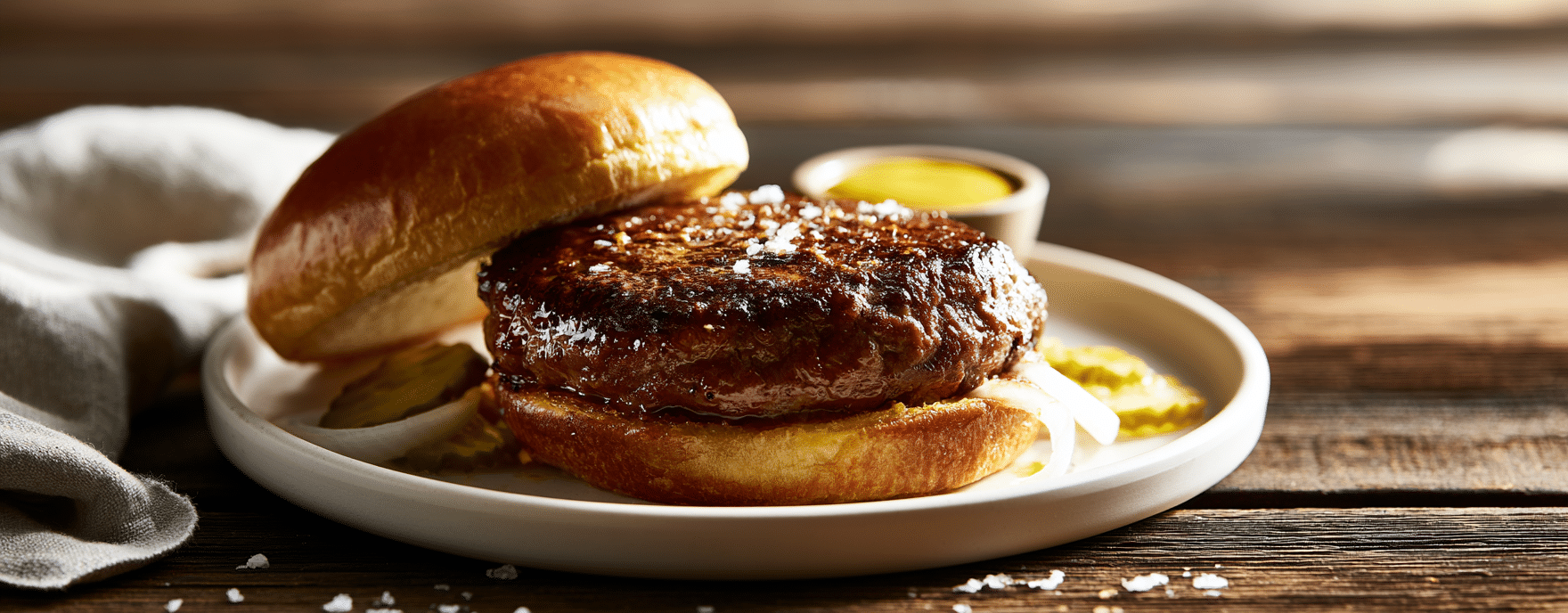
This is a quarter-pound beef burger made with exactly three ingredients: ground beef, salt, and butter. The reason to make it is simple — when the beef is good, a heavy hand with salt and a hot skillet will get you a juicier, better-crusted burger than most people manage with a spice rack full of additions.
Shopping notes
- Ground beef fat content: Look for 80/20 (chuck) at minimum. Leaner blends will dry out in a hot skillet before you get a proper crust. Grass-fed 80/20 is worth it here since the beef is the whole point, but conventional 80/20 still works well.
- Salt: Kosher or coarse sea salt is the call — the larger crystals form a better crust than fine table salt, which can draw out moisture too quickly and turn the surface wet before it browns.
- Butter vs. ghee vs. coconut oil: Ghee has a higher smoke point than whole butter, so it’s a practical choice if your skillet runs extremely hot. Coconut oil adds a faint sweetness some people like; others don’t. Plain unsalted butter is the most straightforward option and the one that tastes most like a classic diner burger.
The short version of why this works
Two things drive the result here. First, a screaming-hot dry skillet creates the Maillard reaction fast — that’s the browning that builds a salty, savory crust on the outside while the inside stays moist. A grill disperses heat and lets fat drip away; a skillet traps it. Second, salting generously on both sides before the patty hits the pan seasons the meat all the way through in the short time it takes to cook, rather than leaving seasoning only on the surface. Those two things together — high heat and confident salting — are what separate a flat, grey patty from one with real flavor.
Troubleshooting
- Patty puffs up in the center: This happens when connective tissue tightens during cooking. Press a shallow thumbprint into the center of each raw patty before it goes in the pan — about a quarter inch deep. It will cook flat.
- Crust is grey instead of brown: The pan wasn’t hot enough, or the patty was too cold straight from the fridge. Let patties sit at room temperature for 10 minutes before cooking, and make sure the skillet is fully preheated — a drop of water should evaporate on contact before you add fat or meat.
- Burger sticks to the pan: Don’t try to move it early. A patty that’s building a crust will release on its own when it’s ready. Forcing it tears the crust and loses the fond. Give it the full 3–5 minutes before you attempt a flip.
- Patty falls apart when flipped: The beef was overworked or the portions were packed too loosely. Form patties with minimal handling — just enough pressure to hold together — and use a wide, thin spatula so the whole patty is supported during the flip.
- Burger tastes underseasoned even after heavy salting: Skip the egg in the mix — it makes the patty mushy and dilutes the salt’s effect on the crust. If you salted well on both sides and still want more, add a small pinch directly to the cooked side right after flipping.
Keeping and reheating
Cooked patties keep in an airtight container in the fridge for up to 3 days. To reheat without drying them out, put the patty in a cold skillet, add a teaspoon of water, cover with a lid, and warm over medium-low heat for 2–3 minutes per side — the steam keeps moisture in. Avoid the microwave if you can; it toughens the meat quickly. Raw formed patties can be frozen for up to 2 months: stack them with a square of parchment between each one, seal tightly, and thaw overnight in the fridge before cooking. Cook all ground beef patties to an internal temperature of 160°F (71°C), whether fresh or from frozen.
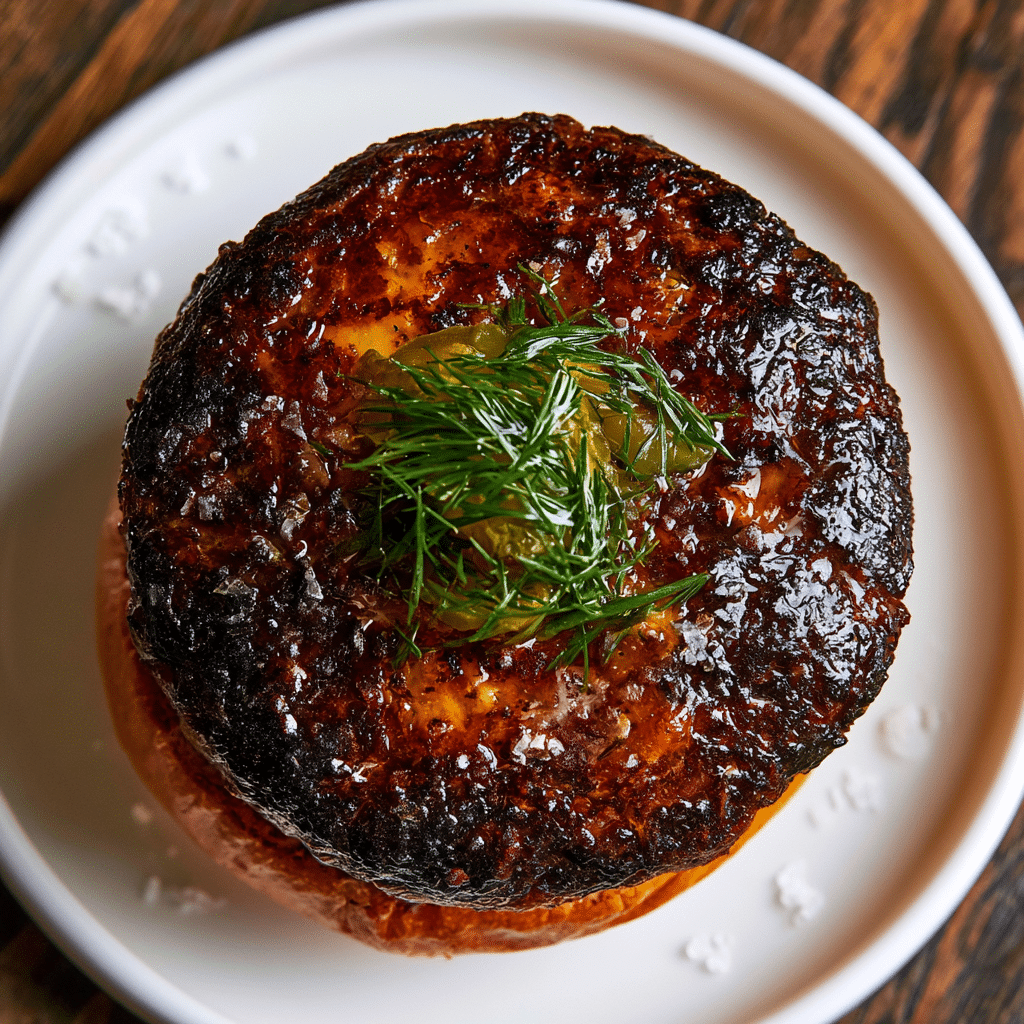
Three-Ingredient Quarter Pound Burger (Skillet)

Equipment
- 12-inch cast iron or heavy-bottomed skillet
- Instant-read thermometer
- Wide spatula (thin-edged for getting under the crust)
- Aluminium foil (for resting)
- Rimmed plate or sheet pan (for resting patties)
Ingredients
- 1 pound ground beef 80/20 or grass-fed preferred, about 454g
- 1 teaspoon kosher salt or ¾ teaspoon fine sea salt, plus more to taste
- 1-2 tablespoons unsalted butter ghee or coconut oil may be substituted (optional — the beef fat may be sufficient), 14-28g
Instructions
- Divide the beef into 4 equal portions (about 4 oz / 113g each). Gently form each into a patty about ¾-inch thick — handle the meat as little as possible so the patties stay tender.1 pound ground beef
- Set patties in a single layer on a plate. Shower each patty with salt, quite generously. Seriously, don’t be afraid of the salt here – it is the only seasoning for the meat.1 teaspoon kosher salt
- Heat a large skillet over high heat. Add a pat of butter or spoon of ghee or coconut oil if using.1-2 tablespoons unsalted butter
- Place 2 burger patties in the skillet, salt side down. Sprinkle each patty with a bit more salt. You want to get a good crust on these, so don’t overcrowd the pan and allow the burgers to steal heat from each other. It’s better to work in a couple of batches.1 pound ground beef, 1 teaspoon kosher salt
- Cook patties for 3 to 4 minutes until a deep brown crust forms on the underside. Flip and cook another 3 to 4 minutes until the internal temperature reaches 160°F (71°C) on an instant-read thermometer. Use an instant-read thermometer to check doneness — ground beef is safe at 160°F (71°C) internal temperature. Remove from the skillet promptly to avoid overcooking during the rest.1 pound ground beef
- Transfer patties to a plate and loosely cover with foil. Repeat above cooking steps with remaining patties.
- Resting is not just for steak cuts – burgers benefit from a few minutes of downtime too. Once your burgers have rested for 3 to 4 minutes, they’re ready to go on your bun. Resting lets the juices redistribute so they don’t flood out on the first bite.
Notes
Nutrition
Your questions, answered
Can I cook this burger to medium or medium-rare?
Ground beef should be cooked to 160°F (71°C) internal temperature for food safety — that’s the USDA recommendation for any ground or minced beef. Unlike a whole-muscle steak, ground beef has surface bacteria mixed throughout the grind, so a pink center carries real risk; use an instant-read thermometer to check.
What should I serve with a three-ingredient burger to make it a full meal?
The patty itself is neutral enough to go in any direction — classic bun with American cheese and pickles, lettuce wrap for a lower-carb plate, or sliced over a simple green salad. Because there’s no competing seasoning in the meat, it pairs cleanly with bold toppings like caramelized onions, sharp cheddar, or a fried egg without anything clashing.
Does the type of skillet matter — cast iron vs. stainless vs. nonstick?
Cast iron and stainless both retain heat well at high temperatures and will give you the best crust. Nonstick pans are not designed for high-heat searing and can degrade at the temperatures needed here, so they’re not the right tool for this recipe. If cast iron is what you have, it’s the top choice.
Try these next
- Copycat Quarter Pounder Recipe
- Ultimate Avocado Bacon Smash Burger
- NYC Bacon Smash Burger
- Perfect Bacon Double Cheeseburger