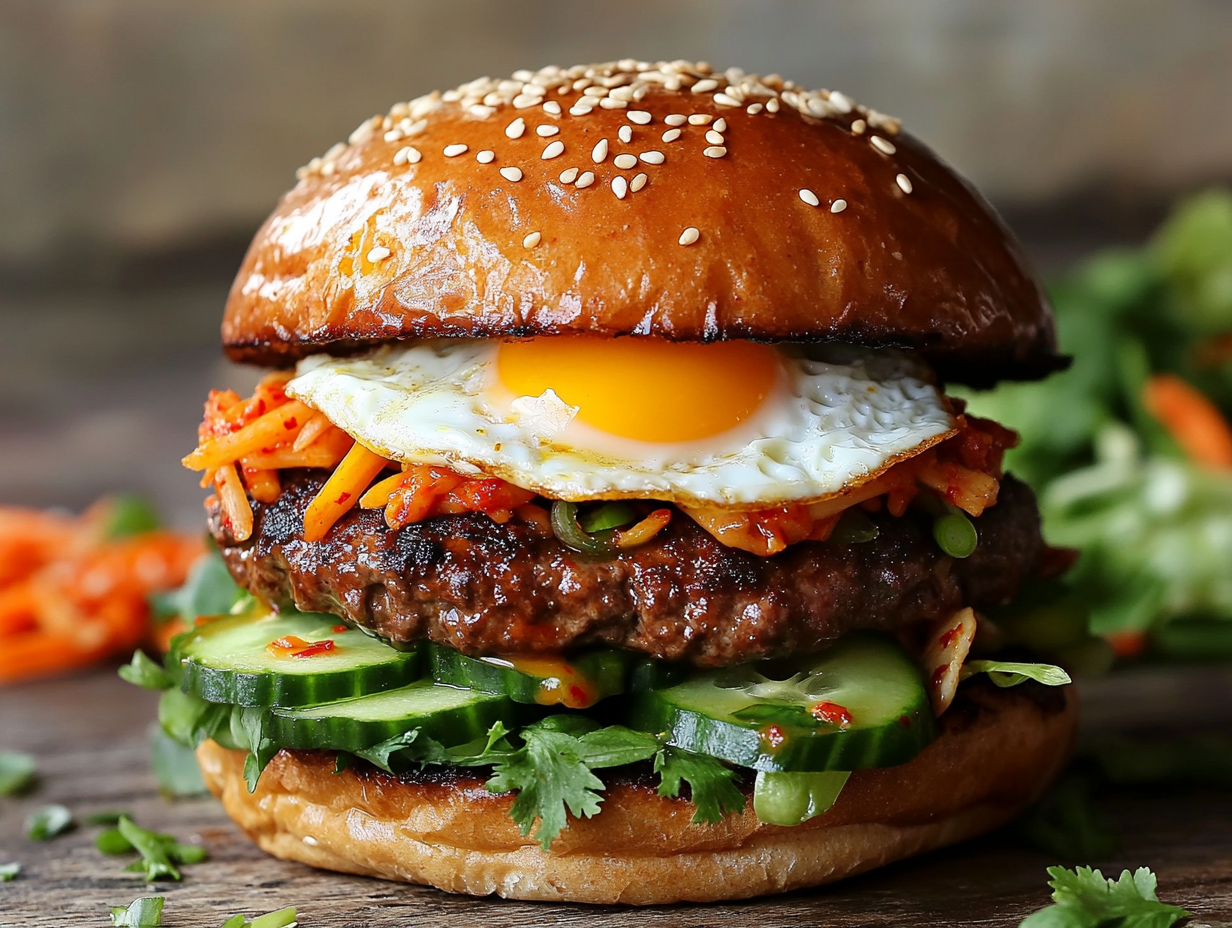
This burger takes the core components of bibimbap — gochujang-seasoned beef, crunchy vegetables, kimchi, and a fried egg — and stacks them between a bun. The honest reason to make it: you get a genuinely complete meal in one hand, with real depth of flavor from fermented and fresh ingredients working together.
What makes this version work
Two things matter most here. First, the gochujang marinade — gochujang, soy sauce, garlic, sesame oil, and a touch of sugar — does double duty: it seasons the beef all the way through and the sugars caramelize on a hot grill, giving you a slightly charred, savory crust that a plain beef patty never gets. Second, the fried egg is not optional decoration. Cook it to a runny yolk and let it break when you take the first bite; it coats the kimchi and vegetables and pulls the whole stack together the way the sauce does in a bowl of bibimbap. Skip adding the egg directly into the patty mix — it makes the patty mushy and you lose the textural contrast that makes this burger interesting.
What can go wrong
- Patty falls apart on the grill: Gochujang adds moisture. If your ground beef is already on the leaner side (90/10 or higher), the patty can crumble. Use 80/20 ground beef and chill the formed patties for at least 15 minutes before they hit the grill.
- Gochujang sauce burns before the patty is done: Gochujang has sugar in it and scorches fast over direct high heat. Sear the patty on high to build the crust, then move it to a medium or indirect zone to finish. Pull it at 160°F (71°C) internal — use a thermometer.
- Soggy bun from the kimchi: Chopped kimchi releases liquid as it sits. Drain it briefly on a paper towel right before assembling. Don’t prep the assembled burger ahead of time.
- Bean sprouts turn limp and watery: Blanch them for no more than 60 seconds in boiling water, then transfer immediately to ice water and pat dry. Any longer and they lose their crunch entirely.
- The burger is too tall to eat: With a fried egg, kimchi, sprouts, carrots, and cucumber all stacked up, height becomes a real problem. Press the bun down firmly after assembly, or toast a slightly flatter bun — brioche slider buns work well if you want to keep it manageable.
Make-ahead notes
The gochujang sauce keeps in a sealed jar in the fridge for up to two weeks, so make a double batch. Formed raw patties can be refrigerated on a parchment-lined plate, covered, for up to 24 hours, or frozen (separated by parchment) for up to two months — thaw overnight in the fridge before grilling. The blanched bean sprouts and julienned carrots can be prepped and stored in airtight containers for up to two days. Kimchi is obviously already shelf-stable in the fridge. The fried egg and the assembled burger should be made fresh; reheating a stacked burger with egg and fresh vegetables is not worth attempting.
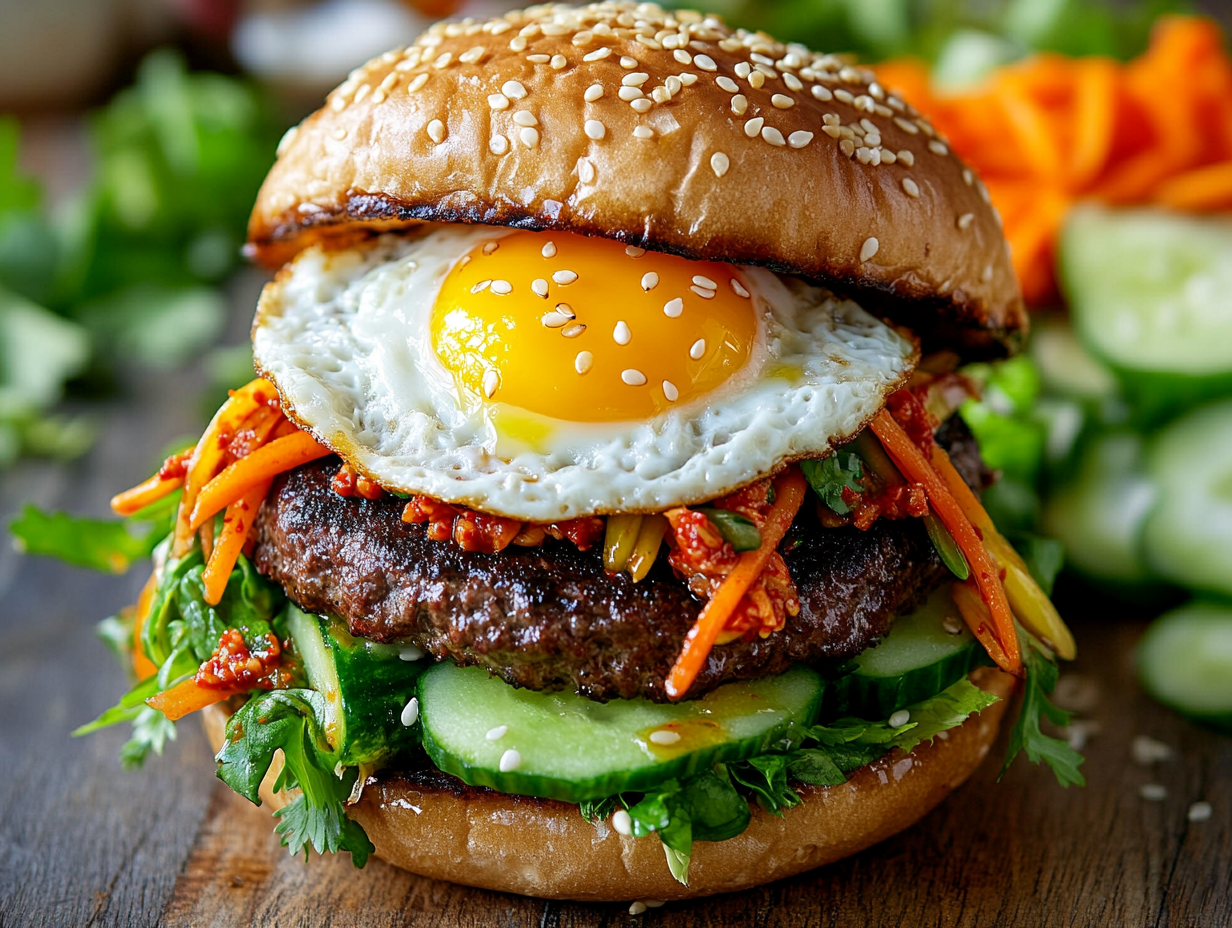
Korean Bibimbap-Inspired Burger

Ingredients
Beef Patty
- 1 lb ground beef Preferably 80/20 ratio for juiciness
- 2 tbsp gochujang Korean fermented chili paste
- 1 tbsp soy sauce Use low-sodium for a balanced flavor
- 2 cloves garlic Minced
- 1 tsp sesame oil
- 1 tsp sugar
Toppings
- 4 medium burger buns
- 1 cup kimchi Chopped
- 1 cup bean sprouts Blanched
- 4 medium fried eggs Sunny-side up
- 1 cup julienned carrots Fresh and crisp
- 1 cup sliced cucumber Thinly sliced for crunch
- 2 tbsp sesame seeds For garnish
Gochujang Sauce
- 2 tbsp gochujang
- 1 tbsp honey
- 1 tbsp rice vinegar
- 1 tsp sesame oil
Instructions
- Prepare the Beef Patty: In a mixing bowl, combine ground beef, gochujang, soy sauce, minced garlic, sesame oil, and sugar. Mix gently until just combined. Form into four equal patties, being careful not to overwork the meat.
- Cook the Patties: Preheat a grill or skillet over medium-high heat. Cook patties for 3-4 minutes per side, or until they reach an internal temperature of 160°F (71°C). Let them rest for a few minutes before assembling.
- Make the Gochujang Sauce: Whisk together the gochujang, honey, rice vinegar, and sesame oil in a small bowl until smooth.
- Assemble the Burger: Toast the burger buns lightly. Spread gochujang sauce on the bottom bun, add the cooked patty, then layer with kimchi, bean sprouts, julienned carrots, cucumber slices, and a fried egg. Sprinkle with sesame seeds.
Notes
- For an extra crispy texture, lightly grill the kimchi before adding it to the burger.
- If you prefer a spicier burger, add extra gochujang to the sauce or top with sliced fresh chilies.
Nutrition
FAQ
Can I use a different protein instead of beef?
Yes — ground pork works well with the same gochujang marinade, but cook it to 160°F (71°C) internal, same as beef. Ground chicken or turkey also works; bring those to 165°F (74°C) and expect a slightly firmer texture, so don’t overwork the mix.
Where do I find gochujang if my grocery store doesn’t carry it?
Most Asian grocery stores stock it, usually in a red tub or squeeze bottle in the condiment aisle. It’s also widely available online. Sriracha is not a substitute — it’s thinner, less complex, and much more vinegary; the flavor of the patty and sauce will be noticeably different.
Can I make this burger without a grill?
A cast-iron skillet over medium-high heat works just as well and actually helps the gochujang crust develop evenly since the heat is consistent. Get the pan hot before the patty goes in, and don’t press it down — you want the juices to stay inside.
What to cook next
- Korean Fried Chicken Burger
- Korean Rice Bulgogi Burger
- Hawaiian Teriyaki Burger Recipe
- Sweet Chili Chicken Burger