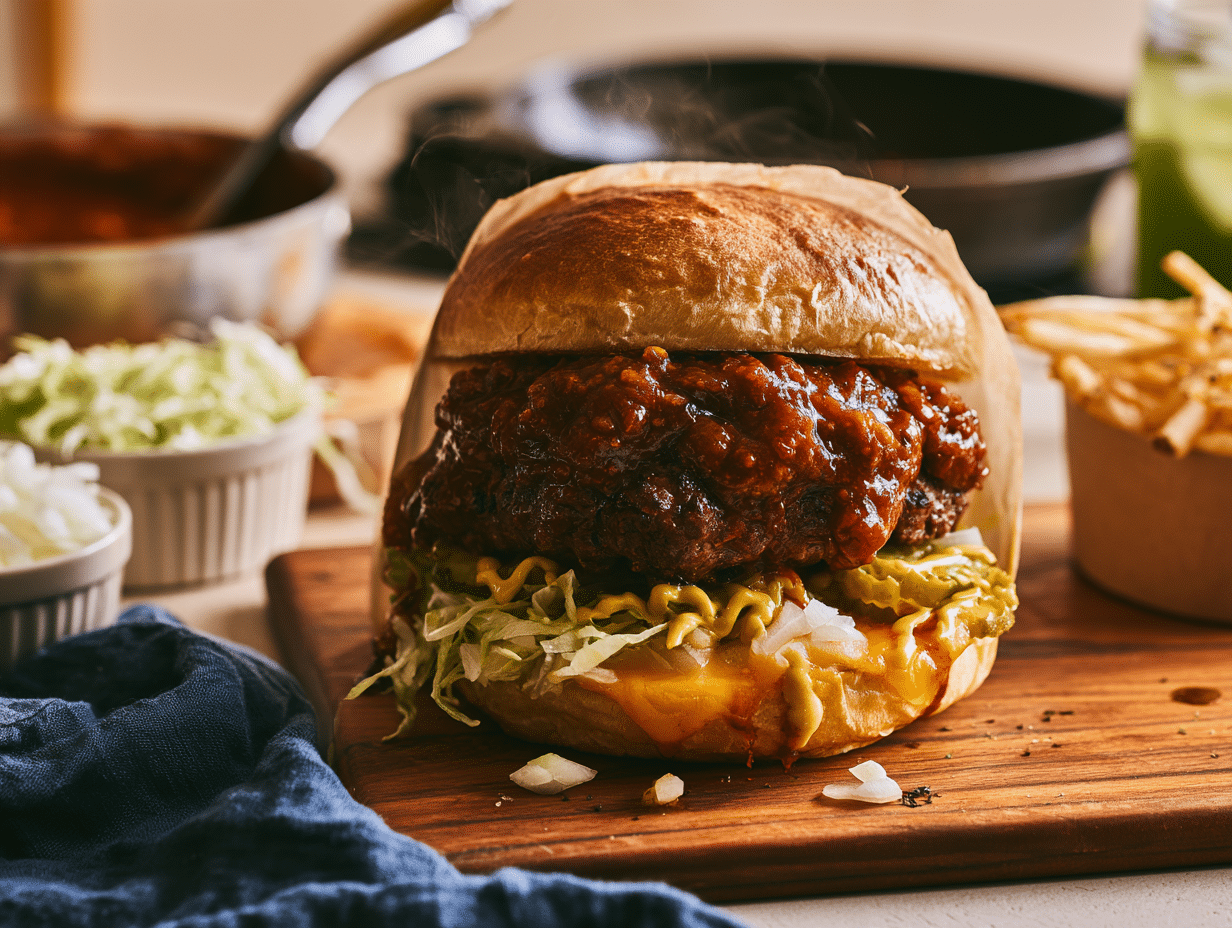
The MOS Burger Chili Burger: A Japanese Fast-Food Icon Reimagined
The Birth of a Japanese Burger Legend
In the bustling streets of Tokyo’s Setagaya district in 1972, a revolutionary concept was born. MOS Burger, founded by Satoshi Sakurada, emerged as Japan’s answer to American fast food—but with a distinctly Japanese sensibility. The name itself tells a story: MOS stands for Mountain, Ocean, Sun, representing the harmonious relationship between nature and food that would define the brand’s philosophy.
Unlike its American counterparts that had begun infiltrating Japan’s food scene, MOS Burger didn’t simply replicate Western burgers. Instead, it created something entirely new—a fusion that respected Japanese palates while embracing the convenience and appeal of hamburgers. This wasn’t just cultural adaptation; it was culinary innovation.
The Signature Chili Burger: A Study in Balance
Among MOS Burger’s many innovations, the chili burger stands as perhaps their most distinctive creation. Introduced in the late 1970s, it represented a radical departure from American chili burgers. Where American versions emphasized bold, aggressive heat and chunky beans, MOS Burger’s interpretation was gentler, more refined—a meat sauce that draped elegantly over the patty rather than overwhelming it.
The genius of this burger lies in its restraint. The chili sauce, known as “meat sauce” in Japan, achieves a delicate balance between savory umami, gentle heat, and a subtle sweetness that would seem foreign to Western palates but feels perfectly at home in Japanese cuisine. This isn’t the chili of Texas roadhouses or Cincinnati parlors—it’s something altogether more nuanced.
Deconstructing the Flavor Profile
What makes the MOS Burger chili so distinctive? It’s a masterclass in layered flavors:
Umami Foundation: The use of soy sauce, Worcestershire, and optional miso paste creates a deep, savory base that anchors the entire sauce. This umami backbone is quintessentially Japanese, turning what could be a simple meat sauce into something more complex.
Controlled Heat: Unlike its American cousins, the spice level here is intentionally mild. The chili powder, cumin, and optional cayenne provide warmth rather than fire, allowing other flavors to shine through.
Sweet Harmony: The addition of ketchup (particularly Japanese Kagome brand) and brown sugar might puzzle American chili purists, but this sweetness is crucial. It rounds out the sauce, creating that signature glossy finish and balanced flavor that makes MOS Burger’s version so craveable.
Textural Precision: The sauce is neither too thick nor too thin—it’s engineered to coat the burger without making it unwieldy, maintaining what the Japanese call “tabeyasusa” (ease of eating).
The Cultural Context: Why This Burger Matters
To understand the MOS Burger chili burger is to understand Japan’s unique approach to adopting foreign cuisine. This isn’t mere imitation—it’s transformation. The burger represents “yoshoku,” the Japanese interpretation of Western food that has created entirely new culinary categories.
In Japanese food culture, presentation and eating experience are paramount. Notice how this recipe emphasizes neat assembly, the importance of wrapping the burger, and maintaining structural integrity. These aren’t afterthoughts—they’re central to the experience. A MOS Burger should be as tidy to eat as it is delicious.
Technical Innovation in Fast Food
MOS Burger pioneered several techniques that set them apart from global chains:
Made-to-Order System: Unlike pre-made burgers sitting under heat lamps, MOS Burger introduced a made-to-order approach in fast food, ensuring freshness and quality.
Temperature Control: The careful attention to serving temperatures—hot meat sauce over a warm patty with cold, crisp lettuce—creates textural contrast that elevates the eating experience.
Ingredient Quality: From day one, MOS Burger emphasized fresh, high-quality ingredients, including never-frozen beef and vegetables delivered daily.
The Home Kitchen Challenge
Recreating this burger at home presents unique challenges. Restaurant versions benefit from specialized equipment and ingredients, but this recipe bridges that gap through clever technique:
The meat mixture uses both beef and pork, mimicking the original’s depth of flavor. The cooking process—building layers of flavor through proper browning and slow simmering—replicates the complexity of the restaurant version. The optional miso paste adds that subtle umami note that makes the sauce authentically Japanese.
Regional Variations and Evolution
As MOS Burger expanded across Asia, the chili burger adapted to local tastes. In Taiwan, it might be slightly sweeter; in Singapore, a touch spicier. Yet the core philosophy remains: balance, quality, and that distinctive Japanese attention to detail.
The burger has also evolved with changing dietary preferences. MOS Burger now offers plant-based versions, maintaining the signature sauce while adapting to contemporary needs—proof that innovation remains central to their philosophy.
Why This Recipe Works
This homemade version succeeds because it understands what makes the original special. It’s not trying to create an American chili burger with Japanese ingredients—it’s faithfully recreating a uniquely Japanese interpretation of Western food.
The careful attention to technique—from rinsing the diced onions to achieving the perfect sauce consistency—mirrors the precision that makes Japanese fast food exceptional. Even the serving suggestions, like wrapping the burger in parchment, acknowledge that presentation and eating experience are inseparable from flavor.
A Lasting Legacy
Today, MOS Burger operates over 1,700 locations across Asia, but its influence extends far beyond numbers. It proved that fast food could be thoughtful, that cultural fusion could create something genuinely new, and that attention to detail matters even in quick-service restaurants.
This chili burger isn’t just a menu item—it’s a testament to Japanese innovation, a bridge between cultures, and proof that sometimes the best culinary creations come from respectfully reimagining tradition. In every glossy spoonful of that meat sauce, in every perfectly balanced bite, you taste not just a burger, but a philosophy: that fast food can be both quick and crafted, convenient and thoughtful, global and distinctly local.
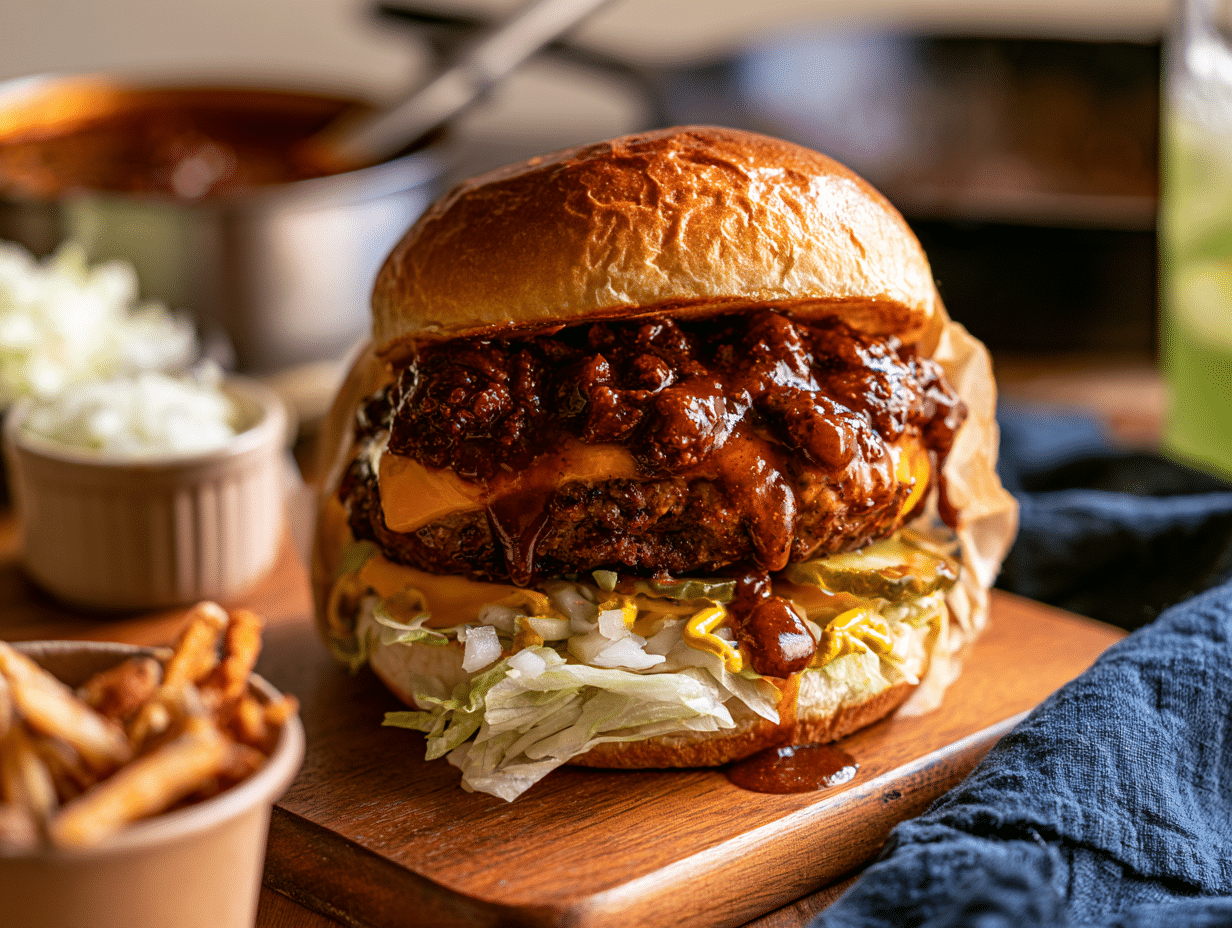
MOS Burger–Style Chili Burger

Ingredients
Meat Chili Sauce
- 1 tbsp neutral oil grapeseed or canola
- 1 cup yellow onion finely minced (about 1 medium)
- 3 cloves garlic minced
- 8 oz ground beef 85% lean
- 4 oz ground pork
- 1 tbsp chili powder mild
- 1 tsp ground cumin
- 1 tsp smoked paprika
- 1 cup tomato sauce
- 2 tbsp ketchup Kagome preferred if available
- 1 tbsp tomato paste
- 1 tbsp soy sauce
- 2 tsp Worcestershire sauce
- 1 tbsp light brown sugar packed
- 1 tsp rice vinegar
- 1 tsp white miso paste optional, for umami
- ½ cup water or low-sodium beef broth
- ¼ tsp cayenne pepper optional, to taste
- ½ tsp kosher salt plus more to taste
- 1 tsp cornstarch for slurry, if needed
- 1 tbsp water for slurry, if needed
Burger Patties
- 1 lb ground beef 80% lean
- 1 ¼ tsp kosher salt
- 1 tsp freshly ground black pepper
- ½ tsp garlic powder optional
- 1 tbsp neutral oil for searing
To Assemble
- 4 whole soft burger buns potato or milk-bread style
- 2 tbsp unsalted butter softened
- 2 cups shredded iceberg lettuce well chilled
- ½ cup white onion finely diced and rinsed
- 4 slices American cheese optional
- 2 tsp yellow mustard optional
- 12 chips dill pickles optional
Instructions
- Start the chili base (5 minutes): Set a medium saucepan over medium heat (about 350°F/175°C surface temperature). Add 1 tbsp neutral oil, then the minced onion and a pinch of salt. Cook, stirring, until translucent and sweet, about 5 minutes; edges should look glossy, not browned. Add garlic and cook 30 seconds until fragrant.
- Brown the meat (5 minutes): Add ground beef and pork. Cook, breaking it up with a spatula, until no pink remains, about 5 minutes. Spoon off excess fat if needed for a cleaner, lighter sauce.
- Season and simmer (17 minutes): Stir in chili powder, cumin, and smoked paprika; toast 30 seconds. Add tomato sauce, ketchup, tomato paste, soy sauce, Worcestershire, brown sugar, rice vinegar, miso (optional), and 1/2 cup water or broth. Bring to a gentle simmer (bubbles lazily break the surface, ~185–195°F / 85–90°C), then cook uncovered for 17 minutes, stirring occasionally. The sauce should thicken and become glossy; a spoon dragged through should leave a brief trail.
- Meanwhile, prep patties (during simmer, 8–10 minutes): In a bowl, gently mix 1 lb ground beef with 1 1/4 tsp salt, 1 tsp pepper, and garlic powder (optional). Divide into 4 balls (about 4 oz each) and form 4-inch patties with a shallow dimple in the center (prevents doming). Chill 5–10 minutes to firm while the chili simmers.
- Toast buns (3 minutes): Split buns and spread cut sides with softened butter. Toast cut sides in a skillet over medium heat (about 350°F/175°C) until golden, 2–3 minutes. For extra softness, cover the pan for the last 20–30 seconds to lightly steam. Keep warm.
- Sear patties and melt cheese (6–8 minutes): Heat a cast-iron skillet or griddle over medium-high until shimmering, about 400°F/205°C. Add 1 tbsp oil, then patties. Sear 2.5–3 minutes per side for medium (about 145°F/63°C internal). Add cheese during the last 30 seconds, then rest patties 2 minutes. For well-done, cook to 160°F/71°C.
- Finish the chili (2–3 minutes): If the sauce needs body, stir together 1 tsp cornstarch and 1 tbsp water, then drizzle into the simmering pot. Cook 2 minutes until glossy and spoonable. Season with cayenne (optional) and additional salt to taste. Keep warm over low heat (or hold at ~160°F/71°C).
- Assemble and serve (2–3 minutes): Spread a whisper of yellow mustard on the bottom bun (optional). Mound chilled, shredded iceberg. Add a patty, spoon on 1/4–1/3 cup hot chili, and shower with diced onions. Add pickles if using, cap with the top bun, and serve immediately—ideally partially wrapped for that MOS-style experience.
Notes
Chef’s Tips
- Signature sweetness: A touch of ketchup and brown sugar mirrors MOS’s gentle sweetness. Keep heat mild and round with soy, miso, and Worcestershire.
- Onion finesse: Rinse diced onions under cold water and pat dry for a clean, gentle bite.
- Bun texture: For that pillowy feel, lightly steam buns for 20–30 seconds before toasting cut-sides golden.
- Thickening: If the chili isn’t coating the spoon, use a small cornstarch slurry and simmer 1–2 minutes until glossy.
- Substitutions: Use tamari and gluten-free buns for gluten-free; swap ground pork with all beef or plant-based grounds for a vegetarian-style chili.
- Juicy patties: Make a shallow dimple in each patty to prevent doming and ensure even cooking.
- For a spicier profile, increase chili powder slightly and add a pinch more cayenne. The chili thickens as it cools—add a splash of water when reheating to return it to a spoonable consistency.
Serving Suggestions
- Plating: Nest shredded iceberg on the bottom bun, set the patty, spoon a generous veil of chili, then sprinkle with pearly diced onions. Cap and wrap halfway in parchment for tidy eating.
- Garnish: Add a light zigzag of yellow mustard and a few dill chips for brightness.
- Sides & Sips: Serve with crisp shoestring fries and iced green tea or a light lager. The perfect burger presents glossy chili, vivid greens, and a soft, golden-toasted bun.
Culinary Context
MOS Burger, founded in Tokyo in 1972, is known for its thoughtful, distinctly Japanese take on Western fast food. This burger channels the chain’s famed meat sauce: softer spice, balanced sweetness, and layered umami. I first tasted it after a late service in Shibuya—its gentle heat and comforting texture made it unforgettable, and this rendition brings that memory home.Optional Advanced Instructions
- Make-ahead: Chili can be prepared up to 3 days in advance (or frozen 1 month). Reheat gently to 160°F/71°C before serving.
- Parallel workflow: Simmer chili while you toast buns and sear patties to keep total cook time efficient.
- Beginners: If searing on the stovetop feels fast, cook patties on a 400°F/205°C sheet pan for 10–12 minutes, finishing with a quick skillet sear for crust.
Timing
- Prep Time: 25 minutes (0 hrs 25 mins)
- Cook Time: 30 minutes (0 hrs 30 mins)
- Total Time: 55 minutes (0 hrs 55 mins)
Course & Cuisine
- Course: Lunch, Dinner
- Cuisine: Japanese
- Origin: Japan