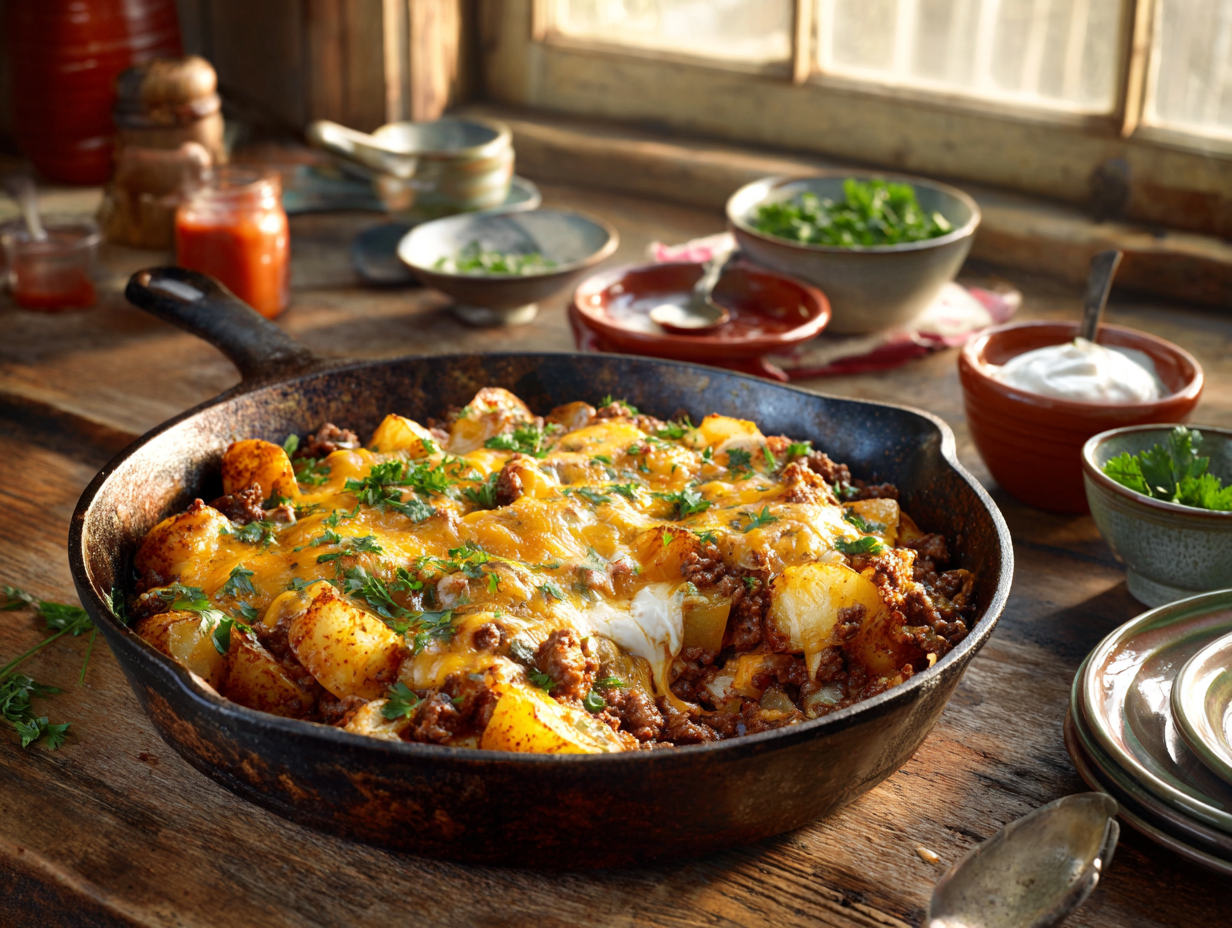
The Cheesy Hamburger and Potato Skillet is a dish steeped in comfort and rooted in tradition. As with many great recipes, it isn’t born of extravagance or luxurious ingredients—it comes from necessity, resourcefulness, and a desire to nourish both the body and the spirit. This one-skillet wonder reflects the legacy of American home cooking, particularly that of the Midwest, where hearty meals designed to warm you from the inside out are a way of life. Whether you’re craving something rustic and filling or you simply want a fuss-free dinner that tastes like home, this dish delivers all that and more.
⧫ A Midwestern Legacy
Inspiration for this dish comes from kitchens like the one I grew up in—in the heart of Illinois, surrounded by cornfields and the rhythms of the seasons. Winters were brisk, and evenings often called for meals that could warm an entire household. My mother, like many Midwestern home cooks, relied on a combination of inexpensive, readily available ingredients to make magic in the kitchen. Potatoes, ground beef, onions, and cheese were always staples in our pantry. The magic happened when these ingredients were combined with care and just the right mix of seasonings.
This Cheesy Hamburger and Potato Skillet is a modern homage to that kind of cooking. It’s a revival of the meals my mother used to make—a clever way to stretch ingredients for a growing family without sacrificing flavor. She often used leftover roasted or boiled potatoes, frying them up to golden perfection and layering them with bits of ground beef from the fridge. Whatever cheese we had on hand—shredded cheddar, Jack, or even slices of American—would be melted over the top. It was easy, filling, and deeply satisfying.
⧫ The Beauty of the One-Skillet Meal
There’s a reason one-pan meals endure through generations: they’re practical. In today’s fast-paced world, the last thing most of us want to do after a long day is deal with a sink full of dirty dishes or juggle countless pots and pans. The genius of this recipe lies in its efficiency. Everything—from searing to simmering—happens in a single skillet.
Using a cast-iron or heavy-bottomed nonstick skillet ensures even cooking and provides the perfect surface for achieving those irresistible crispy bits—the golden edges of the potatoes, the browned nubs of beef, the melted puddles of cheese. There’s something so gratifying about cooking everything together in one vessel, letting the flavors build up in layers, and ending with a dish that looks and smells like it belongs in a country kitchen.
⧫ Comfort Food with Structure
At its core, this dish is structured like a hash or simplified casserole. You start with aromatic sautéed onions as the base, followed by potatoes that are diced and pan-fried to crispy, caramelized perfection. Then comes the heart of the dish: seasoned ground beef, cooked right in the same skillet until it’s beautifully browned. Once all the elements are incorporated, we add the final flavor builders—garlic powder, smoked paprika, cracked black pepper, and just the right amount of kosher salt. These ingredients are simple, but they bring out the best characteristics of each component.
Of course, it wouldn’t be complete without cheese—a generous handful (or two) of sharp cheddar, melted over the top until bubbly and gooey. The cheddar adds richness and ties the whole dish together with a silky finish. A sprinkle of chopped parsley adds color and a hint of brightness that balances out the richness of the meat and cheese.
⧫ Easy to Adapt, Always Delicious
One of the things I love most about this dish is how adaptable it is to different diets and preferences. While it’s deeply satisfying in its classic form, it can easily be modified:
– Want a lighter version? Swap the ground beef for ground turkey or lean chicken.
– Going vegetarian? Use a plant-based ground meat alternative or double up on the potatoes, adding black beans or mushrooms for extra substance.
– Want it spicier? Toss in a pinch of cayenne or chili flakes or serve it with hot sauce on the side.
– Have other veggies to use up? Bell peppers, zucchini, or even corn can be added during the sautéing process.
You can also scale it up to make more or prepare it ahead of time. It reheats beautifully in the oven or skillet, and if you’re lucky enough to have leftovers, they make a delicious breakfast topped with a fried egg.
⧫ Nourishment Beyond the Plate
Perhaps what makes Cheesy Hamburger and Potato Skillet so special is how it offers more than just physical nourishment; it gives emotional comfort, too. This is the kind of meal that brings people together, served hot and bubbling at the center of the family table. It’s the type of dish that invites everyone to lean in a little closer, to share stories over dinner, and maybe even go back for seconds.
In today’s culinary landscape, where fusion and fine dining make waves on social media, it’s good to remember the enduring value of simple, honest food. Food like this—humble in presentation, generous in flavor, and deeply rooted in tradition—is what many of us instinctively reach for when we want to feel connected, grounded, and whole.
So whether you’re recreating a piece of your own childhood or discovering this classic for the first time, the Cheesy Hamburger and Potato Skillet is here to offer warmth, ease, and the timeless joy of a home-cooked meal.
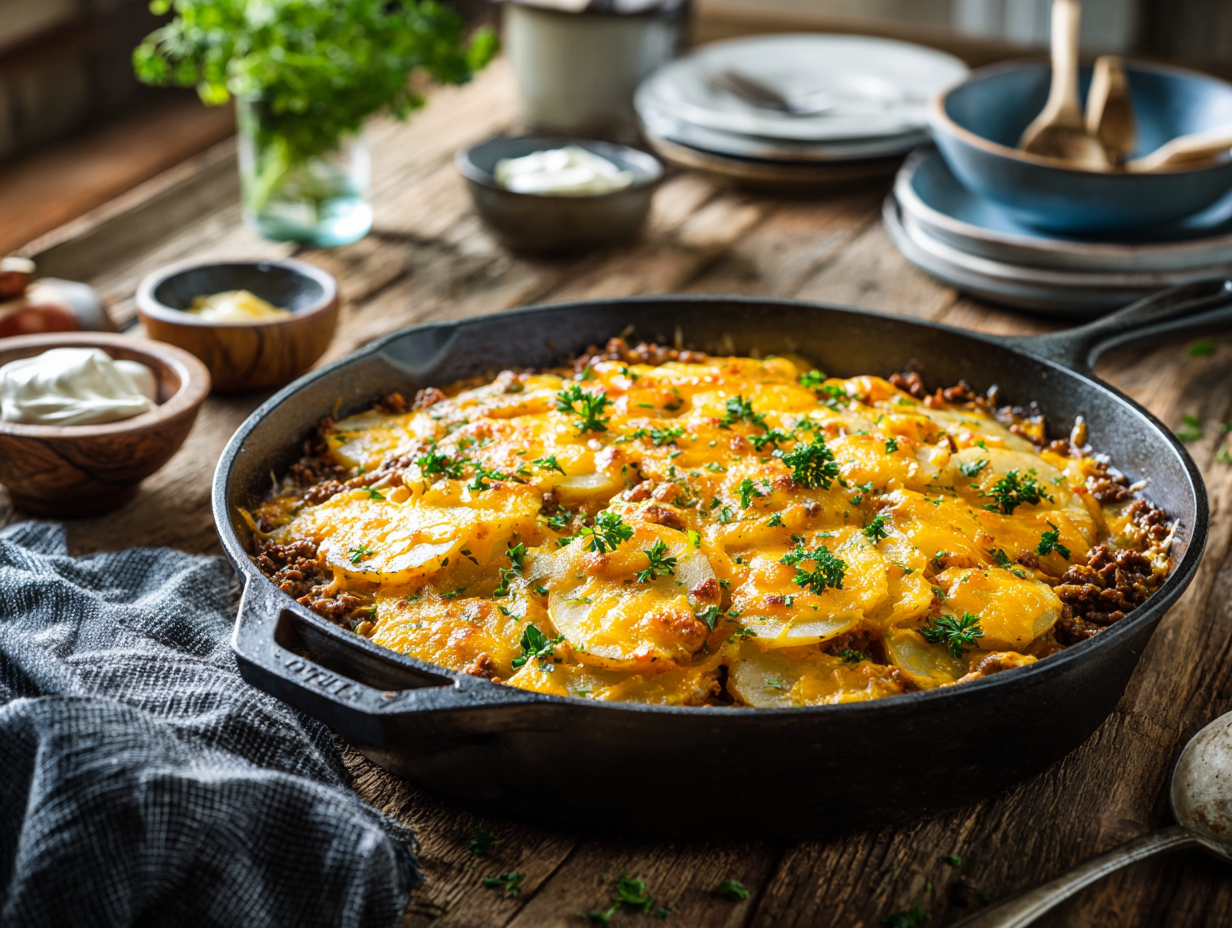
Cheesy Hamburger and Potato Skillet

Ingredients
- 1 pound ground beef (80/20 blend) look for grass-fed if possible
- 2 tablespoons olive oil extra virgin
- 1 medium yellow onion diced
- 3 cups russet potatoes peeled and diced into 1/2-inch cubes
- 1 teaspoon garlic powder
- 1 teaspoon smoked paprika
- ½ teaspoon black pepper freshly cracked
- 1 teaspoon kosher salt or to taste
- ½ cup sharp cheddar cheese shredded
- 2 tablespoons chopped parsley for garnish
Instructions
- Heat a large cast-iron or nonstick skillet over medium-high heat. Add the olive oil and allow it to shimmer.
- Add the diced onions and cook for 2–3 minutes until softened and fragrant.
- Add the potatoes and cook for 10–12 minutes, stirring occasionally, until they begin to turn golden and crisp around the edges. Lower heat slightly if they start to burn before softening.
- Push the potatoes to one side of the skillet. Add the ground beef to the open space. Cook while breaking it apart with a spatula, about 6–8 minutes, or until beef is fully browned with no pink remaining.
- Once the beef is cooked through, mix it with the potatoes and onions. Season with garlic powder, smoked paprika, salt, and pepper. Cook everything together another 4–5 minutes to allow flavors to meld.
- Reduce heat to low and sprinkle the cheddar cheese over the top. Cover with a lid or foil and cook for 2–3 more minutes, until the cheese melts completely.
- Remove from heat and finish with chopped parsley. Serve hot directly from the skillet.
Notes
- If you prefer crispy potatoes, parboil them for 5 minutes beforehand. Drain and pat dry before frying.
- Swap ground beef for ground turkey or a plant-based alternative to make it lighter or vegetarian.
- A few dashes of hot sauce or a spoonful of sour cream can elevate the garnish.