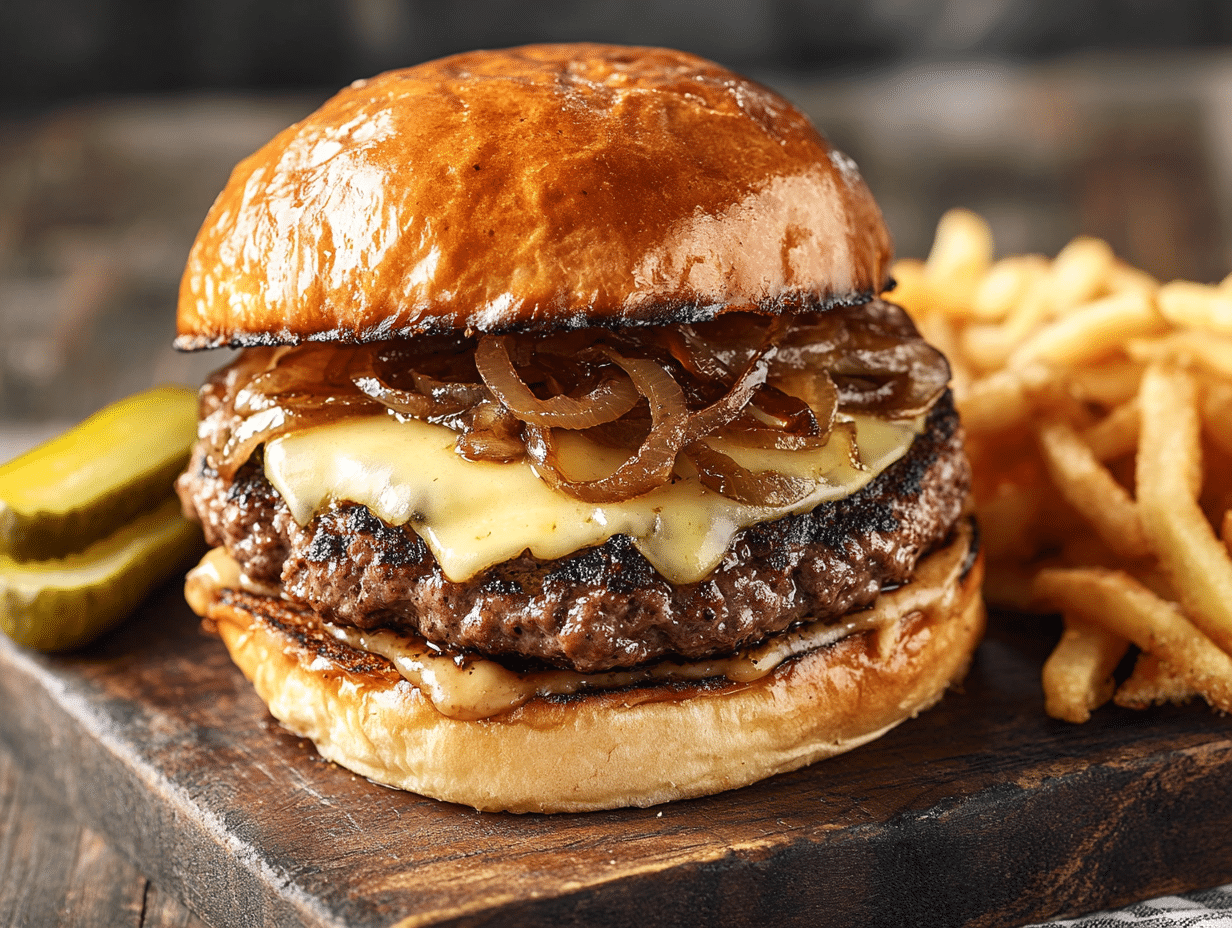
A Wisconsin butter burger is a ground chuck patty cooked in butter on a cast-iron skillet, finished with caramelized onions, melted American cheese, and a buttered toasted bun. It is not a gimmick — the butter basting builds a genuinely crispy, flavorful crust that a dry skillet simply cannot match. If you are feeding a group, this recipe scales cleanly and the prep work can be done well ahead of cook time.
Substitutions that actually work
- Ground chuck alternatives: An 80/20 beef blend from any butcher works fine. Avoid anything leaner than 85/15 — the fat is doing real work here alongside the butter.
- American cheese: Sharp cheddar melts well and adds bite. Swiss gives a nuttier edge. Both are solid. Avoid pre-shredded bags — the anti-caking coating kills the melt.
- Brioche vs. potato bun: Either works. If brioche is unavailable, a standard soft hamburger bun toasted in butter is perfectly fine — do not skip the toasting step.
- Unsalted vs. salted butter: Unsalted gives you more control since the patties are seasoned separately. Salted butter works but taste as you go.
- Caramelized onions: Yellow onions are ideal. White onions work. Sweet Vidalia onions cook down faster and go slightly softer, which some people prefer.
The short version of why this works
Two things actually matter in this recipe. First, the cast-iron skillet — it holds heat evenly and gets hot enough to sear the patty fast, which locks in juices before the butter basting begins. A nonstick pan runs too cool and steams instead of sears. Second, the basting itself: spooning hot butter over the patty as it cooks accelerates browning on the top surface without flipping repeatedly, so you get a proper crust on both sides without drying out the center. Skip the egg in the mix — it makes the patty mushy and you lose that clean beefy bite the butter crust is supposed to complement.
Common problems and fixes
- Butter burns before the patty is done: Your skillet is too hot. Butter browns fast — start at medium-high to sear, then drop to medium before adding the basting butter. Clarified butter tolerates higher heat if burning is a recurring issue.
- Onions are still sharp and crunchy: They need more time than most people expect — 20 to 25 minutes over low heat, stirring occasionally. Rushing them over high heat just chars the outside.
- Patties puff up in the middle: Press a shallow thumb indent into the center of each raw patty before it hits the pan. This counteracts the natural shrinkage and keeps the patty flat for even cooking.
- Bun goes soggy before serving: Toast the buns last, right before assembly. If you are cooking for a crowd, keep toasted buns cut-side up on a wire rack — stacking them face-down traps steam.
- Cheese will not melt properly: Add the cheese slice when the patty is about 30 seconds from done and cover the skillet with a lid or a metal bowl. The trapped steam melts the cheese in under a minute without overcooking the beef.
Leftovers and meal prep
Cooked patties keep in the fridge for up to 3 days in an airtight container. Reheat in a skillet over medium-low with a small knob of butter — about 2 to 3 minutes per side — rather than microwaving, which makes the crust rubbery. Raw seasoned patties can be stacked with parchment between them and refrigerated up to 24 hours ahead, which is genuinely useful if you are cooking for a crowd. For longer storage, freeze raw patties on a sheet tray until solid, then transfer to a zip-lock bag; they keep well for up to 2 months. Thaw overnight in the fridge before cooking — do not cook from frozen or the outside overcooks before the center reaches the safe 160°F (71°C) internal temperature required for ground beef.
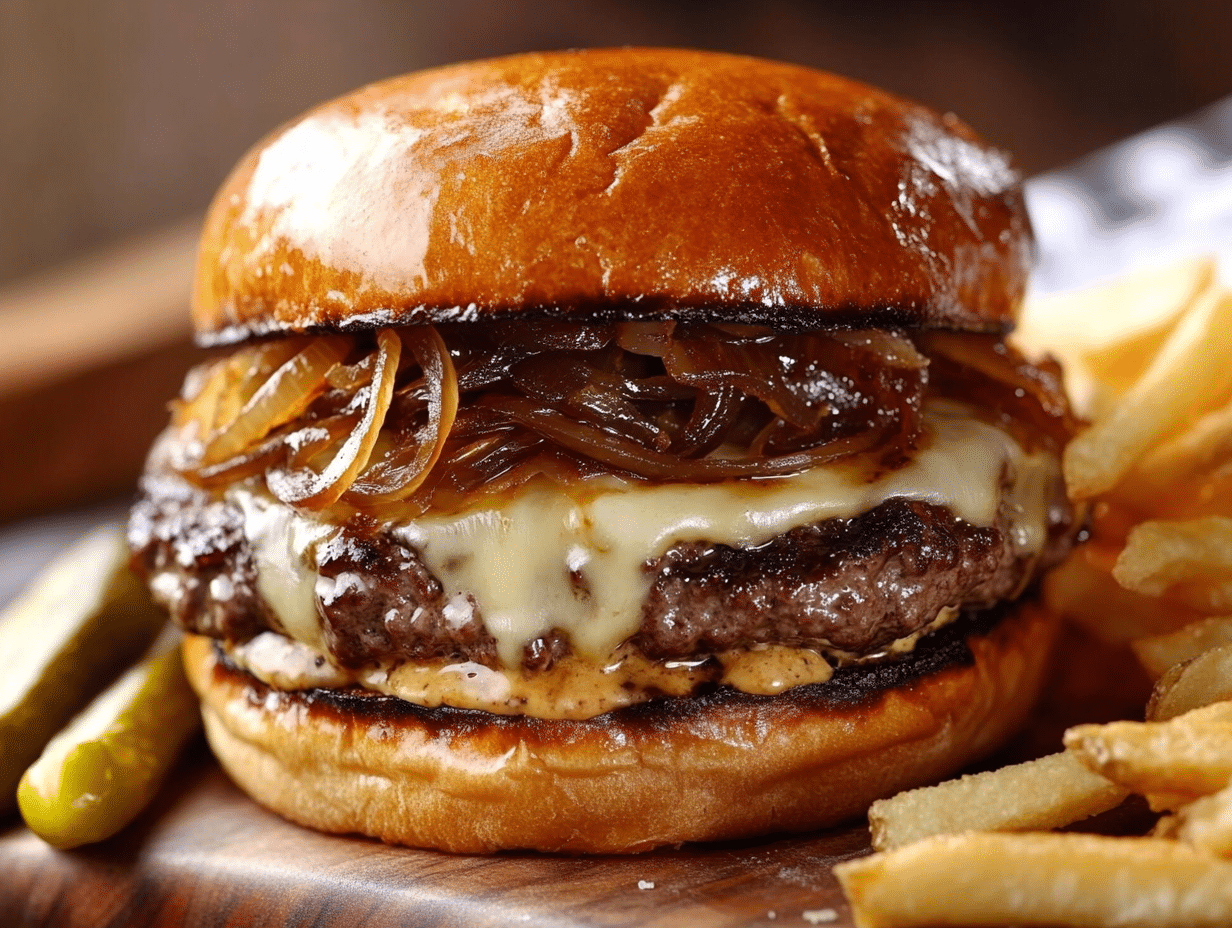
Wisconsin-Style Butter Burger

Ingredients
For the Burger Patties:
- 1.5 pounds ground chuck (80/20) freshly ground or butcher-blended for best flavor
- 1 teaspoon kosher salt
- 0.5 teaspoon freshly ground black pepper adjust to taste
For Cooking and Assembly:
- 6 tablespoons unsalted butter divided — 3 for cooking, 3 for buns and topping
- 4 pieces burger buns preferably brioche or potato for richness
- 4 slices American cheese or cheddar for a sharper bite
- 1 small yellow onion thinly sliced
Instructions
- Prepare the Pan and Onions: In a heavy-bottomed cast-iron skillet, melt 1 tablespoon of butter over medium-low heat (approx. 300°F / 150°C). Add thinly sliced onions and sauté for 8-10 minutes until translucent and lightly caramelized. Stir occasionally and set aside when soft and fragrant.
- Shape the Patties: Divide the ground chuck into four equal portions (about 6 oz each). Gently shape each into a loose patty slightly wider than your buns. Avoid compacting the meat to keep the texture tender. Season both sides with salt and pepper just before cooking.
- Cook the Patties: In the same skillet over medium-high heat (about 375°F / 190°C), add 2 tablespoons of butter. Once sizzling, place the patties in the pan and press lightly to ensure good contact with the surface. Cook for 3-4 minutes, until browned and crisp. Flip, add cheese slices, and cook an additional 2-3 minutes, basting with a spoonful of melted butter from the pan.
- Toast the Buns: While patties cook, melt 2 tablespoons of butter in a clean skillet or griddle. Split and place buns cut-side down onto the skillet. Toast for 1-2 minutes or until golden and crisp. Spread the remaining 1 tablespoon of butter over the toasted sides.
- Assemble: On each toasted bun base, place the cheesy burger patty. Add a scoop of caramelized onions and a smear of soft butter on the top bun before closing. Serve hot, with a crisp pickle spear or fries on the side.
Notes
Chef’s Tips:
- For extra richness, mix 1 tablespoon of butter directly into the beef before shaping patties.
- Substitute with plant-based buttery spread and Beyond Burger-style patties for a vegetarian option.
- Feel free to top with crisp bacon or swap in Swiss cheese for different layers of flavor.
- Freeze shaped patties briefly (10 min) before cooking—they’ll hold their shape better on the skillet.
Nutrition
Your questions, answered
What internal temperature should a butter burger reach?
Ground beef must reach 160°F (71°C) internal temperature — use an instant-read thermometer to check. Unlike a whole-muscle steak, ground beef can carry surface bacteria throughout the patty, so there is no safe version of serving it pink.
Can I cook these on an outdoor grill instead of a cast-iron skillet?
You can, but you will lose most of the butter basting effect since butter drips straight into the flames. A cast-iron skillet or griddle plate set on the grill grates is the practical workaround — you get the outdoor setup and still keep the butter in contact with the patty.
How do I keep the butter from smoking up my kitchen?
Use medium-high rather than high heat, and make sure your skillet is not preheated too aggressively. A splatter screen helps significantly — it cuts smoke without trapping steam the way a lid would.
How many patties can I cook at once without ruining the sear?
Two patties per 10-inch cast-iron skillet is the practical limit. Crowding the pan drops the surface temperature and the patties steam instead of sear — work in batches and tent finished patties loosely with foil while the rest cook.
Can I make the caramelized onions ahead of time?
Yes, and it is worth doing — they reheat perfectly. Cook a large batch, cool completely, and refrigerate in an airtight container for up to 4 days. Warm them in a small pan over low heat with a splash of water before serving.
What is the best way to keep finished burgers warm while cooking in batches?
Set your oven to 200°F (93°C) and place assembled or partially assembled burgers on a wire rack over a baking sheet. This holds them without continuing to cook the beef — avoid going above 200°F or the patties will dry out quickly.
Try these next
- Animal Style Cheeseburger
- Perfect Bacon Double Cheeseburger
- Five Guys Bacon Cheeseburger
- NYC Bacon Smash Burger