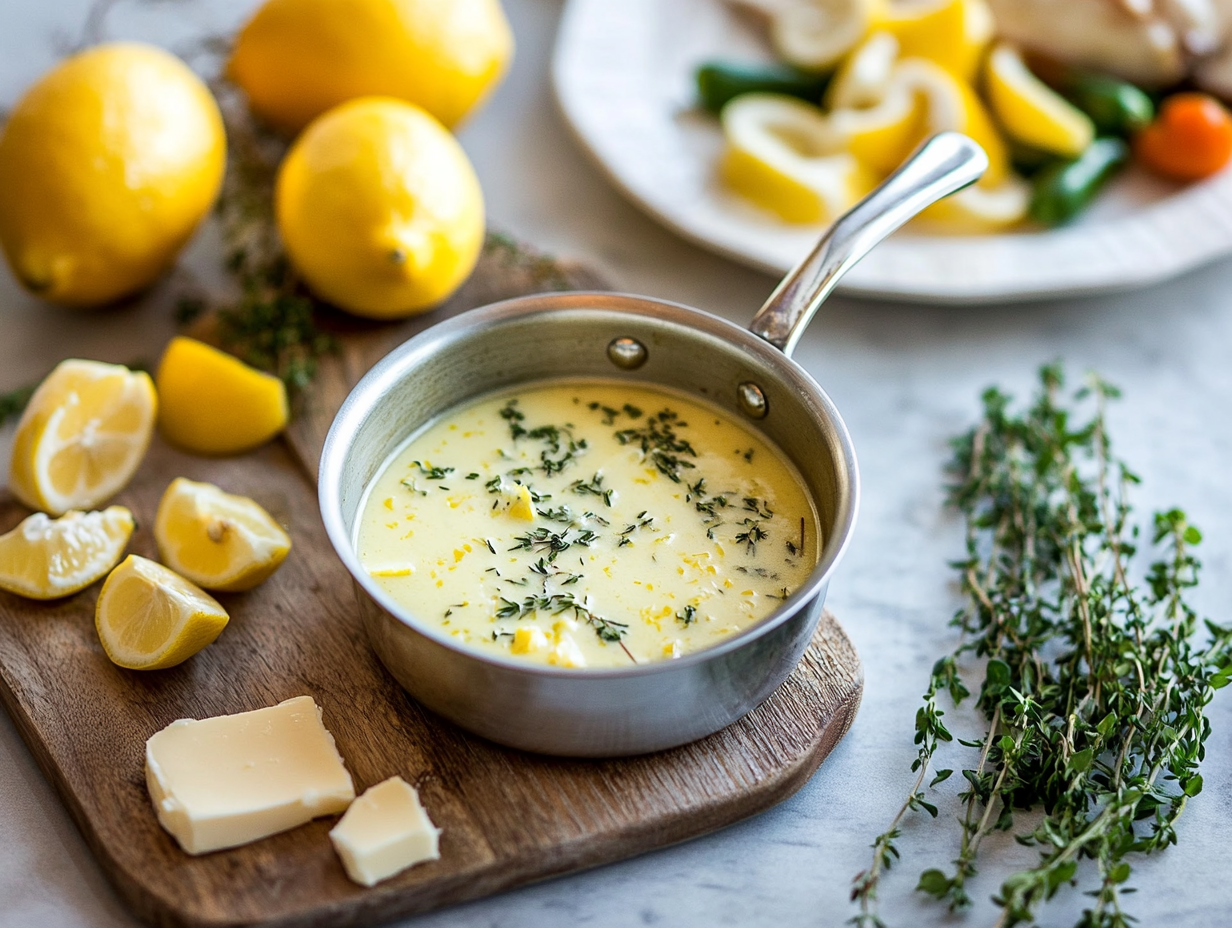
Lemon thyme butter sauce is a simple pan sauce built on white wine, shallots, lemon, and cold butter whisked together over low heat. It comes together in about 15 minutes and makes grilled or pan-seared chicken burgers taste like you actually tried. If you want a sauce that’s bright, rich, and not mayo-based, this is the one to learn first.
Before you start
The only technique that really matters here is controlling your heat when you add the butter. Too hot and the sauce breaks — you get greasy puddles instead of a smooth, cohesive sauce. Keep the pan on low and add the cold butter cubes one or two at a time, whisking constantly between each addition. Cold butter is not optional; it’s what makes emulsification work. Pull the cubes straight from the fridge right before you need them. The second thing worth knowing: reduce your wine and lemon mixture until it’s almost syrupy before you touch the butter. A weak reduction means a thin, flat-tasting sauce no matter how much butter you add.
About the ingredients
- Dry white wine: Sauvignon Blanc or Pinot Grigio work well. Avoid anything labeled “cooking wine” — it’s salted and will throw off the balance. A cheap but drinkable bottle is fine.
- Shallots: These are milder and slightly sweeter than yellow onion. If you genuinely can’t find them, use the white part of a green onion, minced fine. Skip regular onion — it’s too sharp here.
- Unsalted butter: Use unsalted so you control the salt level. European-style butter (higher butterfat) gives a noticeably silkier result, but standard American butter works. Skip the egg in the mix — it makes the patty mushy — is advice for burgers, but the equivalent here is: don’t substitute margarine or a butter blend, they won’t emulsify the same way.
- Fresh thyme: Dried thyme can substitute in a pinch — use about one-third the amount — but the flavor will be earthier and less bright.
- White pepper: Keeps the sauce pale. Black pepper works fine on flavor but leaves visible specks if that bothers you.
Leftovers and meal prep
Butter sauces don’t store as well as most sauces, but it’s doable. Pour leftovers into a small airtight container and refrigerate for up to 3 days — it will solidify in the fridge, which is normal. To reheat, put it in a small saucepan over the lowest heat possible and whisk steadily as it melts back together. Don’t microwave it; the uneven heat almost always breaks the emulsion. Freezing is not recommended — the sauce separates on thawing and doesn’t come back together cleanly. If you want to get ahead, you can make the wine-shallot reduction a day in advance and refrigerate it, then finish with butter right before serving.
If something goes sideways
- Sauce looks greasy and separated: Take the pan off the heat immediately. Add one tablespoon of cold water and whisk hard. Return to very low heat and keep whisking. This fixes a broken emulsion most of the time if you catch it early.
- Sauce tastes flat or too mild: Your reduction probably didn’t go far enough. Next time reduce until only about 2 tablespoons of liquid remain before adding butter. For now, a small squeeze of fresh lemon juice stirred in at the end can rescue it.
- Sauce is too sour or sharp: The wine or lemon was too dominant. Whisk in one or two extra cubes of cold butter — more fat softens acidity without diluting the flavor the way water would.
- Thyme flavor is barely there: Fresh thyme loses its punch fast in a hot pan. Make sure you’re adding it at the very end, off the heat or on the lowest setting, and letting it sit for a full minute before serving.
- Sauce thickened into a paste: It got too cold or sat too long off the heat. Set the pan over very low heat and whisk in a splash of warm water, about a teaspoon at a time, until it loosens to a pourable consistency.
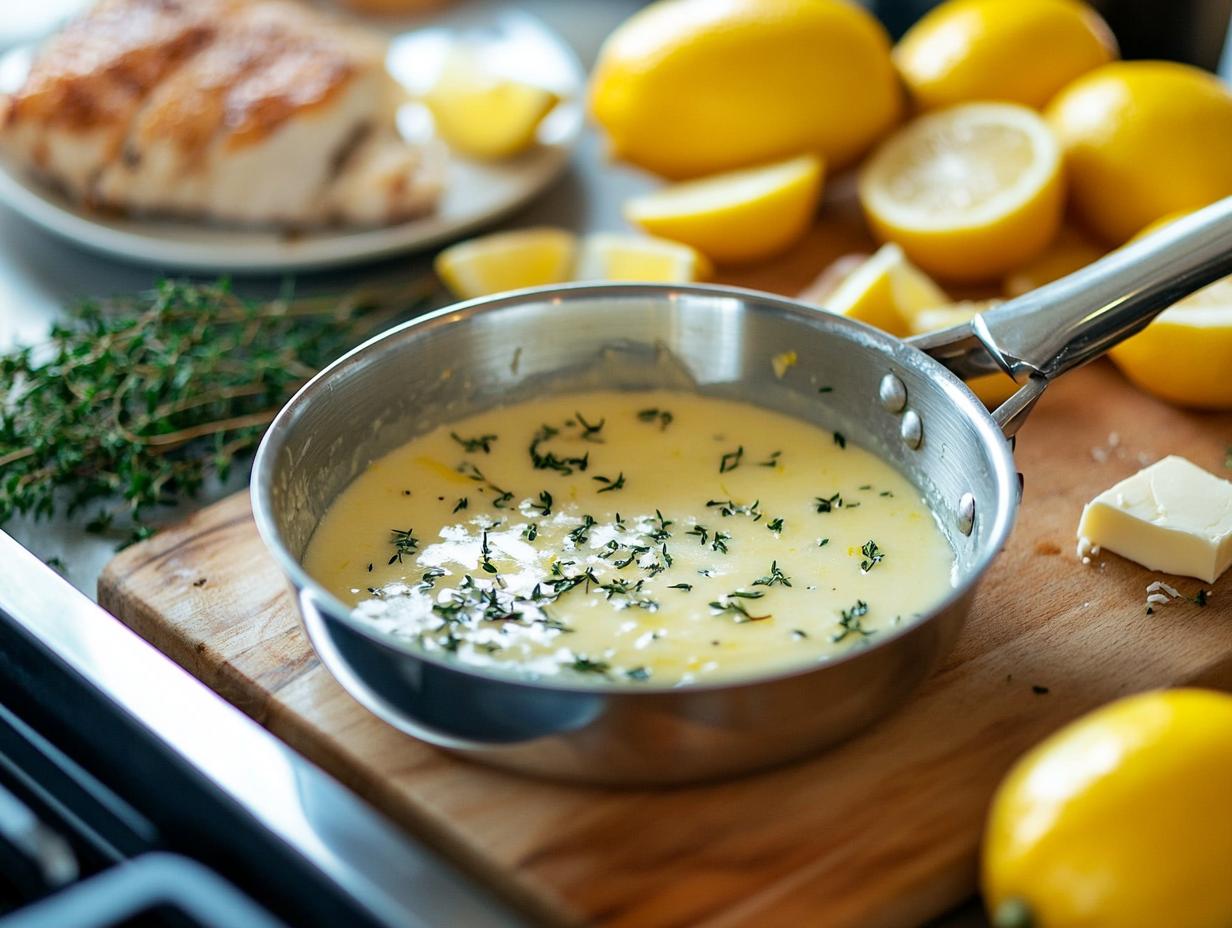
Lemon Thyme Butter Sauce

Ingredients
- ¼ cup Dry white wine Choose a crisp, high-quality white wine
- 1 tablespoon Lemon juice Preferably freshly squeezed
- 1 teaspoon Lemon zest Finely grated from an organic lemon
- 1 tablespoon Shallots Finely minced
- 8 tablespoons Unsalted butter Cold, cut into small cubes
- 1 teaspoon Fresh thyme leaves Finely chopped
- ¼ teaspoon Salt Adjust to taste
- ¼ teaspoon White pepper Freshly ground
Instructions
- In a small saucepan over medium heat, combine white wine, lemon juice, lemon zest, and minced shallots. Bring to a gentle simmer and allow to reduce until about half the liquid has evaporated, approximately 3-5 minutes.
- Reduce the heat to low and slowly whisk in the cold butter cubes, one at a time, while continuously stirring. Ensure each piece is fully melted before adding the next to create a silky, emulsified texture.
- Once all the butter has been incorporated, stir in the freshly chopped thyme, salt, and white pepper. Taste and adjust seasoning as needed.
- Remove the sauce from the heat and strain through a fine sieve if you prefer a smoother consistency. Serve immediately or keep warm over a double boiler, stirring occasionally.
Notes
- For an extra depth of flavor, try infusing the butter with additional aromatics like garlic or a touch of honey.
- If you prefer a non-dairy version, swap butter for vegan butter, though the richness may vary slightly.
Nutrition
Your questions, answered
Can I make this sauce without wine?
Yes — replace the wine with low-sodium chicken broth plus an extra teaspoon of lemon juice. The sauce will be slightly less complex but still works well. Avoid grape juice or apple juice substitutes; the sweetness throws off the whole flavor.
How do I know when the butter sauce is the right consistency?
It should coat the back of a spoon and hold a line when you drag your finger through it — not watery, not thick like gravy. If it slides off the spoon instantly, keep whisking in butter; if it looks paste-like, whisk in a few drops of warm water.
Do I have to strain out the shallots?
No — straining is optional. Leaving the shallots in gives the sauce a little texture and slightly more flavor. Strain only if you want a very smooth, restaurant-style finish.
What burgers or sandwiches actually go well with this sauce?
It works best with grilled or pan-seared chicken burgers, where the lemon cuts through the richness of the meat. A simple crispy chicken sandwich or a herb-seasoned chicken patty is a natural match — skip it on heavily spiced or BBQ-sauced burgers, where the delicate flavor will get lost.
What to cook next
- Crispy SmokeShack Chicken Burger
- Wendy’s Grilled Chicken Remake
- Hawaiian Teriyaki Burger Recipe
- Ultimate Crispy Chicken Burger