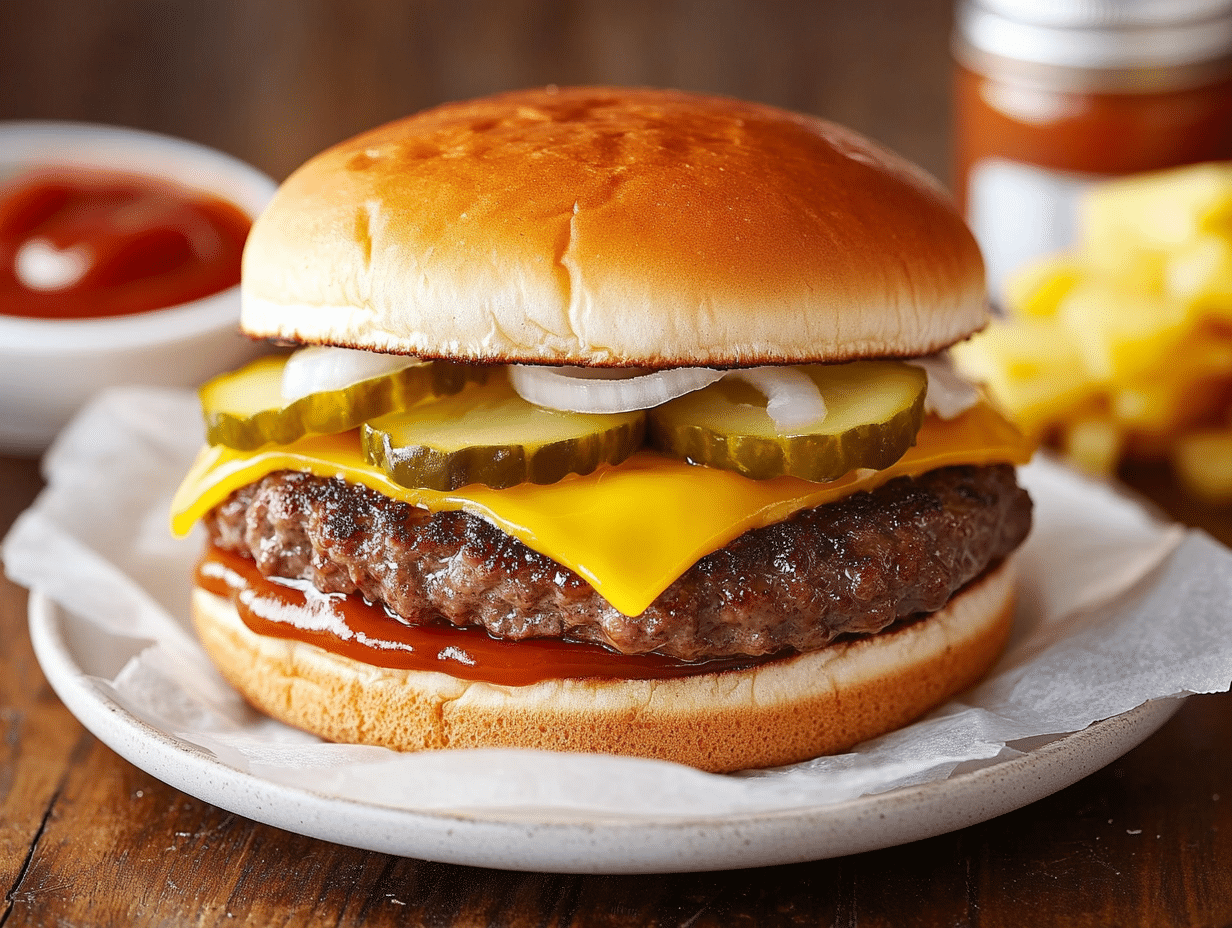
This is a thin-patty, American-cheese, ketchup-mustard-pickle cheeseburger built to taste like the one you’ve been eating your whole life — just made with beef you chose yourself. The real reason to make it at home is control: you pick the grind, you toast the buns properly, and you can knock out a dozen of them for a crowd without breaking a sweat.
What makes this version work
Two things matter most here. First, the patty weight and width — keeping them thin (about 4 inches across, roughly 1.6 oz each) means they cook through fast on a hot flat surface without drying out, and you get that slightly crisp edge that holds up under the cheese and condiments. Second, the wrapping step at the end is not optional if you’re feeding a group. Wrapping each finished burger loosely in foil for even two minutes lets the steam soften the bun and meld everything together — that’s the texture you’re actually remembering. Skip the egg in the mix — it makes the patty mushy and pushes it away from the loose, beefy bite you want.
If something goes sideways
- Patties shrinking into thick pucks: The beef was overworked or packed too tight. Handle it minimally — press once, flat, and done. If your patties are already shrinking in the pan, press them gently with a spatula in the first 30 seconds of cooking before they set.
- Cheese not melting: Add the slice right after you flip, then immediately place a metal bowl or pan lid over the burger for 30–45 seconds. The trapped steam does the work. This is especially useful when you’re cooking multiple patties at once and the pan temperature drops.
- Buns burning before the inside toasts: Your pan is too hot or dry. Use medium heat and a very thin layer of butter — just enough to coat. If you’re toasting a lot of buns in batches, wipe the pan between rounds so residual butter doesn’t scorch.
- Onions tasting too sharp: Soak the finely chopped onions in cold water for 10 minutes, then drain and pat dry. This takes the raw bite down without cooking them, and they’ll stay crisp in the burger.
- Burgers going cold before everyone’s ready to eat: Wrap finished burgers in foil and hold them in a 170°F oven on a wire rack. They’ll stay good for up to 20 minutes without the bun going soggy — longer than that and the patty starts to steam out.
Make-ahead notes
Raw patties can be shaped, stacked between parchment squares, and refrigerated up to 24 hours ahead — any longer and the texture of the ground beef starts to change. For freezing, freeze them on a sheet pan until solid, then transfer to a zip bag; they keep well for up to 2 months and cook straight from frozen on a hot skillet (add about 2 extra minutes per side and verify 160°F internal with a thermometer). Cooked patties reheat acceptably in a covered skillet over low heat with a splash of water to create steam, but they’re noticeably better fresh off the pan. If you’re prepping for a cookout, shape and chill the patties the night before, pre-chop the onions and store them in water in the fridge, and have your buns ready to toast in batches — that’s the setup that keeps things moving when you’re cooking for a crowd.
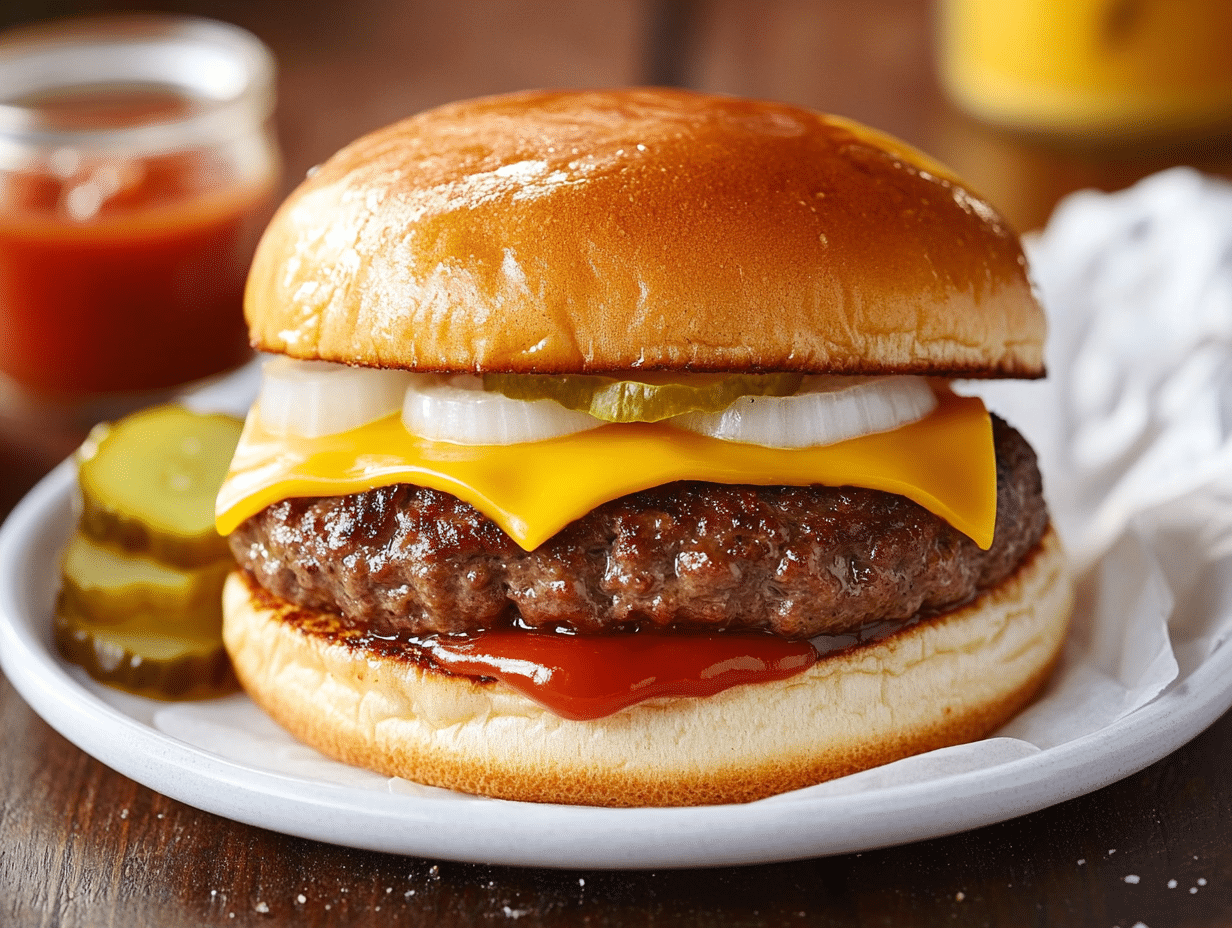
Classic Homemade McDonald's-Style Cheeseburger

Ingredients
- 1 pound ground beef 80/20 blend for best juiciness
- 1 teaspoon kosher salt
- 4 pieces burger buns soft white hamburger buns
- 4 slices American cheese processed cheese like Kraft Singles
- 2 tablespoons yellow mustard classic hot-dog style mustard
- 2 tablespoons ketchup Heinz recommended for classic flavor
- ¼ cup finely diced white onion can be soaked in water to reduce sharpness
- 12 slices dill pickles thinly sliced hamburger chips
- 1 tablespoon unsalted butter for toasting buns
Instructions
- Shape the Patties: Divide the ground beef into four equal portions (4 oz each) and gently flatten them into thin, 4-inch wide patties. Avoid overworking the meat. Use a lid or ring mold for uniformity. Lightly season one side with kosher salt.
- Toast the Buns: In a skillet over medium heat (350°F / 175°C), melt 1 tablespoon of butter. Press the inner sides of the buns into the butter and toast for 1–2 minutes until golden and crisp. Set aside.
- Grill the Patties: Heat a skillet or griddle over medium-high heat (400°F / 200°C). Place patties salted side down and press slightly. Cook for 2–3 minutes until browned underneath and juices begin to appear on top. Flip, season the second side, and immediately add a slice of cheese. Cook another 1–2 minutes until cheese is melted and patties are cooked through.
- Assemble: Spread a thin layer of mustard and ketchup on the top bun. On the bottom bun, layer in order: grilled patty with cheese, 3 slices of pickles, a teaspoon of diced onion. Close with the top bun spread-side down.
- Serve: Serve hot immediately. Wrap in wax paper or foil for the nostalgic 'wrapped burger' look and to help steam slightly, softening the bun like in a real McDonald's burger.
Notes
- For a richer patty, you can mix in 1 tablespoon of beef tallow or melted butter before shaping.
- If using lean beef, brush a bit of oil on the skillet before cooking to prevent sticking and drying out.
- Add a slice of tomato or lettuce if you want a deluxe variation—which McDonald's calls the Quarter Pounder Deluxe.
- Soaking diced onions in cold water for 10 minutes helps mellow their sharpness for a more balanced flavor.
Nutrition
Frequently asked questions
Can I use a higher-lean ground beef like 90/10 to make it a bit lighter?
You can, but the patties will be noticeably drier and less flavorful at this thin size. The 80/20 fat ratio is doing real work here — with a patty this small, there’s not much margin before it dries out on a hot pan.
How do I know when the patty is fully cooked without cutting into it?
Use an instant-read thermometer and pull it at 160°F (71°C) — that’s the safe internal temperature for ground beef. At this patty thickness it usually takes about 2 minutes per side on a properly preheated skillet, but pan temperature varies, so the thermometer is the reliable call.
Can I cook these on a grill instead of a skillet?
Yes, but use a flat cast-iron griddle plate set over the grill grates rather than cooking directly on the grates — patties this thin will fall apart or cook unevenly over open flame. A griddle plate gives you the flat-top contact that makes these work.
More burger recipes to try
- Copycat Quarter Pounder Recipe
- Triple Cheeseburger Copycat Recipe
- Perfect In-N-Out 2×2 Copycat
- Five Guys Bacon Cheeseburger