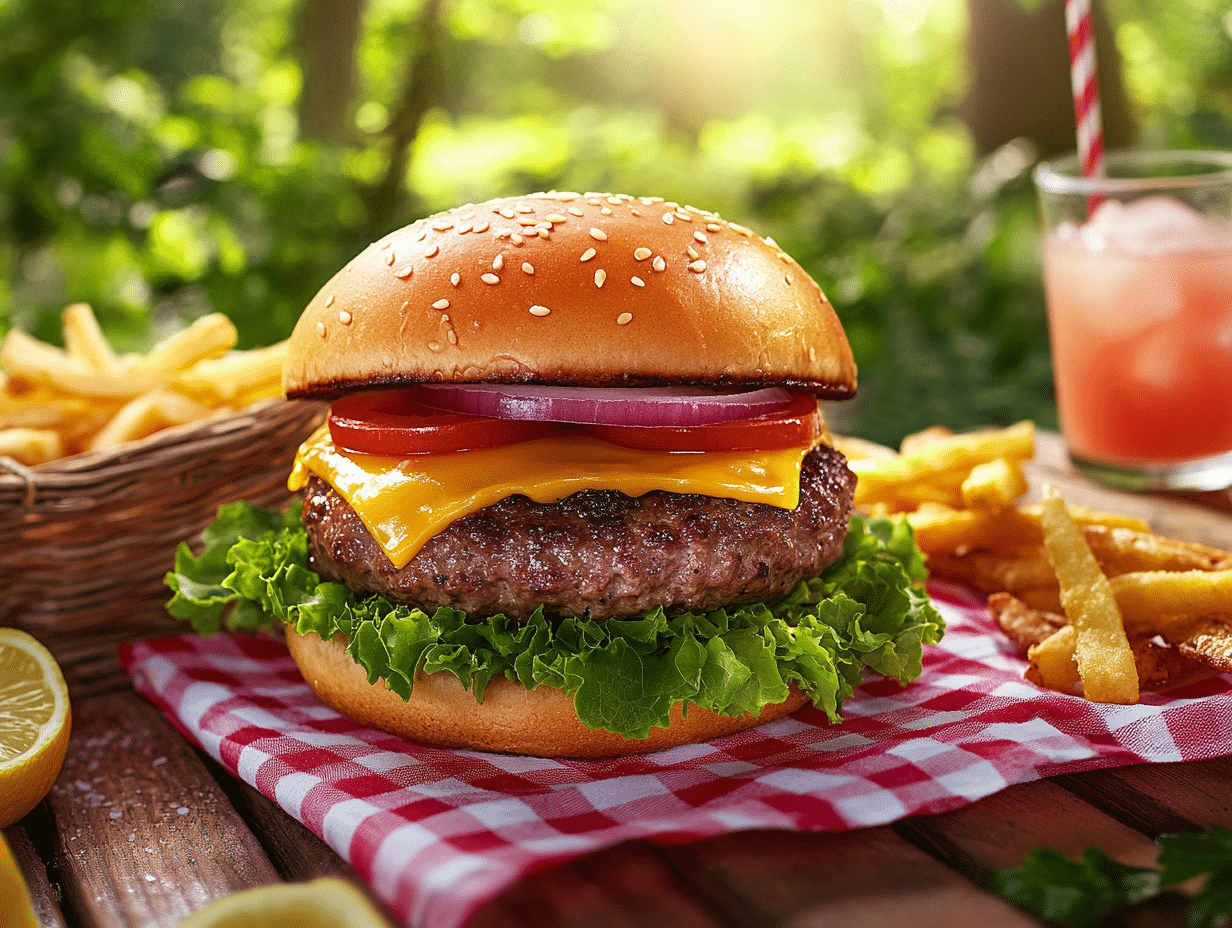
This is a straightforward beef cheeseburger made from pantry staples — 80/20 ground beef, one egg, onion, Worcestershire, and whatever toppings you have on hand. It comes together in 30 minutes and costs a fraction of a restaurant burger. If you want a reliable, juicy result without hunting down specialty ingredients, this is the recipe to bookmark.
The short version of why this works
Two things actually move the needle here. First, the fat ratio: 80/20 ground beef has enough fat to keep the patty moist over high heat without turning greasy. Leaner beef dries out fast and forgives nothing. Second, the thumb-press indentation in the center of each raw patty. As beef cooks, the edges contract faster than the middle, which pushes the center upward. That small dimple counteracts the dome and gives you a flat patty that sits properly on the bun and cooks evenly all the way through. Neither trick requires extra ingredients or equipment — just knowing why you’re doing them.
Ingredient notes
- Worcestershire sauce: Optional in the recipe, but worth using if you have it. No Worcestershire? A small splash of soy sauce does the same umami job. A few drops of fish sauce also works if that’s what’s in the door of your fridge.
- Bun type: Brioche and potato buns are called for, but a standard supermarket sesame bun toasted in butter is genuinely fine. The toasting matters more than the bun brand.
- Cheddar cheese: Any sliced cheese that melts — American, Monterey Jack, provolone, even a slice of Swiss — works here. Skip the egg in the mix — it makes the patty mushy and the binding isn’t necessary when you’re using 80/20 beef.
- Ground beef substitute: Ground turkey or a plant-based patty can replace the beef. If you go that route, cook to 165°F internal — no exceptions, and do not serve those patties with any pink remaining.
What can go wrong
- Patties fall apart in the pan: Usually means the beef was overworked or packed too loosely. Mix just until combined and press firmly when shaping. Chilling the formed patties for 15 minutes before cooking also helps them hold together.
- Cheese won’t melt properly: If you’re cooking on a dry skillet, add a teaspoon of water to the pan after placing the cheese and immediately cover with a lid. The steam melts the cheese in about 30 seconds without overcooking the patty.
- Bun goes soggy before you finish eating: Spread mayo or mustard on the bun cut-side before toasting — it creates a slight barrier. Also, put wet toppings like tomato between dry layers (lettuce below, onion above) rather than directly against the bun.
- Patty is cooked outside but raw inside: This usually means the heat was too high. Medium to medium-high is the right zone. Use an instant-read thermometer and pull the patty at 160°F internal for beef. Guessing by color alone is unreliable.
- Onion in the patty tastes raw and sharp: Chop it very fine — almost minced. Large chunks don’t cook through in the time it takes to cook the patty. Fine pieces soften and sweeten; big pieces don’t.
Keeping and reheating
Cooked patties keep in the fridge for up to 3 days in an airtight container. To reheat, put the patty in a covered skillet over medium-low heat with a tablespoon of water and warm for 3–4 minutes — this keeps it from drying out. A microwave works in a pinch (30-second bursts, covered), but the texture suffers. For freezing, wrap raw formed patties individually in plastic wrap, then bag them; they’ll keep for up to 3 months. Cook from frozen on medium heat with the lid on, adding 3–4 minutes to the cook time, and still verify 160°F internal before serving. Don’t freeze cooked patties that have already been dressed — the toppings don’t survive it.
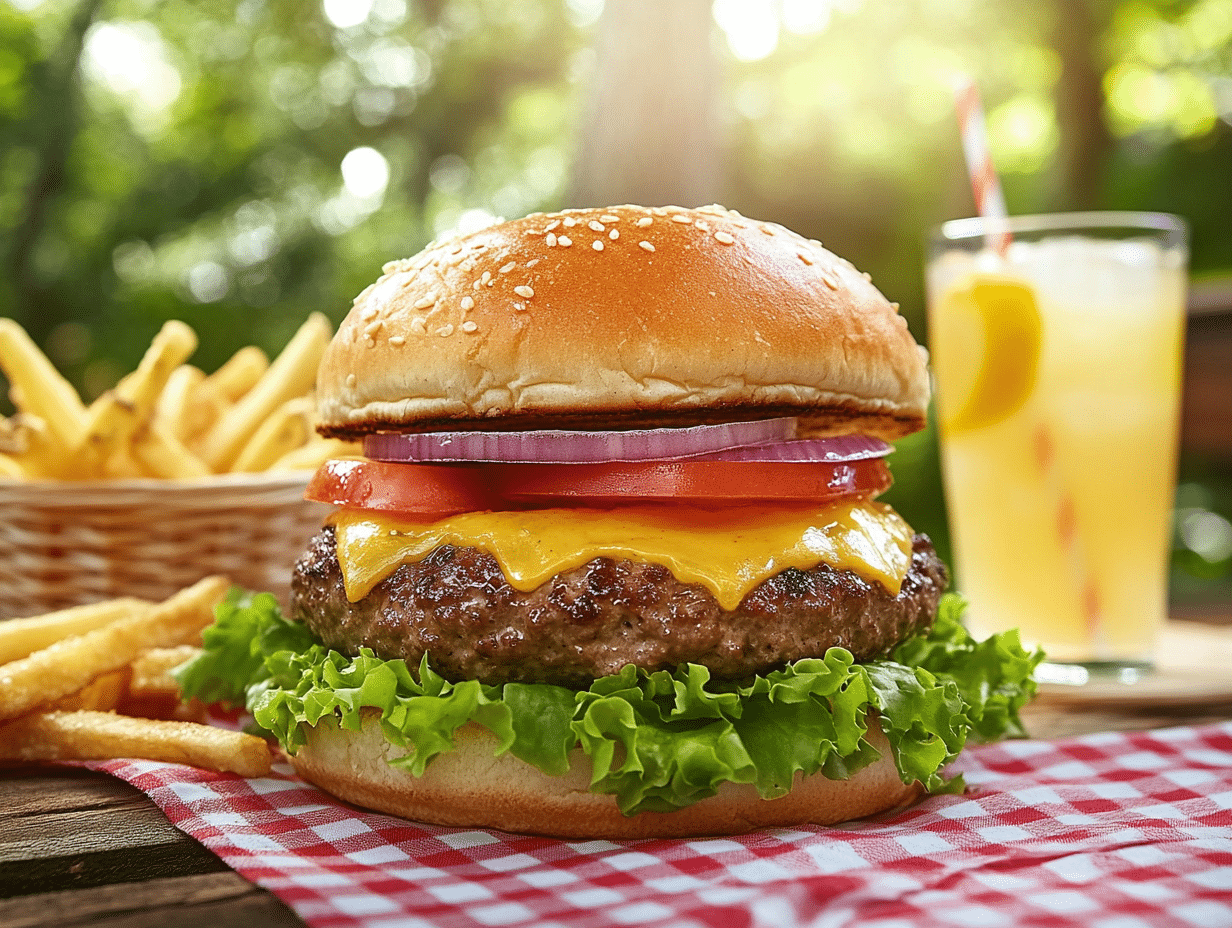
Classic Easy Burger

Ingredients
For the Burger Patties:
- 1 lb ground beef (80/20 blend) look for high-quality grass-fed beef for maximum flavor
- 1 large egg helps bind the patties
- ¼ cup finely chopped onion adds flavor and juiciness
- 1 tsp Worcestershire sauce optional but adds umami depth
- ½ tsp kosher salt
- ¼ tsp freshly ground black pepper
For Serving:
- 4 pieces burger buns brioche or potato buns recommended
- 4 slices cheddar cheese or cheese of your choice
- 1 tbsp unsalted butter for toasting buns
- 1 medium tomato, sliced use a ripe, beefsteak tomato for best texture
- 1 medium red onion, thinly sliced optional for sharpness
- 1 head lettuce iceberg or romaine for crunch
- ¼ cup mayonnaise for spread
- 2 tbsp ketchup optional topping
- 2 tbsp yellow or Dijon mustard optional topping
Instructions
- In a mixing bowl, gently combine ground beef, egg, chopped onion, Worcestershire sauce, salt, and black pepper. Mix lightly with your hands—do not overwork the meat, or it will become tough.
- Divide the mixture evenly into four portions and form into patties about 3/4 inch thick and slightly wider than your buns. Using your thumb, press a shallow indentation in the center of each patty to prevent it from puffing up when cooked.
- Heat a cast iron skillet or grill pan over medium-high heat (about 375°F / 190°C). Place patties onto the hot surface and cook for about 3-4 minutes on the first side without pressing. Flip and cook for another 3 minutes for medium doneness.
- In the final minute of cooking, place a slice of cheese on each patty and cover loosely with a lid until melted.
- Meanwhile, melt butter in a separate skillet over medium heat. Toast buns, cut side down, for 1-2 minutes until golden and crisp.
- Assemble the burgers: Spread mayo on the bottom bun, add lettuce, then the cheese-topped patty, followed by tomato slices, onion, and finish with mustard and ketchup as desired. Top with the other half of the bun and serve hot.
Notes
- For a healthier version, substitute ground turkey or plant-based meat.
- Chilling patties for 15 minutes before cooking helps retain shape and juice.
- Adding a touch of vinegar or pickle juice to mayo for spread brings out brightness.
Nutrition
FAQ
Can I use 90/10 lean ground beef instead of 80/20?
You can, but the patty will be noticeably drier and more prone to crumbling. If 90/10 is what you have, add a tablespoon of olive oil to the mix and don’t cook past 160°F — every extra degree matters with lean beef.
Do I have to use a cast iron skillet, or will a regular pan work?
A regular stainless or nonstick pan works fine. Cast iron holds heat more evenly and gives a better crust, but it’s not required — just make sure whatever pan you use is fully preheated before the patty goes in.
How do I know when the burger is done without a thermometer?
A thermometer is the only reliable method for ground beef — the target is 160°F internal. Color alone is not a safe guide; beef can look brown inside before it’s safe, or still look pink when it actually is.
Can I make the patties ahead of time and refrigerate them?
Yes, up to 24 hours ahead. Shape them, stack with parchment between each patty, cover tightly, and refrigerate. Cold patties actually hold their shape better when they hit the pan.
What’s a good substitute if I don’t have fresh onion for the patty?
Onion powder works — use about half a teaspoon per pound of beef. It distributes evenly through the mix and won’t leave any sharp raw-onion bite the way a coarsely chopped fresh onion can.
My burger always sticks to the pan. What am I doing wrong?
The pan probably isn’t hot enough before the patty goes in, or you’re trying to flip too early. Let the patty cook undisturbed until it releases naturally — usually 3–4 minutes — and it will lift cleanly. Forcing an early flip is what tears the crust.
More burger recipes to try
- Perfect Bacon Double Cheeseburger
- BBQ Cheeseburger Recipe
- Ultimate Avocado Bacon Smash Burger
- Angus Bacon Guacamole Burger