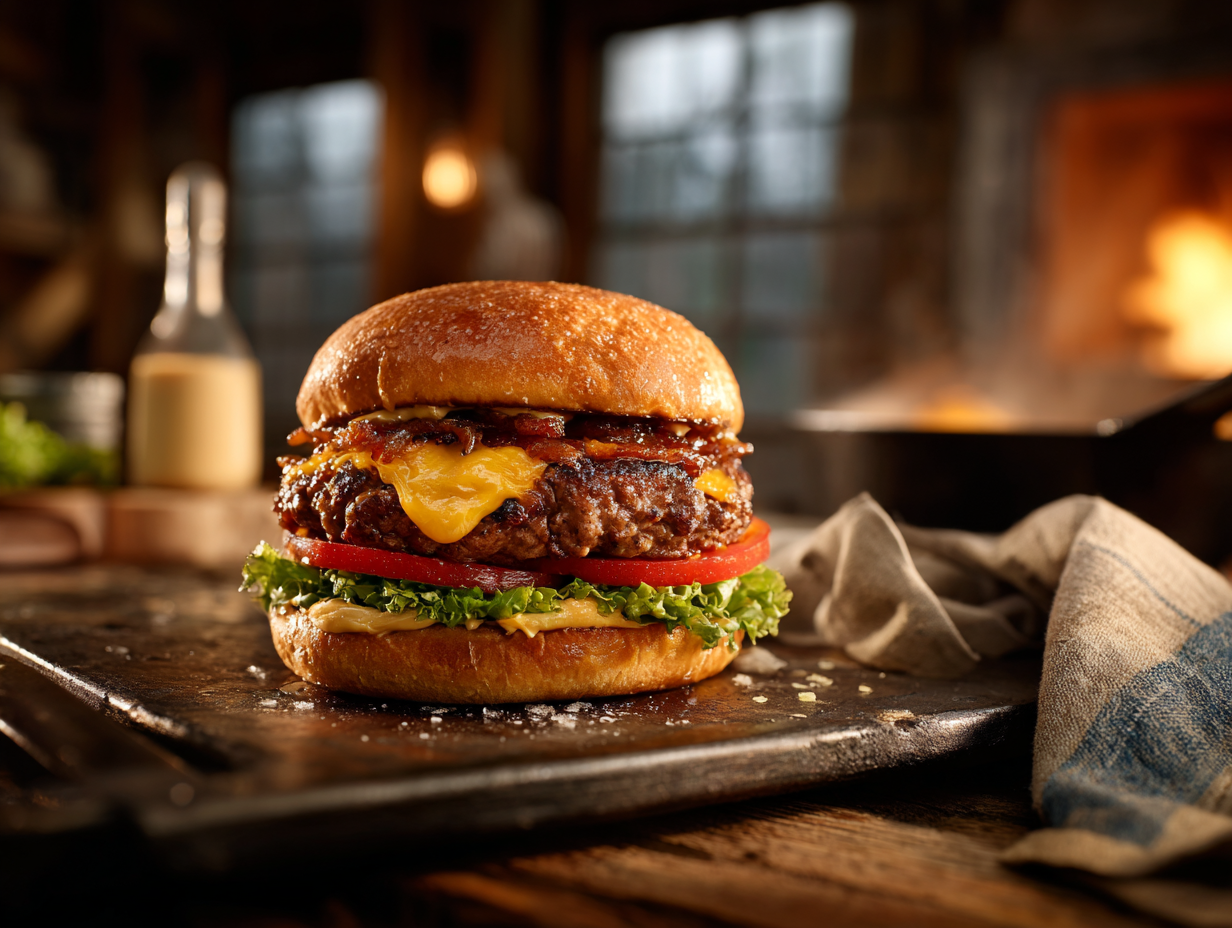
A smash burger is a thin, crispy-edged beef patty cooked fast on a screaming-hot surface — the opposite of a thick, babied patty. The honest reason to make this at home is that the cast iron version is genuinely better than most restaurant versions: hotter pan, fresher beef, and you control the cheese melt. It takes about 15 minutes of active cooking, and the components prep well ahead of time.
The short version of why this works
Two things actually drive the result here. First, the beef balls need to be loose and cold when they hit the pan — warm, compressed meat steams instead of sears. Second, cast iron holds its temperature when cold meat lands on it, which thinner pans don’t. That sustained heat is what creates the lacy, browned crust in the first 30 seconds. Everything else — the sauce, the cheese dome, the toasted bun — is good, but those two things are non-negotiable. Skip the egg in the mix if you’re tempted to add it; it makes the patty mushy and you lose the crust.
Troubleshooting
- Patty sticks to the spatula when smashing: Press a small square of parchment paper between the spatula and the beef ball. Peel it off immediately after smashing. No sticking, no tearing.
- Crust is pale and soft, not browned: The pan wasn’t hot enough before the beef went in. Cast iron needs at least 3 full minutes over high heat — it should be lightly smoking. A drop of water should evaporate instantly on contact.
- Cheese won’t melt properly: Add the cheese right after the flip, then cover immediately with a metal bowl or pan lid. The trapped steam melts it in about 20 seconds. Don’t skip the cover step.
- Bun gets soggy before you finish eating: Toast the cut sides in the butter until they’re genuinely golden, not just warm. A proper toast creates a barrier. Also, put the sauce on the bun, not directly on the patty.
- Smoke alarm goes off: High heat and beef fat will smoke. Turn on the range hood before you start, crack a window, and don’t use extra oil — the fat in 80/20 beef is enough.
Ingredient notes
- 80/20 ground beef: This fat ratio is the right call and worth seeking out specifically. Leaner blends (90/10 or higher) won’t produce enough fat to self-baste the crust, and the patty dries out fast at this thickness.
- American cheese: It melts faster and more evenly than cheddar at high heat, which matters on a thin patty with a short cook time. Aged cheddar is fine for flavor but can break or stay rubbery — if you use it, shred it thin rather than using a thick slice.
- Pickle juice in the smash sauce: Use the brine from a jar of dill pickles, not bread-and-butter pickles. The sweetness in bread-and-butter brine throws off the balance of the sauce.
- Brioche buns: They toast quickly because of the butter content — watch them closely. A standard potato roll works as a swap and holds up slightly better if the burger sits for a few minutes.
Make-ahead notes
The beef balls can be portioned, loosely shaped, and stored in a single layer on a parchment-lined tray in the fridge for up to 48 hours — keep them covered and cold right up until they hit the pan. The smash sauce keeps in a sealed jar in the fridge for up to 5 days, so make a double batch on Sunday and use it through the week. Caramelized onions reheat well: store them in the fridge for up to 4 days and warm them in a small pan over low heat for 2 minutes. Cooked patties can be refrigerated and reheated in a dry cast iron pan over medium-high heat for about 90 seconds per side — they won’t be quite as crispy as fresh, but they’re still very good in a stacked burger or sliced over a salad. Don’t microwave them; they turn rubbery.
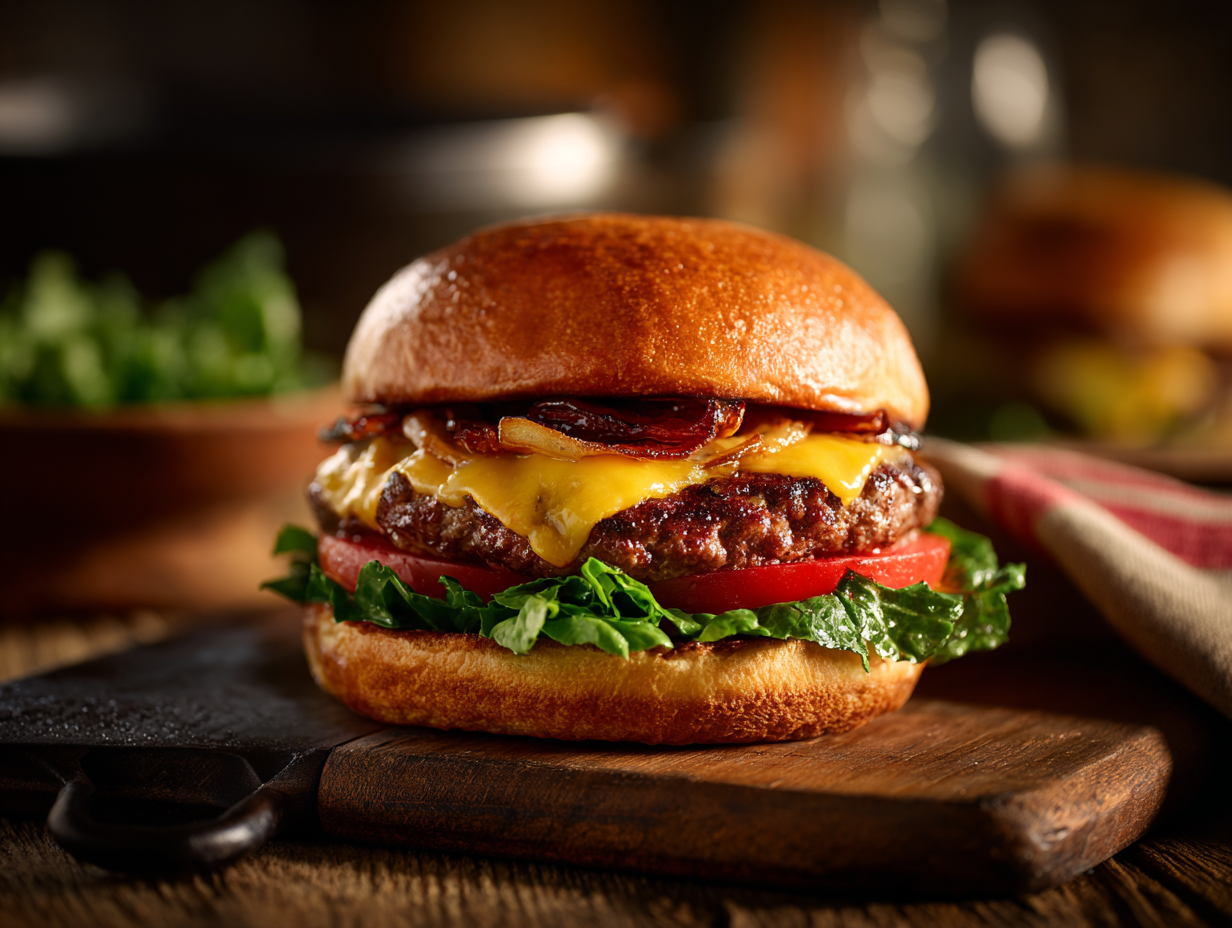
Smash Burger on Cast Iron

Ingredients
For the Burger Patties:
- 1.5 pounds ground beef (80/20 blend) freshly ground chuck preferred for optimal juiciness and crust development
- 1 teaspoon kosher salt
- ½ teaspoon freshly ground black pepper
For the Burger Assembly:
- 4 slices American cheese choose high-quality or deli-style for best melt and flavor
- 4 pieces brioche buns lightly toasted
- 2 tablespoons unsalted butter for toasting buns
- 1 medium yellow onion thinly sliced
- 1 tablespoon neutral oil such as canola or grapeseed, for high-heat cooking
- 4 tablespoons smash sauce optional, see notes for recipe
- 4 leaves butter lettuce washed and dried
- 1 medium vine-ripened tomato sliced into 4 rounds
Instructions
- Divide the ground beef into 4 equal balls (about 6 oz each). Do not overwork the meat; keep them loosely packed for a better smash and crust.
- Preheat your cast iron skillet over medium-high heat for about 5 minutes until smoking hot. Cast iron holds heat well, crucial for achieving the crisp crust.
- Add neutral oil to the skillet and swirl to coat. Place 2 meatballs on the hot surface (working in batches if needed).
- Using a stiff metal spatula (or two spatulas for extra torque), press each meatball flat into a thin patty, about 1/4-inch thick. Hold pressure for 10–15 seconds for proper searing.
- Season each smashed patty with kosher salt and black pepper. Cook undisturbed for about 2 minutes until the edges are deeply golden brown and crisp.
- Flip each patty, place a slice of cheese on top, and cover with a lid or metal bowl for steam. Cook another 1–2 minutes until cheese melts and internal temp reaches 160°F (71°C).
- In another skillet or same pan cleared, toast brioche buns cut-side down in butter until golden brown, about 1 to 2 minutes.
- In the same skillet, add sliced onions and a pinch of salt. Sauté for 5–7 minutes over medium-low heat until deeply golden and fragrant, stirring occasionally.
- To Assemble: Spread smash sauce on bottom bun, layer with lettuce, tomato slice, cheesy smash burger, caramelized onions, and top bun.
Notes
Chef’s Tips:
- For the crispiest sear, avoid flipping the patties more than once.
- Use cold meat to help compress better on the skillet.
- Make a simple smash sauce by mixing 2 tbsp mayo, 1 tsp mustard, 1 tsp ketchup, 1/2 tsp pickle juice, and a dash of smoked paprika.
- Ingredient Swaps: Swap American cheese with sharp cheddar or pepper jack for stronger flavor. Gluten-free buns or lettuce wraps work for low-carb options.
Nutrition
Common questions
Can I use a regular stainless or nonstick pan instead of cast iron?
Stainless works but you’ll get less consistent results — it doesn’t hold heat as well when cold beef hits it. Nonstick is not recommended here; the high heat required for a proper crust exceeds the safe operating range of most nonstick coatings.
What internal temperature should the patty reach?
Ground beef should reach 160°F (71°C) internal temperature. At the thin size used in this recipe, that happens fast — usually within 2 minutes total cook time on a properly preheated cast iron pan, but use an instant-read thermometer if you’re unsure.
Can I make a double smash burger with this recipe?
Yes — cook two patties separately, then stack them with a slice of cheese between the layers and one on top. Don’t try to smash two balls together before cooking; they won’t cook evenly and you lose the crust on the interior surfaces.
My beef balls are falling apart when I try to smash them. What’s wrong?
They’re probably too loosely packed to hold together during the transfer to the pan. Shape them just firmly enough to hold a ball shape, then smash immediately once they’re in the pan — don’t let them sit on the surface before pressing. Working with cold beef also helps them hold together.
Can I freeze the raw beef balls for later?
Yes. Freeze them in a single layer on a tray until solid, then transfer to a zip-lock bag — they’ll keep for up to 3 months. Cook them straight from frozen: place the frozen ball in the hot pan, let it sit for 30 seconds, then smash and add 1 extra minute to the cook time per side.
If you liked this one
- Ultimate Avocado Bacon Smash Burger
- NYC Bacon Smash Burger
- Five Guys BLT Smash Burger
- Perfect Bacon Double Cheeseburger