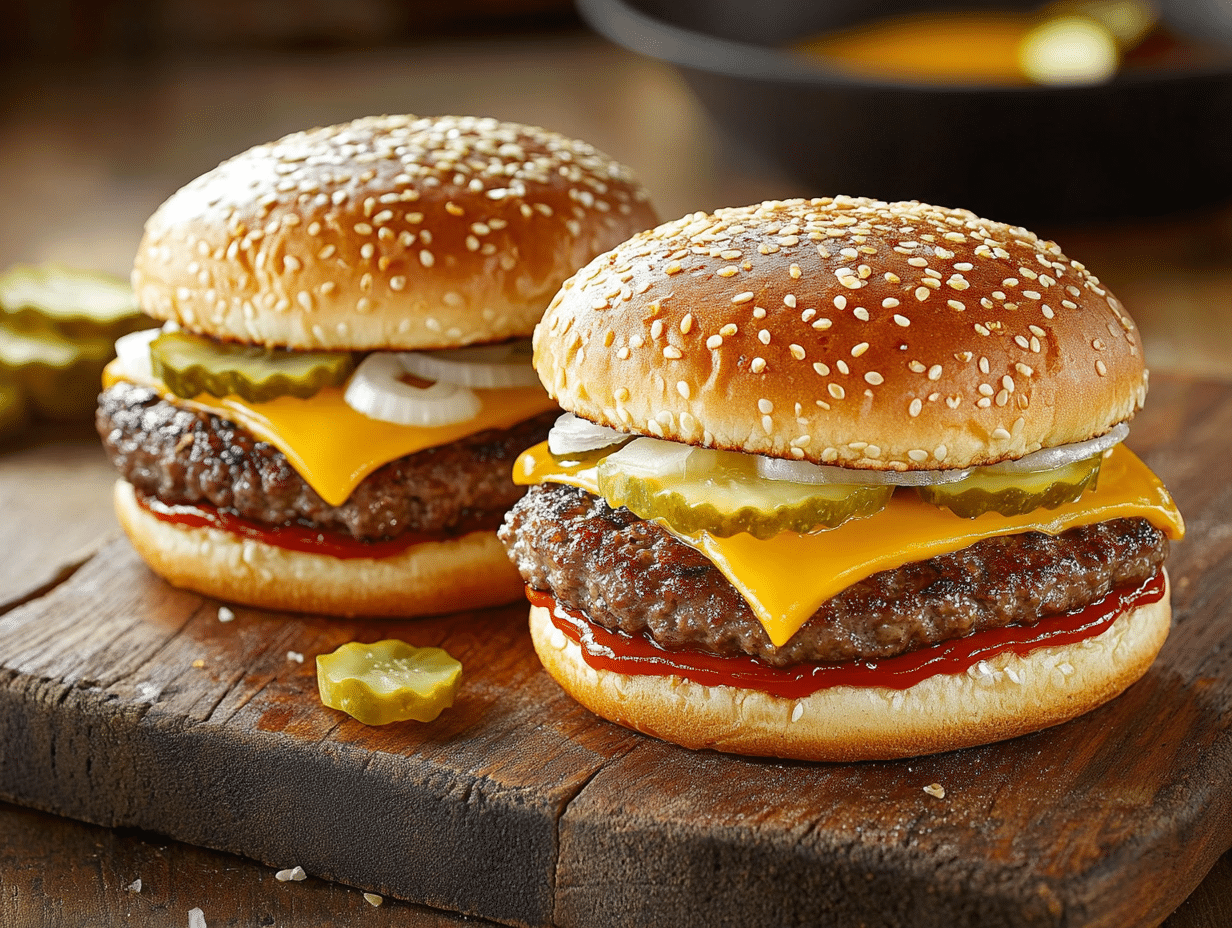
This is a homemade quarter-pound beef burger built to taste better than the drive-through version — juicier patty, better cheese melt, and a bun that doesn’t fall apart. The honest reason to make it at home is control: you pick the beef, you control the heat, and you get a properly seared crust that a fast-food line can’t reliably deliver. It comes together in under 30 minutes once your skillet is hot.
The short version of why this works
Two things matter most here. First, the fat content: 80/20 ground beef has enough fat to stay juicy through a hard sear without needing any binders or add-ins — skip the egg in the mix, it makes the patty mushy and dense. Second, the skillet temperature: a cast iron pan needs to be genuinely hot before the patty goes in, not just warm. That high heat is what builds the browned crust that gives the burger most of its flavor. Get those two things right and the rest is just assembly.
Mistakes to avoid
- Pressing down on the patty while it cooks. It squeezes out the fat and juice you’re trying to keep. Leave it alone once it hits the pan.
- Pulling the burger before it’s done. Ground beef must reach 160°F (71°C) internal temperature — use an instant-read thermometer if you’re not sure. Unlike a whole-muscle steak, ground beef can carry bacteria throughout, not just on the surface.
- Adding cheese too late. Put the slice on in the last 60–90 seconds of cooking and cover the pan with a lid or foil tent. The trapped steam melts it evenly without overcooking the patty.
- Toasting the bun on a separate pan. Toast it cut-side down in the same skillet right after the patty comes out. The leftover beef fat in the pan adds flavor you’d otherwise throw away.
- Skipping the rest. Let the patty sit on a plate for 60 seconds before building the burger. It’s a small step that keeps the juices from running straight out when you bite in.
Ingredient notes
- American cheese: Deli-sliced American melts more smoothly than individually wrapped singles because it has a higher moisture content. If you want to swap in cheddar or gouda, go for a young, mild version — aged cheddars don’t melt as cleanly and can turn greasy.
- Sesame seed bun: A brioche-style or potato bun works well here. Avoid anything too crusty or thick — it competes with the patty instead of supporting it. Standard grocery-store brioche buns are fine and easy to find.
- White onion: If raw onion is too sharp for your taste, soak the chopped pieces in cold water for 10 minutes, then drain. It takes the edge off without losing the crunch.
Storage and reheating
Store cooked patties separately from the buns and toppings. Wrap patties in foil or keep them in an airtight container in the fridge for up to 3 days. To reheat, put the patty in a covered skillet over medium-low heat with a splash of water and warm for 2–3 minutes per side — this keeps it from drying out. Microwaving works in a pinch but tends to toughen the meat. For longer storage, freeze raw formed patties separated by parchment paper for up to 3 months; thaw overnight in the fridge before cooking.
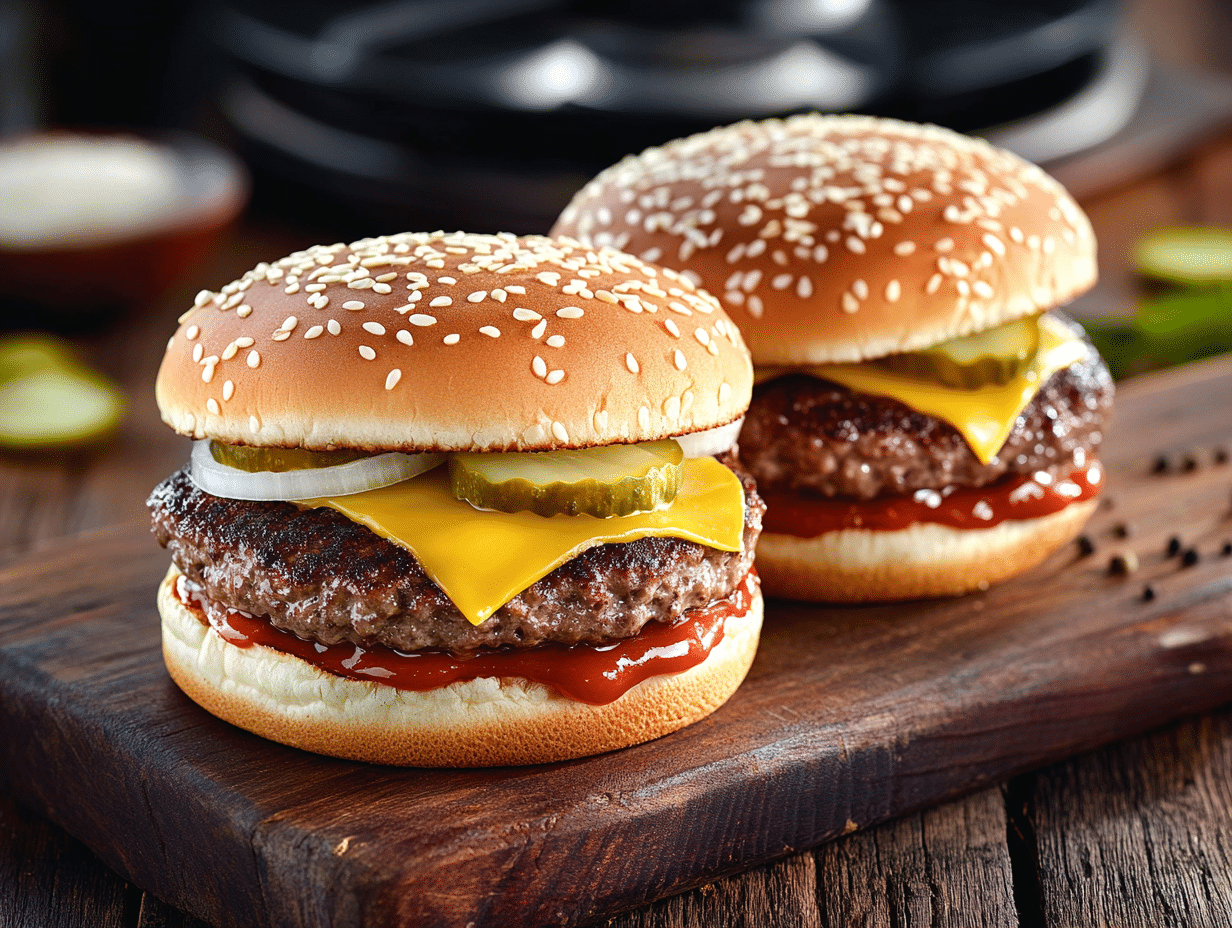
Homemade Quarter Pounder with Cheese

Ingredients
- 2 pieces sesame seed burger buns lightly toasted; choose soft, buttery brioche-style for best results
- 2 pieces beef patties, 80/20 ground beef, 1/4 lb each formed loosely to preserve juicy texture
- ½ teaspoon kosher salt for seasoning patties before cooking
- ¼ teaspoon freshly cracked black pepper to taste
- 2 slices American cheese preferably deli-style or high-quality for melting
- ¼ cup white onion finely chopped; soak in cold water 10 min to mellow if needed
- 6 slices pickles thinly sliced hamburger pickles for tang and crunch
- 2 teaspoons ketchup classic flavor; use Heinz or similar
- 2 teaspoons yellow mustard for that authentic tang
Instructions
- Heat a cast iron skillet or flat griddle over medium-high heat (about 425°F / 220°C). Do not add oil, as the beef fat will render out naturally.
- Lightly season both sides of each beef patty with kosher salt and black pepper just before cooking.
- Place patties onto the hot skillet. Firmly but gently press with a spatula for a good sear. Cook for 2 to 3 minutes on the first side until a golden-brown crust forms.
- Flip the patties, add a slice of American cheese on top of each, and cook an additional 2 to 3 minutes or until the cheese is melted and internal temp reaches 160°F (71°C).
- Toast the burger buns cut side down on the same skillet for 30–60 seconds until lightly golden and warm.
- Assemble the Burgers: Spread 1 teaspoon each of ketchup and mustard on the top bun. Layer pickles and onions on the bottom bun, then place the cheesy patty on top.
- Close the burger with the top bun. Serve immediately while hot for optimal texture and flavor.
Notes
- Swap American cheese for cheddar or gouda for a gourmet twist.
- For a juicier burger, don’t press the patties too hard when flipping—allow natural fat rendering.
- For added nostalgia, wrap the burger in wax paper for 1–2 minutes before serving to slightly steam the bun like McDonald's.
Nutrition
Your questions, answered
Can I use leaner ground beef, like 90/10, to make it healthier?
You can, but the burger will be noticeably drier and less flavorful. The fat in 80/20 beef isn’t just for taste — it keeps the patty moist during the high-heat sear, and leaner beef loses that buffer quickly.
How do I know when the patty is cooked through without cutting it open?
Use an instant-read thermometer inserted into the side of the patty — you’re looking for 160°F (71°C) for ground beef. A 4-ounce patty at about ¾-inch thick typically takes 3–4 minutes per side on a properly preheated cast iron skillet over medium-high heat.
My patties always shrink and puff up in the middle — what am I doing wrong?
The puffing happens because the edges of the patty cook and tighten faster than the center, pushing the meat upward. Press a shallow thumbprint into the center of each raw patty before it goes in the pan — about ¼-inch deep — and it will cook flat.
More burger recipes to try
- Copycat Quarter Pounder Recipe
- Perfect Bacon Double Cheeseburger
- Triple Cheeseburger Copycat Recipe
- Angus Bacon Guacamole Burger