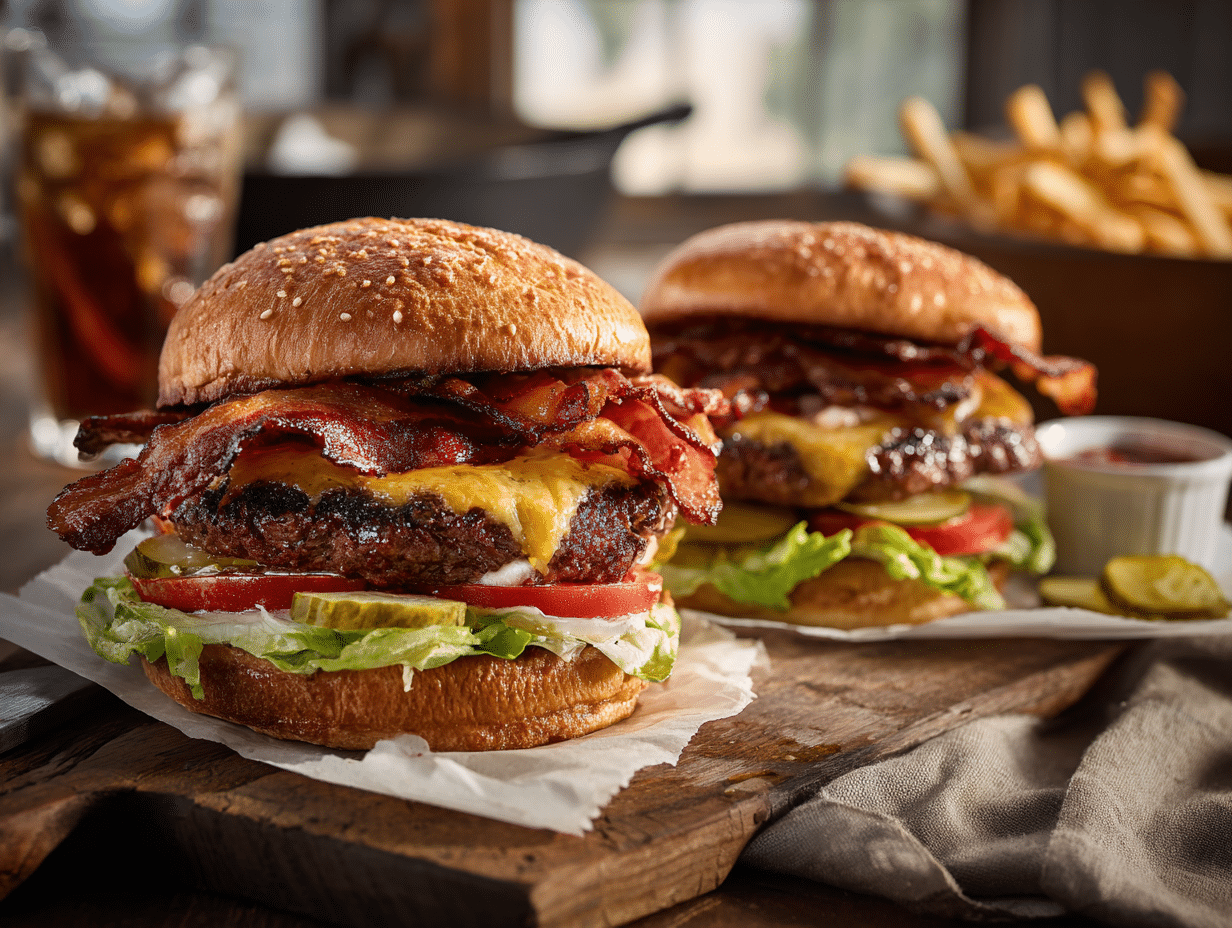
The Story Behind Wendy’s Big Bacon Classic Double
A Fast Food Icon
The Big Bacon Classic has been a cornerstone of Wendy’s menu since the late 1990s, representing the chain’s commitment to fresh, never-frozen beef and premium toppings. This double-patty variant emerged as Americans’ appetites grew for more substantial, indulgent burgers that could compete with casual dining offerings while maintaining fast-food convenience.
The Wendy’s Difference
What set Wendy’s Big Bacon Classic apart from competitors was its focus on quality ingredients: fresh beef patties (never frozen, as their famous slogan reminds us), thick-cut applewood-smoked bacon, and fresh produce. While McDonald’s and Burger King relied on frozen patties, Wendy’s made fresh beef their calling card, a practice that founder Dave Thomas insisted upon when he opened the first location in Columbus, Ohio, in 1969.
Evolution of the Recipe
The original Big Bacon Classic launched with a single patty, but as the “bigger is better” trend swept through American fast food in the early 2000s, the double version became increasingly popular. The burger represented Wendy’s answer to the premium burger movement, combining their signature square patties with upscale touches like applewood-smoked bacon and a special burger sauce.
The Technical Excellence
From a culinary perspective, the Big Bacon Classic Double showcases several smart techniques. The use of 80/20 ground beef ensures juiciness, while the flat-top griddle creates the Maillard reaction necessary for that distinctive crust. The layering order isn’t arbitrary—placing lettuce directly above the sauce creates a moisture barrier that prevents the bottom bun from becoming soggy, while the cheese acts as a “glue” between the two patties.
Cultural Impact
The Big Bacon Classic became part of Wendy’s identity during their “Do What Tastes Right” campaign, positioning the chain as the quality leader in fast food. It helped Wendy’s maintain its position as the third-largest hamburger fast-food chain globally, proving that consumers would pay a premium for perceived quality improvements.
The Home Cook’s Advantage
While the original is cooked on commercial flat-top grills at precise temperatures with specialized tools, home cooks actually have several advantages. Cast-iron skillets can achieve even better crusts than commercial equipment, and controlling your own ingredient quality—from the beef grind to the bacon cure—allows for a superior product. The key is understanding the principles behind each component: high heat for the sear, proper fat content in the beef, and the crucial balance between hot and cold elements.
Modern Interpretations
Today’s home cooks often elevate the classic with artisanal touches: locally sourced beef, heritage breed bacon, or house-made burger sauce. Some add umami boosters like Worcestershire sauce or MSG to the beef, while others experiment with different cheese varieties. However, the most successful versions maintain the spirit of the original—a harmonious balance of beef, bacon, cheese, and fresh toppings that made the Big Bacon Classic an American icon.
Why This Recipe Works
This copycat version succeeds by respecting the original while applying restaurant-quality techniques. Baking the bacon ensures consistent crispness without the splatter, while the signature sauce recipe captures that tangy-sweet profile that complements the richness of the beef and cheese. The emphasis on proper seasoning timing and temperature control transforms a fast-food favorite into a gourmet experience, proving that with the right techniques, home cooking can indeed surpass the drive-thru.
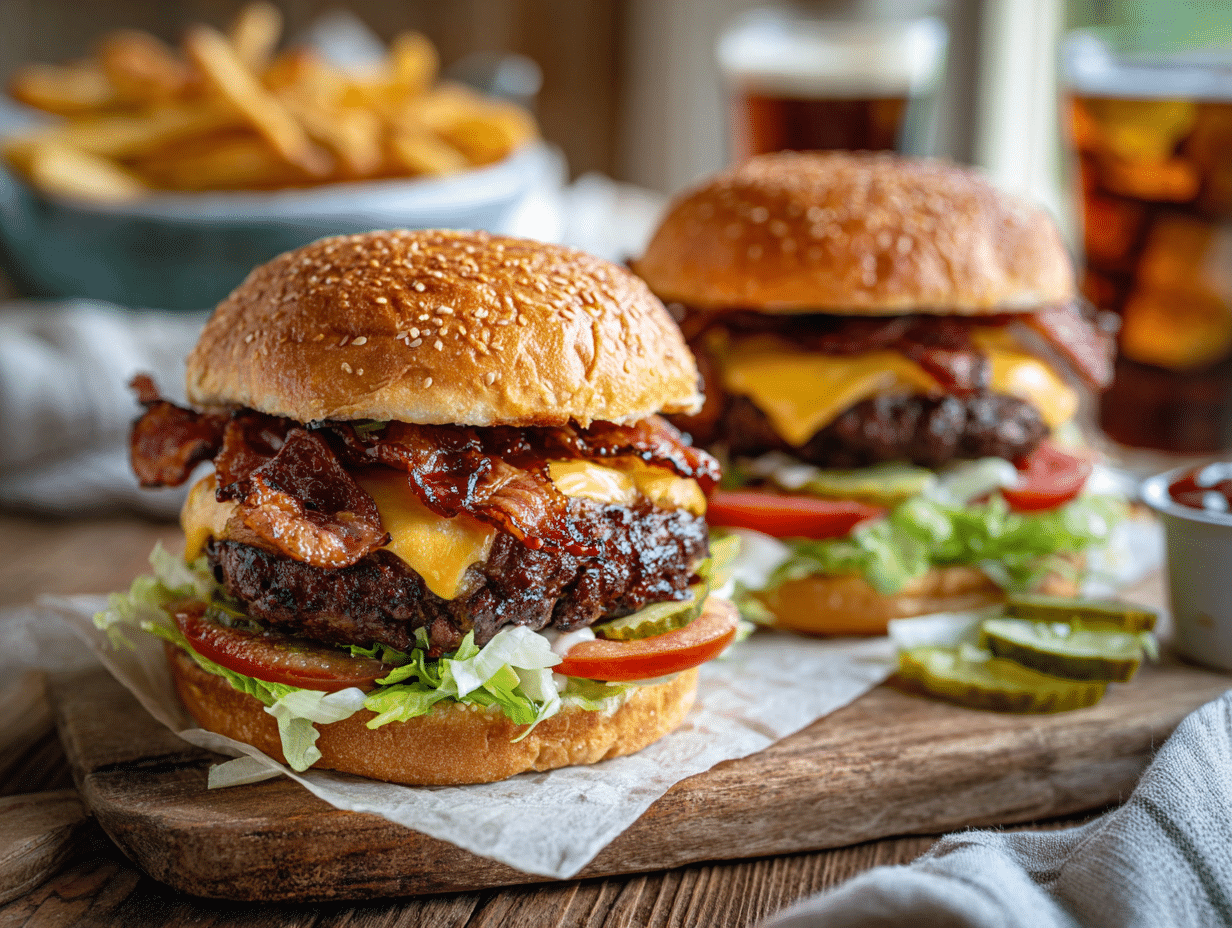
Wendy’s Big Bacon Classic Double (Copycat)

Ingredients
For the Bacon:
- 6 slices thick-cut bacon applewood-smoked preferred
For the Signature Burger Sauce:
- ¼ cup mayonnaise full-fat; Duke’s or Hellmann’s
- 2 tbsp ketchup Heinz recommended
- 1 tbsp sweet pickle relish bright, crunchy style
- 1 tsp yellow mustard
- ¼ tsp smoked paprika optional, for a subtle smokiness
For the Fresh Toppings:
- 4 leaves iceberg lettuce crisp outer leaves, dried well
- 4 slices vine-ripened tomato cut 1/4-inch thick; pat dry
- ½ cup sweet onion, thinly sliced into rings Vidalia or similar
- 8-10 pieces dill pickle chips cold and crunchy; Claussen or Grillo’s
For the Buns:
- 2 whole sesame seed hamburger buns potato or brioche-style; sturdy but soft
- 1 tbsp unsalted butter, softened for toasting buns
For the Patties & Searing:
- 1 tbsp neutral oil canola, grapeseed, or avocado oil
- 1 lb ground beef (80/20) cold; freshly ground if possible
- 1 ½ tsp kosher salt Diamond Crystal; reduce if using Morton
- 1 tsp freshly ground black pepper
- 4 slices American cheese deli-style for best melt
For the Assembly:
- 2 tsp ketchup optional, for the top bun
- 2 tsp yellow mustard optional, for the top bun
Instructions
- Cook the Bacon (12 minutes): Arrange 6 slices of thick-cut bacon on a foil-lined sheet pan and place in a cold oven. Set to 400°F (204°C) and bake until deep mahogany and crisp, about 12 minutes. Transfer to a rack or paper towels to drain. Keep warm on the rack.
- Make the Signature Sauce (3 minutes): In a small bowl, whisk together 1/4 cup mayonnaise, 2 tbsp ketchup, 1 tbsp sweet relish, 1 tsp yellow mustard, and 1/4 tsp smoked paprika. Taste and adjust salt or tang with an extra pinch of mustard if desired. The sauce should be tangy, lightly sweet, and creamy.
- Prep the Fresh Toppings (5 minutes): Pat 4 tomato slices dry, tear 4 crisp iceberg leaves to fit the buns, thinly slice sweet onion into rings (about 1/2 cup), and set out 8–10 dill pickle chips. Keep everything chilled for maximum crunch.
- Butter and Toast the Buns (2 minutes): Spread the cut sides of 2 sesame buns with 1 tbsp softened butter. Toast cut-side down in a preheated skillet over medium heat until evenly golden, 1–2 minutes. Alternatively, broil cut-side up on high for 45–60 seconds, watching closely to avoid scorching.
- Form the Patties (3 minutes): Divide 1 lb cold 80/20 ground beef into 4 equal portions (about 4 oz each). Gently shape into 1/2-inch-thick patties about 4 inches wide with a slight dimple in the center to prevent doming. Do not overwork the meat.
- Preheat and Oil the Pan (1 minute): Heat a large cast-iron skillet or griddle over medium-high until shimmering-hot. Add 1 tbsp neutral oil and swirl to coat. You should see faint wisps of heat and the oil should move fluidly.
- Sear the Patties, First Side (3 minutes): Season the tops of the patties generously with about half the kosher salt and pepper. Place seasoned-side down into the hot pan; immediately season the second side. Cook without moving until the edges are deeply browned and you hear assertive sizzling, about 3 minutes.
- Flip, Cheese, and Finish (3–4 minutes): Flip each patty and top with a slice of American cheese. Cook 2–3 minutes more, until the cheese has melted and patties reach an internal temperature of 160°F (71°C). Stack two patties for each burger to keep warm off the heat.
- Assemble Like a Pro (2 minutes): Bottom bun → 1–1.5 tbsp Signature Sauce → lettuce → onion rings → pickles → first cheesy patty → second cheesy patty → 3 slices crisp bacon → tomato → a light zigzag of ketchup and mustard (optional) → top bun. Press gently to set.
- Serve Immediately: The ideal burger shows glistening cheese, crisp bacon snap, and a fresh, cool crunch from the produce, with a toasty, buttery bun aroma.
Notes
Chef’s Tips:
- Crust = Flavor: Use cast iron and avoid overcrowding. A dry, hot surface delivers that steakhouse-style sear.
- Season Smart: Salt right before the patties hit the pan to keep juices inside.
- Better Bacon: Bake on a rack at 400°F (204°C) for flat, evenly crisp slices. Keep warm in a 200°F (93°C) oven while you cook.
- Sauce Tweak: Add 1/2 tsp Worcestershire for extra savoriness or a dash of hot sauce for gentle heat.
- Substitutions: Use sharp cheddar or pepper jack instead of American; turkey bacon for a lighter twist; potato rolls if sesame buns aren’t available.
- Dietary Notes: For gluten-free, use GF buns; for low-carb, use lettuce wraps and skip the bun.